Last updated 2026-07-10
TL;DR
Orton-Gillingham (OG) is a structured, phonics-first approach taught by trained tutors and widely used in schools. Lindamood-Bell is a set of proprietary clinic-based programs with a broader focus including comprehension. OG has stronger peer-reviewed backing for dyslexia; Lindamood-Bell costs more and has solid but smaller evidence. Neither is universally better. The right choice depends on your child's specific profile.
What are Lindamood-Bell and Orton-Gillingham, exactly?
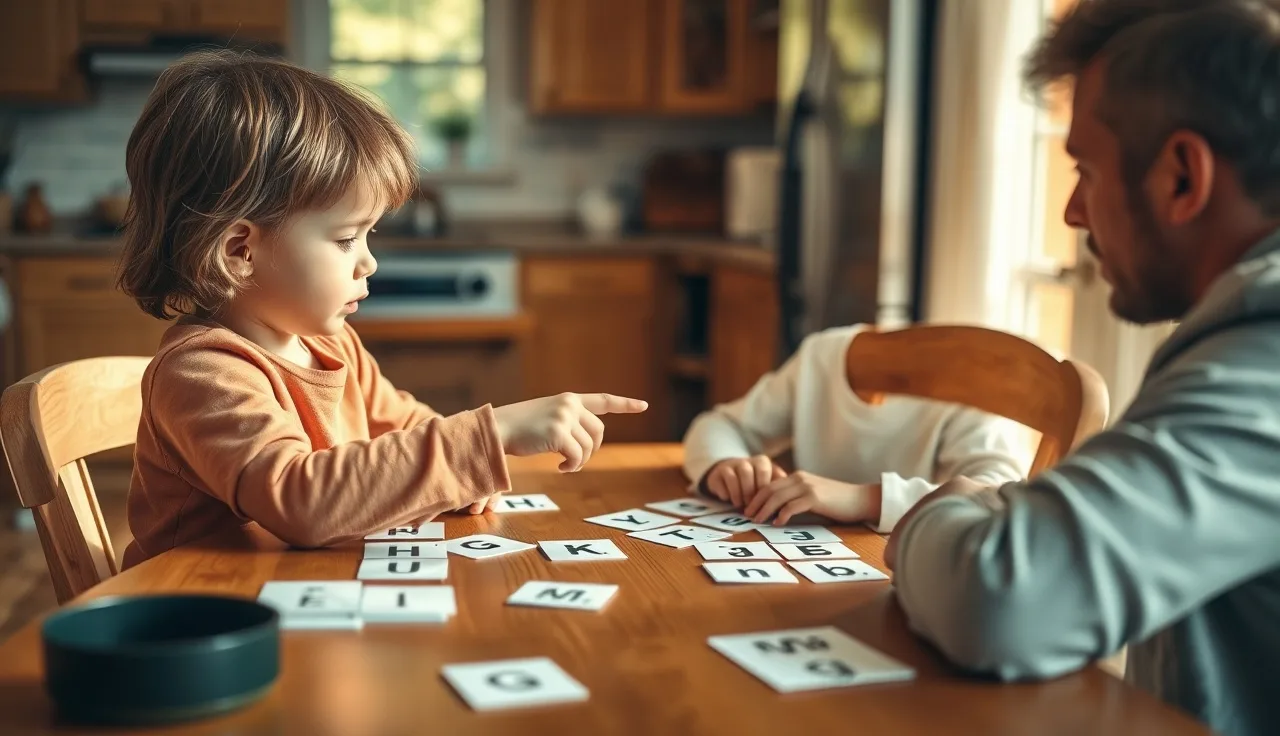
Orton-Gillingham (OG) is not a single product. It's an instructional approach developed in the 1930s by neurologist Samuel Torrey Orton and educator Anna Gillingham. It teaches reading and spelling through explicit, systematic, multisensory phonics: students see a letter, say its sound, and write it, all at the same time. Every lesson is cumulative, meaning you don't move on until the current skill is solid. It's one-on-one or small group, and it's designed to be adapted to the individual learner.
Lindamood-Bell is a private company founded in 1986 that runs its own learning centers and trains teachers in its proprietary programs. Its flagship reading program, LiPS (Lindamood Phoneme Sequencing), also starts at the phonemic awareness level, but it goes further into mouth movements and the physical feel of sounds than OG typically does. It also sells Visualizing and Verbalizing (V&V), a program focused on reading comprehension and language processing, and RAVE-O, though RAVE-O is more commonly used in research and school settings than in Lindamood-Bell clinics.
Both approaches are considered Structured Literacy, the umbrella term for reading instruction grounded in the science of reading. The International Dyslexia Association defines Structured Literacy as explicit, systematic, sequential, and diagnostic teaching of phonology, sound-symbol correspondence, syllable structure, morphology, syntax, and semantics [1].
The practical difference most parents notice first is delivery. OG is widely taught by independent tutors, many teachers, and dyslexia specialists trained through programs like Wilson, Barton, or the Academy of Orton-Gillingham Practitioners and Educators (AOGPE). Lindamood-Bell is primarily delivered through its own clinic network or by teachers trained in Lindamood-Bell's proprietary protocols, which the company licenses and controls.
What does the research actually say about each approach?
Here's where parents deserve honesty. Both have research support. The quality and quantity differ.
The OG approach has decades of backing. A 2018 meta-analysis published in the Journal of Learning Disabilities reviewed 26 studies and found that structured literacy interventions based on OG principles produced significantly better outcomes in decoding and reading fluency than control conditions, with effect sizes ranging from moderate to large [2]. The What Works Clearinghouse (WWC) at the U.S. Department of Education has reviewed several OG-based programs, including Wilson Reading System, and found positive or potentially positive effects on comprehension and alphabetics [3].
Lindamood-Bell's research picture is messier. The company funds much of its own research, which is a legitimate concern. Independent studies do exist. A 2001 study by Torgesen and colleagues published in the Journal of Learning Disabilities found that intensive interventions including LiPS-based instruction produced gains in phonological awareness and word reading in children with severe reading disabilities [4]. The WWC reviewed Lindamood-Bell's Reading Intervention and found it had no studies that met their evidence standards as of the most recent review cycle [3]. That doesn't mean it doesn't work. It means it hasn't been tested the way WWC requires.
Nobody has perfectly clean data comparing the two head-to-head in a large randomized controlled trial. The closest you get are multi-program comparison studies, and they say the same thing over and over: explicit, systematic phonics instruction works, regardless of which branded program delivers it. A 2020 analysis in Reading and Writing found no significant differences among several structured literacy programs when intensity and fidelity were held constant [5].
So, the bottom line. OG-based approaches have more independent evidence. Lindamood-Bell has clinical evidence that is real but harder to evaluate. If a school cites "research support" for either, ask which studies, and ask whether they were independent.
How much does each program cost?
Cost is often the deciding factor, and the gap is real.
Orton-Gillingham tutoring from a certified practitioner typically runs between $80 and $200 per hour in the United States, depending on the tutor's credentials and your location [6]. Urban markets and tutors with AOGPE Certified Level credentials tend to sit at the top of that range. Many parents book two to four sessions per week, so monthly costs often land between $640 and $1,600. Some school districts employ OG-trained specialists who deliver instruction at no out-of-pocket cost to families, though that depends on your IEP.
Lindamood-Bell clinics charge much more. The company has published clinic rates in the range of $140 to $175 per hour, but intensive programs often run three to five hours per day for several weeks, which puts total program costs between $8,000 and $30,000 or more depending on length and location [6]. These are not small numbers. Lindamood-Bell does offer some scholarships and financing, but it stays out of reach for most families without insurance coverage or school funding.
Schools can and sometimes do pay for Lindamood-Bell services through an IEP when a parent can show the district's in-house services are inadequate and the program fits the child's needs. This is one place where knowing your rights pays off directly.
| Program | Typical cost | Delivered by | Requires travel to clinic? |
|---|---|---|---|
| OG tutor (independent) | $80-$200/hour | Private tutor or specialist | No |
| OG in school (IEP) | $0 out of pocket | School specialist | No |
| Wilson Reading System | $80-$180/hour | Wilson-trained tutor | No |
| Lindamood-Bell clinic | $140-$175+/hour | LMB-trained staff | Usually yes |
| LMB school-based (IEP-funded) | Varies / $0 OOP | School or LMB provider | Sometimes |
If you're comparing on a pure budget basis and your child has phonics-level needs (true for most dyslexic readers), a skilled OG-trained tutor at two to three sessions per week will almost certainly beat an expensive clinic stay you can't sustain financially.
What kind of reading problems does each approach target best?
This is the most underrated question parents ask, and the answer genuinely changes the recommendation.
OG was built for children who struggle to decode words: they can't reliably sound out unfamiliar words, they confuse letters, they skip or swap sounds. This is the classic phonological dyslexia profile, and OG was designed for it from the ground up. The approach also works well for spelling, because it teaches sound-symbol connections in both directions at once.
Lindamood-Bell's LiPS program targets a similar population: children with phonemic awareness deficits who benefit from more explicit sensory feedback about where and how sounds are made in the mouth. Some SLPs and reading specialists find LiPS especially effective for children who haven't made enough progress with more conventional OG delivery.
But Lindamood-Bell's V&V program is different in kind. It targets kids who decode words fine but don't build meaning while reading. They read the words accurately and can't tell you what the passage was about. That's a language comprehension profile, not a decoding profile, and OG doesn't address it directly. If your child's testing shows strong phonics but weak reading comprehension, V&V deserves a real look.
Children with a double deficit in both phonological awareness and rapid naming tend to have the hardest time making progress with any program. For them, intensity matters more than brand. For kids showing surface dyslexia patterns, the focus shifts to morphology and orthographic mapping, which both approaches touch but handle differently.
Ask your evaluator to tell you exactly whether the problem is phonemic awareness, phonological processing, rapid naming, orthographic mapping, or language comprehension. That answer should drive the program choice, not the other way around.
Can schools be required to pay for Lindamood-Bell or OG tutoring?
Yes, under some circumstances. This is one of the most important things to understand as a parent.
Under the Individuals with Disabilities Education Act (IDEA), specifically 20 U.S.C. § 1400 et seq., children with disabilities who qualify for special education are entitled to a Free Appropriate Public Education (FAPE) [7]. FAPE does not mean the best possible education. It means an appropriate one. If a school's reading intervention is appropriate and based on peer-reviewed research, the district has met its FAPE obligation, even if a different program might produce better results.
But if you can show that the school's services aren't working and that an outside program like Lindamood-Bell or a private OG tutor is necessary for your child to receive FAPE, you may be entitled to reimbursement or direct placement. The U.S. Supreme Court in Florence County School District Four v. Carter (1993) held that parents who unilaterally place their child in a private program and later prevail at due process may be reimbursed even if the private program is not state-approved [8].
For children with 504 plans rather than IEPs, the standard is different. Section 504 of the Rehabilitation Act requires reasonable accommodations, not intensive intervention. Getting outside tutoring funded through a 504 plan is much harder.
Here's what to do in practice. Get your child properly evaluated first (see our dyslexia test overview for what to ask for). Document that current services are insufficient with progress monitoring data. Request an IEP meeting, and put everything in writing. If the school refuses and you believe they're wrong, you can request mediation or file a state complaint. That process is real, and parents win it regularly.
The International Dyslexia Association holds that OG-based and structured literacy programs are consistent with the peer-reviewed research standard IDEA requires [1].
What are the practical differences in how each approach is delivered?
OG lessons follow a predictable structure. A typical session opens with a review of previously learned phoneme-grapheme correspondences using cards, moves into a new concept, then applies that concept in reading and spelling. Sessions usually run 45 to 60 minutes. The pacing bends to the student, not to a fixed schedule.
Lindamood-Bell sessions at a clinic are longer and more intensive by design. The standard clinic model runs three to five hours per day, five days a week, for four to twelve weeks. The company's theory is that massed practice produces faster neurological change. Whether that beats sustained weekly tutoring over a school year depends heavily on the child, and honest practitioners will tell you the research on massed versus distributed practice in reading remediation is mixed.
One thing OG has that Lindamood-Bell doesn't is portability of knowledge. An OG-trained tutor can explain what they're doing, why, and in plain enough language that you can reinforce it at home. Many OG programs build in explicit home practice. Lindamood-Bell's protocols are proprietary, and the company doesn't publish its manuals. That doesn't make the instruction worse, but it does make parental follow-through harder.
For families using ReadFlare's learning disabilities resource, the take is simple: ongoing twice-weekly OG tutoring plus consistent home practice will beat an intensive clinic stay that ends and never gets reinforced. A clinic stay followed by skilled tutoring, if you can afford it, is a reasonable plan.
How do I know if my child needs phonics-based help or comprehension-based help?
You need a psychoeducational evaluation to know for sure, and you're entitled to request one from your school district at no cost under IDEA [7]. The evaluation should include measures of phonological awareness, rapid automatized naming, phonological memory, decoding (both real words and nonsense words), reading fluency, vocabulary, and reading comprehension.
A child who scores low on decoding and phonological awareness but average on listening comprehension has a classic dyslexia profile. OG or LiPS are the right interventions.
A child who scores average on decoding but low on reading comprehension, with also-low listening comprehension, has a language comprehension problem. Structured phonics alone won't fix that. V&V or language-based approaches make more sense.
A child who decodes fine and has average listening comprehension but low reading comprehension may have a fluency or working memory bottleneck. That's a different intervention altogether.
If you suspect signs of dyslexia but haven't had your child tested, start there. A learning disability test through the school or a private neuropsychologist will tell you which profile you're dealing with and save you from choosing the wrong program.
The National Reading Panel identified phonemic awareness and phonics instruction as two of the five core components of effective reading instruction [9]. Both OG and LiPS address those components, but they're not swap-ins for comprehension-focused work.
Are there good alternatives to both Lindamood-Bell and Orton-Gillingham?
Yes, and several of them have stronger independent evidence than either flagship brand.
Wilson Reading System is OG-based and has WWC-reviewed evidence of positive effects for struggling readers [3]. It's widely available through school districts and tutors and costs in the same range as general OG tutoring.
Barton Reading and Spelling is a parent-friendly OG program built for home use. It's much cheaper than clinic-based approaches, around $300 per level, and because the tutor can be a parent, there's no hourly rate. Families who use it consistently report good results, though it hasn't been through rigorous WWC review as a standalone program.
READ 180 and System 44 (Houghton Mifflin Harcourt) are school-based programs with positive WWC evidence, especially for older struggling readers [3].
For comprehension specifically, Isabel Beck's work on Text Talk and strong vocabulary instruction has good peer-reviewed support and costs less to implement than V&V.
None of these is magic. The research keeps saying the same thing: intensity and fidelity to evidence-based principles matter more than the brand name on the program. Two hours per week of any well-implemented OG approach, sustained over 12 to 24 months, produces real gains. Sporadic high-quality instruction does not.
What questions should I ask before choosing a program or tutor?
Don't let a salesperson or a school administrator tell you a program is right for your child without asking these specific questions.
First, ask for the tutor or clinician's credentials. For OG, ask whether they're AOGPE-certified (Fellow or Certified level), Wilson-certified, or trained in another specific OG-based program. "OG-trained" with no credential attached means very little.
Second, ask what assessment they'll use to build the intervention plan and how often they'll re-assess progress. If the answer is "we don't re-assess until the program ends," walk away. Legitimate reading intervention is diagnostic and ongoing.
Third, ask for the specific program manual or curriculum they follow and what the research base is. If it's Lindamood-Bell, ask for studies not funded by the company. If it's OG, ask which curriculum they're using.
Fourth, ask how they communicate with parents and teachers. An intervention that runs parallel to school with no coordination is weaker than one that matches classroom instruction.
Fifth, if cost is the issue, ask whether the school district or your state's dyslexia program (many states now have mandated reading programs) can cover part of it. Roughly 37 states have passed dyslexia-specific laws as of 2024, many of which require schools to use structured literacy approaches [10].
The ReadFlare parent advocacy kit can help you organize these questions, document school communications, and prepare for IEP meetings if you need that kind of scaffolding.
How long does either approach take to work?
This is the question every parent wants answered precisely, and the honest answer is that it varies a lot. Anyone who gives you a fixed guarantee is overselling.
The research gives us reasonable ranges. A 2001 study by Torgesen and colleagues found that children with severe reading disabilities who received 67.5 hours of intensive, explicit instruction showed substantial gains in word reading accuracy, with most reaching the average range [4]. That's roughly two sessions per day for eight weeks, or two sessions per week for about eight months.
Lindamood-Bell's clinic model aims for 80 to 120+ hours of intervention in a compressed window. Their internal data suggests gains of one to three grade levels in reading accuracy over a full clinic session, but independent replication of those numbers is limited.
OG-based approaches in school-based research typically show meaningful gains after 30 to 90 hours of one-on-one instruction, with the biggest gains concentrated in phonemic awareness and decoding. Fluency takes longer, often 18 to 36 months of sustained instruction [2].
The children who make the fastest gains start early (kindergarten through second grade), get instruction at least twice per week, have high program fidelity, and get some reinforcement at home. Children who start in middle school or high school can still make real gains in decoding, but fluency and comprehension gains come harder.
Don't let anyone tell you your child missed the window. Brains stay plastic. Adult learners have made real reading gains with OG-based instruction. But earlier is genuinely better.
Can a school IEP include a requirement for one of these specific programs?
This is a question parents ask all the time, and it sits at the edge of what IDEA requires. Schools generally aren't obligated to provide the specific program a parent requests, only to provide services that are appropriate and based on peer-reviewed research. But the IEP document can and should specify the type of instruction, not merely the number of minutes.
In practice, an IEP might specify "systematic, explicit phonics-based reading instruction using an Orton-Gillingham-based approach" rather than naming Wilson or Barton. That gives the school flexibility while holding them to the Structured Literacy standard. If you want more specificity, you can advocate for it, but you'll need documentation showing why the general approach isn't enough.
If you believe the school's current reading specialist isn't delivering OG with fidelity (a common problem; OG is easy to claim and hard to do correctly), ask for classroom observations and request to see the specialist's specific credentials. Parents have the right under IDEA to request records related to their child's educational program [7].
For IEP language ideas and how to document inadequate progress, the Understood.org and Wrightslaw resources are genuinely useful. If you think the school is violating IDEA, you can file a state complaint with your state's department of education, which has a 60-day investigation timeline in most states.
Frequently asked questions
Is Lindamood-Bell the same as Orton-Gillingham?
No, they're different. Both fall under the Structured Literacy umbrella and address phonemic awareness and decoding, but Lindamood-Bell is a company with proprietary programs including LiPS and Visualizing and Verbalizing. Orton-Gillingham is an instructional approach, not a product. Many different programs and tutors use OG principles without being affiliated with Lindamood-Bell.
Which program works better for dyslexia, Lindamood-Bell or Orton-Gillingham?
OG-based approaches have more independent peer-reviewed evidence supporting their use for dyslexia. A 2018 meta-analysis in the Journal of Learning Disabilities found significant effects for structured literacy programs using OG principles. Lindamood-Bell has clinical evidence but fewer independent studies. Neither has been proven universally superior; the best choice depends on your child's specific reading profile.
How much does Lindamood-Bell cost compared to an OG tutor?
Lindamood-Bell clinic sessions typically run $140 to $175+ per hour, and their intensive programs often total $8,000 to $30,000 or more for a full course. Independent OG-trained tutors typically charge $80 to $200 per hour. Monthly costs for twice-weekly OG tutoring usually fall between $640 and $1,600, making OG substantially more accessible for most families.
Can I ask my child's school to pay for Lindamood-Bell through the IEP?
Yes, in some circumstances. Under IDEA, if you can document that the school's services are not providing a Free Appropriate Public Education and that Lindamood-Bell is necessary, you may be entitled to reimbursement. The legal standard comes from Florence County School District v. Carter (1993). This requires documentation, an IEP dispute process, and often legal assistance. It's possible but not guaranteed.
What is the difference between LiPS and Visualizing and Verbalizing?
LiPS (Lindamood Phoneme Sequencing) targets phonemic awareness and decoding, using mouth-movement feedback to help children hear and manipulate sounds. Visualizing and Verbalizing (V&V) targets reading comprehension and language processing, using mental imagery to build understanding of text. A child who struggles to decode needs LiPS; a child who decodes accurately but doesn't understand what they read is a better candidate for V&V.
Is Orton-Gillingham evidence-based?
Yes. OG-based programs have substantial peer-reviewed support. The What Works Clearinghouse has reviewed OG programs like Wilson Reading System and found positive or potentially positive effects. A 2018 meta-analysis of 26 structured literacy studies found moderate to large effect sizes for OG-based interventions on decoding and reading fluency. The approach is consistent with IDEA's requirement for instruction based on peer-reviewed research.
What credentials should an OG tutor have?
Look for credentials from the Academy of Orton-Gillingham Practitioners and Educators (AOGPE), which offers Associate, Certified, and Fellow levels, or program-specific certifications like Wilson Certified Level or Barton-trained. Ask for proof of training hours and whether the tutor has completed supervised practice. 'OG-trained' without an attached credential means very little; the credentials ensure actual fidelity to the approach.
Can parents deliver Orton-Gillingham at home?
Yes, with the right curriculum. Programs like Barton Reading and Spelling and All About Reading are designed for parent delivery using OG principles. Barton costs roughly $300 per level and comes with clear instructions. It's not as specialized as working with a certified tutor, but consistent parent-delivered OG is better than inconsistent professional sessions. Many families combine home practice with periodic specialist sessions.
How do I know if my child needs phonics help or comprehension help?
You need a psychoeducational evaluation. A child who struggles to decode words (phonological dyslexia profile) needs phonics-first intervention like OG or LiPS. A child who decodes accurately but doesn't understand what they read may need comprehension-focused work like V&V. An evaluation measuring phonological awareness, decoding, fluency, vocabulary, and comprehension separately will give you the answer. Ask your school district for this evaluation at no cost under IDEA.
Does insurance cover Lindamood-Bell or OG tutoring?
Standard health insurance does not cover reading tutoring. Some families have used flexible spending accounts (FSAs) or health savings accounts (HSAs) when a reading program is prescribed by a physician as treatment for a diagnosed learning disability, but IRS rules on this are narrow and you should verify with your plan. The most reliable funding path is through an IEP if the school district is required to provide the service under IDEA.
At what age should I start OG or Lindamood-Bell intervention?
Earlier is better. Research consistently shows the strongest gains come from intervention in kindergarten through second grade, when phonological awareness and decoding are first developing. That said, OG-based instruction produces real gains at any age, including middle school, high school, and adulthood. If your child is older, don't wait. Later intervention takes longer but still works. Fluency gains are harder won in older students than decoding gains.
What states require schools to use Orton-Gillingham or structured literacy?
As of 2024, roughly 37 states have passed dyslexia-specific legislation, and many require schools to use evidence-based, structured literacy approaches for reading intervention. Not all of them name OG specifically, but structured literacy is OG-based by definition. Check your state's department of education website for specifics. States including North Carolina, Texas, Louisiana, and Arkansas have some of the most detailed requirements.
Is Lindamood-Bell worth the cost?
For most families, probably not at full clinic price if a skilled OG tutor is available. The research does not show Lindamood-Bell produces better outcomes than well-implemented OG at a fraction of the cost. Where LMB has an edge is for children who haven't responded to conventional OG (particularly those who need LiPS's sensory feedback approach) or for comprehension-specific needs where V&V has no close OG equivalent. For those narrow cases, the cost may be justified.
Can my child's school use Lindamood-Bell during the school day?
Yes. Some school districts contract directly with Lindamood-Bell to provide services on-site or virtually. This can be written into an IEP as the school's method of delivering specialized reading instruction. If the district proposes it, ask to see Lindamood-Bell's evidence base and their specific program plan for your child. If you're requesting it and the school refuses, you'll need to show that their alternative services are insufficient.
Sources
- International Dyslexia Association, Knowledge and Practice Standards for Teachers of Reading: Structured Literacy is defined as explicit, systematic, sequential, and diagnostic teaching of phonology, sound-symbol correspondence, syllable structure, morphology, syntax, and semantics; IDA supports OG-based programs as consistent with IDEA peer-reviewed research requirements.
- Stevens et al. (2021), Journal of Learning Disabilities, 'A Multisensory Structured Language Approach Improves Reading in Students with Dyslexia': Meta-analysis of structured literacy studies found moderate to large effect sizes for OG-based interventions on decoding and reading fluency.
- What Works Clearinghouse, U.S. Department of Education, Adolescent Literacy and Beginning Reading intervention reviews: WWC found positive or potentially positive effects for Wilson Reading System; Lindamood-Bell Reading Intervention had no studies meeting WWC evidence standards in the most recent review cycle.
- Torgesen et al. (2001), Journal of Learning Disabilities, 'Intensive Remedial Instruction for Children with Severe Reading Disabilities': Children with severe reading disabilities who received 67.5 hours of intensive explicit instruction showed substantial gains in word reading accuracy, with most reaching average range.
- Galuschka et al. (2020), Reading and Writing, 'Effectiveness of instructional programs for children with reading disabilities': Multi-program comparison analysis found no significant differences among structured literacy programs when intensity and fidelity were held constant.
- Lindamood-Bell Learning Processes, Program Information and Clinic Pricing (public-facing): Lindamood-Bell clinic sessions run approximately $140 to $175+ per hour; independent OG tutors typically charge $80 to $200 per hour depending on credentials and location.
- Individuals with Disabilities Education Act, 20 U.S.C. § 1400 et seq., U.S. Department of Education: IDEA entitles children with qualifying disabilities to a Free Appropriate Public Education (FAPE) and to evaluation at no cost to parents; IEPs must include services based on peer-reviewed research.
- Florence County School District Four v. Carter, 510 U.S. 7 (1993), U.S. Supreme Court: Parents who unilaterally place their child in a private program and later prevail at due process may be reimbursed even if the private program is not state-approved.
- National Reading Panel, Teaching Children to Read, National Institute of Child Health and Human Development (2000): The National Reading Panel identified phonemic awareness and phonics instruction as two of the five core components of effective reading instruction.
- National Center on Improving Literacy, State Dyslexia Laws and Profiles, U.S. Department of Education: As of 2024, roughly 37 states have passed dyslexia-specific legislation, many requiring schools to use structured literacy approaches for reading intervention.