Last updated 2026-07-09
TL;DR
Orton-Gillingham (OG) books are structured literacy materials built on the OG method: multisensory, explicit, sequential phonics with strong evidence for dyslexia. Core teacher manuals run $40 to $150. Student workbooks cost $15 to $50. No single book is "the OG curriculum." Dozens of programs draw on the approach with wildly different fidelity and research support.
What is the Orton-Gillingham approach and where did it come from?
Samuel Orton was a neurologist. In the 1920s he noticed something that seems obvious now and was radical then: plenty of children who could not read had perfectly normal intelligence. He teamed up with educator Anna Gillingham, and by 1935 they had the first edition of what became the foundational OG manual. Their idea was simple. Reading and spelling are learned skills, not gifts you are born with, and children who struggle need explicit, systematic, multisensory teaching in how sounds map to letters.
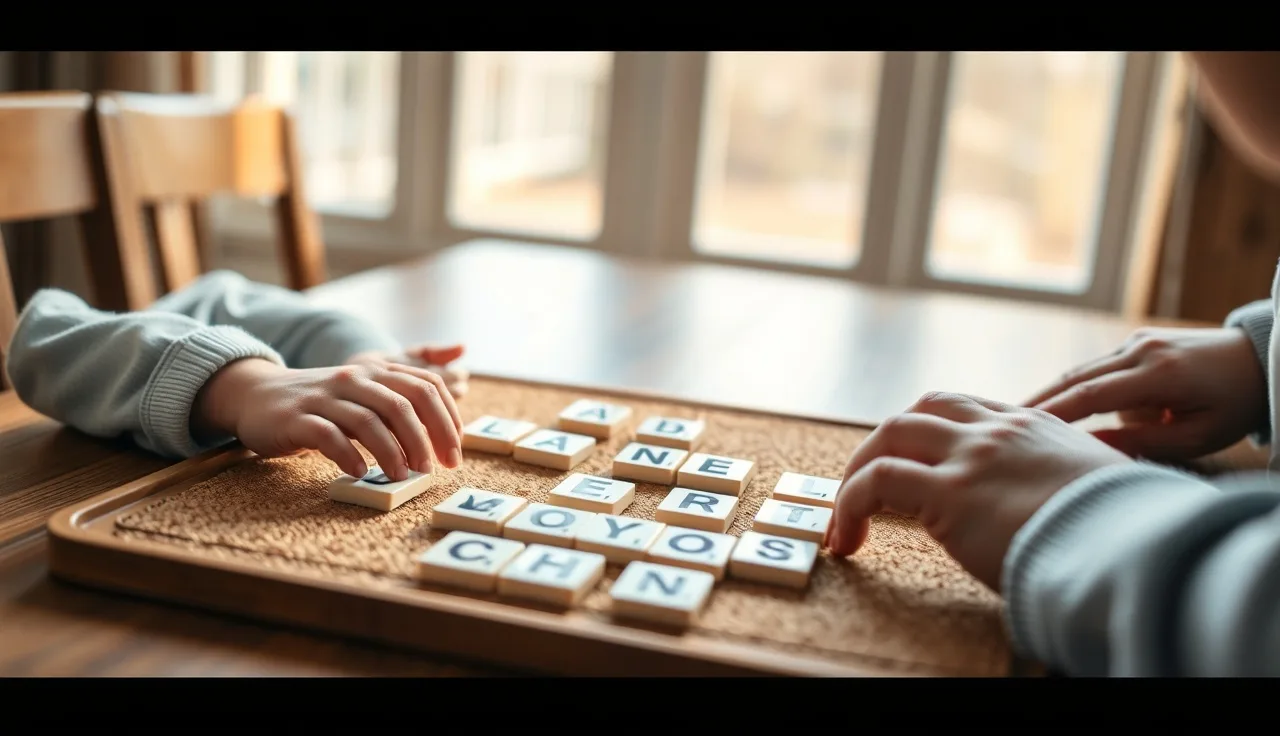
Three words describe the method: multisensory, structured, sequential. Multisensory means the student sees the letter, says the sound, hears their own voice, and writes, all at once. Structured means every lesson follows the same predictable shape. Sequential means skills stack in a deliberate order, from simple consonant-vowel-consonant words up through Latin and Greek word parts.
Here is the part shoppers miss. OG is not a single published program. It is a set of principles. The Academy of Orton-Gillingham Practitioners and Educators (AOGPE) maintains training standards, but there is no one "official OG book" you order from a single publisher [1]. That matters when you spend money, because products marketed as OG range from faithful to barely related.
For context on what dyslexia looks like before instruction starts, see signs of dyslexia. If you suspect your child has phonological dyslexia, OG-based materials are built to hit exactly that phonological core deficit.
What does the research say about OG-based reading instruction?
The evidence is real, and it has more nuance than the marketing copy admits. The most-cited synthesis is the 2000 National Reading Panel report, which found that systematic phonics instruction produces stronger outcomes than non-systematic phonics or no phonics at all [2]. OG-based programs sit squarely in the systematic category.
Narrower reviews looked at OG itself. A 2019 meta-analysis in Learning Disabilities Research and Practice (Stevens et al.) examined 26 studies of OG and OG-influenced interventions and reported a mean effect size of 0.42 for word reading and 0.35 for reading fluency [3]. Those are moderate, meaningful gains. Not magic. Effect sizes tend to run larger when a trained specialist delivers the instruction than when a classroom teacher hands out workbooks.
The What Works Clearinghouse (WWC), run by the Institute of Education Sciences, reviews specific programs one at a time. Wilson Reading System has "strong" evidence for word and pseudoword reading. Barton Reading and Spelling System has not been reviewed by WWC as of mid-2025. That does not mean Barton fails. It means nobody has run it through the full WWC protocol [4].
An honest summary: the method has decades of solid support. The specific book you buy matters less than whether the person teaching delivers systematic, explicit phonics with consistent multisensory practice. A trained teacher with a plain workbook usually beats an untrained parent with an expensive kit.
What are the main Orton-Gillingham books and programs available?
Here is a working comparison of the OG-based books and programs parents and teachers actually reach for. Prices are approximate retail as of mid-2025 and can move.
| Program / Book | Best for | Approx. cost | WWC review? | Training required? |
|---|---|---|---|---|
| Gillingham Manual (7th ed.) | Trained tutors, reference | ~$60 | No | Yes, OG coursework |
| Wilson Reading System | Trained specialists, grades 2+ | $200-$500 full kit | Yes, strong | Yes, Wilson Level I |
| Barton Reading and Spelling System | Parents at home, Levels 1-10 | ~$299 per level | No | No |
| All About Reading / All About Spelling | K-3, parent-led | $40-$90 per level | No | No |
| Explode the Code | Supplement, classroom | $10-$18 per workbook | No | No |
| Preventing Academic Failure (Bertin & Perlman) | Classroom teachers K-6 | ~$125 | No | Helpful |
| SPIRE | Schools, grades K-8 | School licensing | Yes, moderate | Yes |
A few things the table cannot show. Wilson and SPIRE are clinical-grade programs that expect a trained person to deliver them. Barton runs the other way. Susan Barton built it so a motivated parent with zero teaching background can use it, and she tested it with parents as the main audience. All About Reading splits reading and spelling into two aligned programs, and many families find the cost per level reasonable next to private tutoring.
The Gillingham Manual is a reference text, not a lesson plan. You would never hand it to a child. A trained practitioner uses it as a guide while building custom lessons. If you have no training, the manual alone will not get you anywhere useful [5].
For children still building basic sight vocabulary alongside decoding, tools like sight word flashcards and sight words worksheets can round out OG practice at home without replacing it.
Which Orton-Gillingham book is best for parents teaching at home?
If you have no teaching credential, three programs are built for you: Barton, All About Reading/All About Spelling, and to a lesser degree Logic of English.
Barton is the most scripted thing you will find. Every lesson tells you what to say, which tiles to place, and what to do when your child makes a specific error. Susan Barton designed it because parents kept asking her to. Each level covers roughly a semester of reading instruction and costs around $299. Ten levels carry a child from basic phoneme awareness through Greek and Latin word parts. That is real money, somewhere between $2,000 and $3,000 for all ten, though most families never need all ten.
All About Reading (AAR) and All About Spelling (AAS) cost less per level and cover similar ground. They feel like a traditional school curriculum, with a teacher guide, a student workbook, and letter tiles in the box. Families often prefer AAR for kids ages 5 to 8 because the stories are engaging and the pacing is gentle.
Explode the Code is not a full OG program. It is a phonics workbook series that follows a structured order and shows up in a lot of classrooms. For a child who already has a trained specialist and needs extra reps at home, these workbooks are cheap and useful. They will not replace a full program.
One honest note. Consistency beats program choice. A child who does 20 to 30 minutes of structured work five days a week beats a child who does an hour whenever the mood strikes. If you want a formal evaluation before you start, a learning disability test or dyslexia test can tell you whether OG is the right match.
How do OG books differ from regular phonics workbooks?
Most phonics workbooks from Target or Amazon follow a loose phonics order but skip several things OG-based materials include on purpose.
First, the multisensory piece. A standard workbook asks a child to look at a letter and write it. An OG lesson asks the child to say the sound, write the letter in sand or on a textured surface, tap out each phoneme, then read the word in print. That layered input is deliberate. Research on multisensory reading instruction shows that combining auditory, visual, and kinesthetic pathways improves retention for students with dyslexia, and helps most beginning readers too [6].
Second, the diagnostic-prescriptive structure. OG was designed to be individualized. A trained practitioner finds exactly where in the sequence a student breaks down and starts there. Generic workbooks start on page one no matter what the child already knows.
Third, the drill review. OG lessons always open with review of learned phonograms before anything new appears. That spaced retrieval is baked in, not optional.
So when your child's school says "we use phonics," that is not the same as saying they use an OG-based structured literacy approach. Related, not identical. The science of reading movement picked up real legislative steam after 2020 and pushed many states toward structured literacy mandates, but what happens in a given classroom still varies a lot by district and teacher [7].
What should I look for when buying an Orton-Gillingham book?
Four things are worth checking before you spend a dollar.
First, scope and sequence. Does the program lay out every phonics element in a chart you can inspect? Vowel teams, r-controlled vowels, multisyllabic rules, morphemes, all of it should appear with a clear teaching order. A hidden or vague scope and sequence is a warning sign.
Second, decodable texts. Students need to practice reading words built only from patterns they have already learned. Programs with decodable readers built into the sequence beat programs that send you off to find your own. Barton includes decodable stories. AAR includes decodable readers in every level kit.
Third, error correction. A good program tells you exactly what to do when a student misreads a word. "Sound it out" is not a procedure. A real procedure sounds like this: cover the word, say the sounds with the student phoneme by phoneme, blend, then reread the whole sentence from the start.
Fourth, who the book is written for. Some assume you already know the jargon. Others are written for parents. Buying a practitioner-level manual with no training wastes money and can backfire, because you might teach a letter-sound correspondence wrong and have to unteach it later.
The ReadFlare parent toolkit has a checklist you can print and bring to a school meeting to ask which of these four elements your child's current intervention actually covers. Useful before you spend anything on a home program.
Do schools use Orton-Gillingham books, and can you request them through an IEP?
Schools can use OG-based programs, and some states now require structured literacy by law. As of 2025, more than 40 states have passed some form of structured literacy or reading science legislation, many of which name systematic phonics and some of which list OG-based approaches as acceptable methods [7].
Under IDEA (the Individuals with Disabilities Education Act, 20 U.S.C. § 1400 et seq.), a child identified with a specific learning disability in reading is entitled to specially designed instruction that meets their individual needs [8]. The IEP team decides what that instruction looks like. You can request, in writing, that the team consider a specific OG-based program, or that the reading specialist working with your child hold documented OG training.
Here is the limit. The law requires "specially designed instruction" but names no specific commercial program. What you can do is ask the school to write the instructional approach and the trainer's credential level into the IEP itself. If the school is using a loosely OG-inspired workbook with no trained practitioner behind it, that is a fair concern to raise, on the record.
Parents who want to understand their 504 rights alongside IDEA rights, and those building a case for a specific intervention, should learn how prior written notice works. The Department of Education's Office of Special Education Programs (OSEP) publishes guidance on IEP content requirements [9].
A child with a formal learning disabilities diagnosis has stronger legal standing to demand intensive, evidence-based reading instruction than a child who is simply behind grade level. Both deserve good teaching.
How much do Orton-Gillingham books and programs cost?
Costs run from almost nothing to several thousand dollars, depending on what you buy and who it is for.
At the low end, Explode the Code workbooks cost $10 to $18 each, and All About Spelling Level 1 runs around $40. Those are the friendliest entry points on a tight budget.
Mid-range programs like All About Reading (full kit with tiles and readers) cost $60 to $90 per level. A family working through levels 1 to 4 spends $240 to $360 total over two to three years. That compares well against private tutoring at $60 to $120 per hour.
Barton is the priciest parent-facing program. Each level is roughly $299, and Susan Barton recommends completing every level that applies to your child's current reading level. Families who buy levels 1 through 5 spend close to $1,500.
Professional programs like Wilson Reading System are licensed to schools and trained specialists. A Level I Wilson training course alone costs roughly $2,000 to $3,000. Parents are not the target for Wilson. Trained specialists are.
Private OG tutoring, where a certified practitioner works one-on-one with your child, typically costs $60 to $150 per session depending on where you live and the practitioner's credentials. Two sessions a week adds up to $6,000 to $15,000 per year. That is real money. A good home program used consistently can close a meaningful chunk of the gap for a fraction of that, but it costs you time and steadiness instead of cash.
Are there free or low-cost Orton-Gillingham resources?
Yes. Free is not the same as complete, so set your expectations there.
The Florida Center for Reading Research (FCRR) at Florida State University publishes free student center activities aligned with structured literacy principles. They are not a full OG curriculum. They are research-connected and genuinely useful as supplements [10].
Teachers Pay Teachers has thousands of OG-inspired phonics resources, and quality is all over the map. Look for sellers who explicitly cite AOGPE standards or show a clear scope and sequence.
Some libraries stock sets of decodable readers from publishers like Bob Books or Flyleaf Publishing. Flyleaf publishes a full set that follows a structured phonics sequence, and some library systems carry them for checkout, which saves you real money on practice texts.
The International Dyslexia Association (IDA) publishes free fact sheets and a Knowledge and Practice Standards document that spells out what structured literacy teachers should know [11]. That document is a good yardstick for evaluating any paid program.
YouTube is a mixed bag. Some certified practitioners post solid phonics drill videos. Others post generic phonics content mislabeled as OG. If you use video, pair it with a written scope and sequence so you know where each video fits.
ReadFlare's free reading tools include a phonics scope and sequence tracker that maps your child's current skills against what any book or program covers. It helps you find the right entry point instead of starting on page one.
What Orton-Gillingham books are used for adults and older students?
Most OG-based programs are marketed at elementary kids, but the method works at any age. Research on adult literacy intervention shows structured, systematic phonics produces gains for adults with dyslexia, even people who have struggled for decades [12].
For older students, grade 6 and up, Wilson Reading System is the common clinical choice. It runs from phonics through advanced morphology, and it skips the childlike illustrations that make younger-focused programs feel insulting to a teenager.
Barton levels 6 through 10 cover syllable types, prefixes, suffixes, and roots in a tone that works reasonably for middle and high schoolers. The structure is identical to the lower levels. Some older students find that repetitive. Others like knowing exactly what comes next.
For adults in community college or workforce settings, RAVE-O and Language! Live are structured literacy programs built for older learners. Neither is purely OG in origin, but both follow the same structured, sequential phonics logic.
One practical warning. Older students are painfully aware of being behind. Anything that looks like a kindergarten workbook meets resistance fast. Wilson and Barton's upper levels avoid that. All About Reading looks too young for students above grade 3, even when the content sits at the right level.
For a student who also struggles with number recognition or math alongside reading, understanding number dyslexia as separate from reading dyslexia helps families decide whether a reading-only program is enough.
How do you know if an Orton-Gillingham book is actually working?
Progress monitoring is the answer, and it should happen every four to eight weeks.
Three core skills tell the story. Phoneme segmentation fluency (how fast a child breaks a spoken word into sounds), nonsense word fluency (reading made-up decodable words, which isolates decoding from memorization), and oral reading fluency (words read correctly per minute on grade-level text). DIBELS 8th edition is the most widely used free screening and progress monitoring tool in schools, and families can read its benchmarks through the University of Oregon [13].
If a child has had consistent OG-based instruction for eight to twelve weeks and the data shows no real movement, something has to change. Either the intensity is too low (fewer than four sessions a week rarely moves the needle for a child with significant deficits), the instructional level is wrong (too hard or too easy), or the delivery is inconsistent.
A program that is working looks concrete. Phoneme segmentation climbing from, say, 20 phonemes per minute toward the grade-level benchmark near 45 to 50. Oral reading fluency gaining roughly one to two correct words per week on average. Spelling accuracy rising on controlled word lists from the current program level.
If you are not seeing gains like that, do not immediately buy a different OG book. First check whether the current program is being used consistently and correctly. The most common failure is not program quality. It is inconsistent delivery.
Frequently asked questions
Is Orton-Gillingham the same as structured literacy?
OG is the oldest and most influential example of structured literacy, but the terms are not identical. Structured literacy is the broader category, defined by the International Dyslexia Association to include explicit, systematic instruction in phonology, phonics, syllable patterns, morphology, syntax, and semantics. OG-based programs meet that definition. So do Wilson, Barton, RAVE-O, and others. OG is one road to structured literacy, not the only one.
Can a parent with no teaching background use an Orton-Gillingham book at home?
Yes, if you choose a program built for parents. Barton Reading and Spelling System and All About Reading are both scripted for non-teachers. The Gillingham Manual is not. Practitioner programs assume you already know phoneme manipulation, syllable types, and error-correction protocols. The wrong book without training can slow progress or introduce confusion. Pick the program that matches your background as much as your child's needs.
How long does it take to see results from Orton-Gillingham instruction?
Most research and practitioner experience says you should see measurable word-reading gains within eight to twelve weeks of consistent, intensive instruction. Intensive means four to five days a week, 45 to 60 minutes per session for children with significant deficits. Lighter schedules, two to three days a week, show slower gains. Closing a two-year reading gap usually takes one to two years of intensive work. Nobody can promise faster honestly.
What is the difference between Barton and Wilson Reading System?
Wilson is a clinical program that needs formal Level I training to deliver correctly, and it carries strong evidence from the What Works Clearinghouse. Barton is designed for parents with no training, runs on a scripted format, and has not been formally reviewed by WWC. Both follow OG principles. Wilson fits school specialists. Barton fits a parent running a home program. Yearly cost is comparable once you count Wilson practitioner training.
Are Orton-Gillingham workbooks good for kids without dyslexia?
Yes. Systematic phonics helps most early readers, not only those with dyslexia. The National Reading Panel found in 2000 that systematic phonics outperforms non-systematic approaches across ability levels. OG-based materials are more thorough and explicit than most grade-school phonics programs, so a child without a learning disability simply moves through the levels faster. The explicitness does no harm.
Can I request that my child's school use a specific Orton-Gillingham program in their IEP?
You can request it, and the school must consider your request and respond in writing. Under IDEA, the IEP team decides the specific method, not the parent alone. You can ask for the program to be named in the IEP, for the teacher to have documented OG training, and for progress monitoring data at each IEP meeting. If the school declines, it must issue prior written notice explaining why. Document every request.
What is the original Gillingham Manual and should I buy it?
The Gillingham Manual (formally Remedial Training for Children with Specific Disability in Reading, Spelling, and Penmanship) is now in its 7th edition, published by Educators Publishing Service at around $60. It is the foundational practitioner reference for trained OG teachers, not a lesson-plan book for parents. Without formal OG training, it raises more questions than it answers. Buy it only if you are completing an OG practitioner course.
What is All About Reading, and how does it compare to Barton?
All About Reading (AAR) is a four-level parent-led phonics program aligned with OG principles, at $60 to $90 per level. Barton runs ten levels at roughly $299 each. AAR covers kindergarten through about second-grade reading; Barton extends through advanced morphology and suits older struggling readers. AAR has a gentler look for younger kids. If your child is under age 8 and reads below a second-grade level, AAR is often the more affordable starting point.
Does Explode the Code count as an Orton-Gillingham program?
Not quite. Explode the Code workbooks follow a sequential phonics order and grew from OG-influenced ideas, but they lack the full multisensory component that defines OG. There is no tile manipulation, no auditory drill, no explicit error-correction protocol. They work well as supplemental practice for a child already getting OG-based instruction, but they should not be the only intervention for a child with significant reading difficulty.
How much does Orton-Gillingham tutoring cost compared to buying books?
Private OG tutoring from a certified practitioner runs $60 to $150 per session, or roughly $6,000 to $15,000 a year at two sessions per week. A full Barton home program across all needed levels costs $900 to $1,500 total. A full All About Reading set runs $240 to $360. The books cost far less, but they need 30 to 60 minutes of your time a day, five days a week. When a parent's time is genuinely available, home programs are cost-effective.
What should a kindergarten or first-grade child's Orton-Gillingham book look like?
At that age you want a program that starts with phonemic awareness before print, introduces letters one at a time with a consistent keyword and sound, includes decodable texts using only learned patterns, and builds in plenty of review. All About Reading Pre-Level 1 starts with pure phonemic awareness before letters appear. Barton Level 1 also starts at phoneme awareness. Avoid programs that dump all 26 letters in the first two weeks. That pace is too fast for a child with phonological weaknesses.
Are there Orton-Gillingham books in Spanish?
Yes, though options are limited. Lectura Fácil and Estrellita are OG-influenced programs in Spanish. Some practitioners adapt English programs for Spanish, since Spanish is highly regular phonetically and responds well to systematic phonics. The International Dyslexia Association has resources on structured literacy for Spanish speakers on its website. If your child is in a dual-language program, ask whether the reading specialist has training in Spanish structured literacy specifically.
Is Orton-Gillingham backed by science of reading research?
The OG approach lines up closely with the five pillars the National Reading Panel identified in 2000: phonemic awareness, phonics, fluency, vocabulary, and comprehension. Meta-analyses of OG-based interventions show moderate effect sizes (around 0.42 for word reading, per Stevens et al. 2019). The science of reading movement draws on the same body of research OG was built on. The terms come from different communities but point at the same instructional practices.
Sources
- Academy of Orton-Gillingham Practitioners and Educators (AOGPE), About OG: AOGPE maintains practitioner training and certification standards; there is no single official OG textbook or curriculum.
- National Institute of Child Health and Human Development, Report of the National Reading Panel (2000): The National Reading Panel found systematic phonics instruction produces stronger outcomes than non-systematic or no phonics instruction.
- Stevens E.A. et al., Learning Disabilities Research and Practice (2019), 'A Systematic Review of Orton-Gillingham and OG-Influenced Reading Instructional Studies': Meta-analysis of 26 OG studies found a mean effect size of 0.42 for word reading and 0.35 for reading fluency.
- What Works Clearinghouse, Institute of Education Sciences, Wilson Reading System review: WWC rates Wilson Reading System as having strong evidence for word and pseudoword reading outcomes.
- Educators Publishing Service, Gillingham Manual product description: The Gillingham Manual 7th edition retails at approximately $60 and is intended as a practitioner reference, not a standalone parent lesson guide.
- International Dyslexia Association, Knowledge and Practice Standards for Teachers of Reading (2018): IDA standards describe multisensory structured literacy as combining auditory, visual, and kinesthetic-tactile pathways simultaneously to enhance memory and learning.
- Education Commission of the States, Reading Policy Database (2024): As of 2025, more than 40 states have passed structured literacy or reading science legislation, many referencing systematic phonics.
- Individuals with Disabilities Education Act (IDEA), 20 U.S.C. § 1400 et seq., U.S. Department of Education: IDEA entitles children with a specific learning disability in reading to specially designed instruction that meets their individual needs.
- U.S. Department of Education, Office of Special Education Programs (OSEP), IEP guidance: OSEP publishes guidance on IEP content requirements and prior written notice under IDEA.
- Florida Center for Reading Research, Florida State University, Student Center Activities: FCRR publishes free student center activities aligned with structured literacy principles for classroom and home use.
- International Dyslexia Association, Knowledge and Practice Standards for Teachers of Reading: IDA's Knowledge and Practice Standards document outlines what structured literacy teachers should know and be able to do.
- Shaywitz S.E. and Shaywitz B.A., Biological Psychiatry (2008), 'Paying Attention to Reading: The Neurobiology of Reading and Dyslexia': Neuroimaging research shows that structured phonics intervention produces brain changes in readers with dyslexia, supporting OG approaches at any age.
- DIBELS 8th Edition, University of Oregon Center on Teaching and Learning: DIBELS 8th edition provides free screening and progress monitoring benchmarks including phoneme segmentation fluency and nonsense word fluency.