Last updated 2026-07-09
TL;DR
An Orton-Gillingham blending board is a flat tool that lets a teacher or parent slide letter cards across a surface to blend phonemes into words in real time. It makes blending visible and slows it down, which is exactly what struggling readers and kids with dyslexia need. Most cost $8 to $20 to buy, or almost nothing to make at home.
What is an Orton-Gillingham blending board?
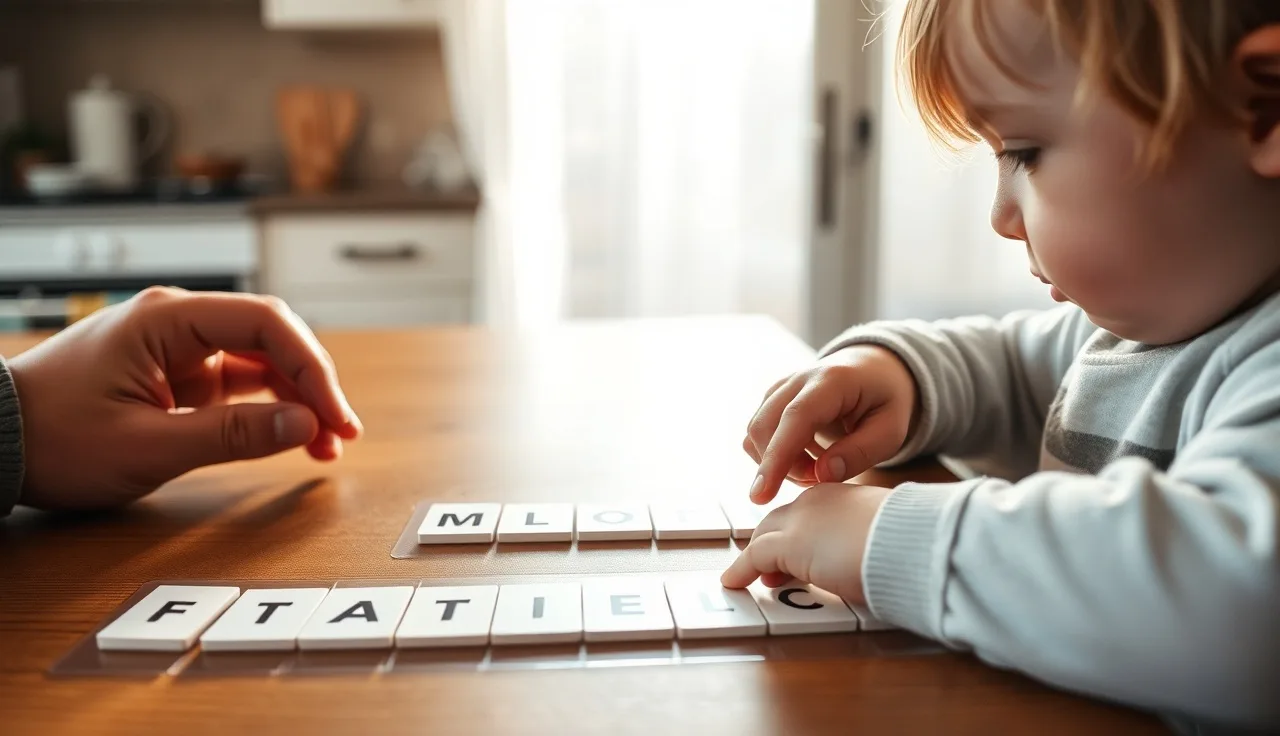
A blending board is a flat surface, usually cardstock, a laminated strip, or a wooden board, split into columns that match the positions of sounds in a syllable: onset, vowel, and ending. Letter cards slide into each column one at a time while the teacher says each sound out loud. The student watches the sounds pile up left to right, then sweeps all three together into a spoken word.
That left-to-right motion matters more than it looks. The Orton-Gillingham (OG) approach rests on the idea that reading gets learned through visual, auditory, and kinesthetic channels working at once. Samuel Orton and Anna Gillingham built the method in the 1930s and 1940s for students whose phonological processing doesn't develop automatically [1]. The board is the kinesthetic anchor for the blending skill.
Blending is one of the hardest phonological awareness tasks for kids with signs of dyslexia. Phoneme blending means holding separate sounds in working memory and merging them into a whole, which is a heavy cognitive load for a child who already struggles with phonological dyslexia. The board cuts that load by putting the memory outside the head: the sounds sit on the table while the child assembles them.
The board has no required format. Some tutors use white cardboard with three taped columns. Others buy pocket-chart boards with laminated tiles. A few use digital slide decks. The physical version usually wins because the drag of the card across the board adds a sensory channel a screen tap can't.
Why does blending feel so hard for struggling readers?
If your child can say every sound in "cat" but still can't hear that those sounds make "cat," you're watching a phonological processing gap happen live. It isn't a comprehension problem. It isn't laziness. It's a breakdown in phoneme blending, the ability to merge discrete speech sounds into a recognizable word.
The National Reading Panel's 2000 report found that phonemic awareness, the family of skills that includes blending, is one of the two strongest predictors of early reading success, alongside phonics [2]. Blending specifically predicts how fast a child moves from decoding letter by letter to reading words as whole units.
Kids with phonological dyslexia and those with a rapid naming deficit both struggle here, but for different reasons. Phonological dyslexia adds noise to the sound-storage step: the child can't hold /k/ /æ/ /t/ clearly enough to blend them. A rapid naming deficit is a retrieval-speed problem: the child knows the sounds but can't pull them together fast enough to feel like reading. The board helps both because it slows the process down and gives every sound a physical home.
Research from Florida State University published in Scientific Studies of Reading found that explicit, systematic phonics instruction with blending practice produces much larger gains for at-risk readers than instruction that treats blending as incidental [3]. The board is the physical mechanism that explicit practice runs on in OG-based tutoring.
How does a blending board actually work step by step?
Here is the standard OG blending board routine. You don't need a certification to run it, though a real OG program should be overseen by someone trained in the approach.
Step 1: Set up the board. Lay it out horizontally. For CVC words (consonant-vowel-consonant), you use three columns. For CCVC or CVCC words, add a fourth.
Step 2: Place the onset card. Slide the first consonant into the left column and say its sound: "/k/." Ask the child to repeat it.
Step 3: Add the vowel. Slide the vowel card into the middle column. Say "/æ/." Sweep your finger from onset to vowel and blend just those two: "/kæ/."
Step 4: Add the rime. Slide the final consonant into the right column. Say "/t/."
Step 5: Full sweep. Start at the left edge of the first card and drag your finger smoothly across all three in one unbroken motion while you say "cat." The continuous finger movement cues the child to produce a continuous blend, not three choppy sounds.
Step 6: Student repeats with their own finger sweep. This is the kinesthetic step. The child's own finger moving left to right while they blend puts the direction and the merging motion into muscle memory.
Once the child can blend three-phoneme words with confidence, you build to four-phoneme blends, then consonant clusters, then long vowel patterns. The board stays the same. Only the cards change. That's the point. New phonics patterns show up inside a familiar, low-threat structure.
One common mistake: sweeping too fast. The finger drag should take about one second per word. Slower feels unnatural. Faster defeats the purpose. You're teaching the child what blending feels like, not testing whether they already know it.
What cards and materials do you need to make one at home?
You need almost nothing. Here's a workable home setup.
| Item | Cost | Notes |
|---|---|---|
| White cardstock (letter-size) | $0.10/sheet | Cut into 1x1.5 inch tiles |
| Laminator or packing tape | $25 one-time or free | Tape over each tile to make it durable |
| Washable marker | $1 | Write letters, wipe, reuse |
| Tape to mark columns | $0 | Painter's tape on a table or a piece of cardboard |
| Pre-printed tile sets (printable PDFs online) | $0-$5 | Many OG tutors share free sets |
If you want something pre-made, blending board kits run $8 to $18 on major retail sites as of mid-2025. The price gap reflects whether tiles come included and whether the board is magnetic. Magnetic is nicer but not necessary.
The one real choice you have to make is how to organize the tiles: by phoneme family or alphabetically. Most OG practitioners go by phoneme family, keeping all the short-vowel tiles in one color and all the consonant digraphs in another. The color-coding isn't decoration. It tells the child which category of sound they're handling before they even read the letter.
If your child has a formal IEP and gets OG-based services at school, the school provides the materials. But a five-minute home session three times a week is one of the highest-return things a parent can do. Reading research keeps showing that distributed practice, short sessions spread across days, holds up better than longer, less frequent sessions [4].
Who should use a blending board and when?
The honest answer: any child learning to decode in an OG or structured literacy program, and any child stuck on the blending step. That's a wide net.
More precisely, blending boards do the most for these groups.
Kids in kindergarten through second grade building their first phonics skills. Blending CVC words is a kindergarten standard in most states [5]. If a child isn't there by the middle of first grade, a blending board is a reasonable intervention tool.
Kids with diagnosed dyslexia. Dyslexia affects roughly 15 to 20% of the population according to the Yale Center for Dyslexia and Creativity, and its core deficit is phonological processing [6]. Blending is a phonological task. This is instruction aimed straight at the deficit.
Kids with an IEP who get specialized literacy services. Under IDEA (20 U.S.C. § 1400 et seq.), students with disabilities are entitled to a Free Appropriate Public Education that includes specially designed instruction [7]. If your child's IEP has a reading goal tied to phonemic awareness or decoding, you can ask the team to name blending board practice in the service delivery. Schools don't have to use a specific tool, but they do have to use evidence-based methods.
English language learners who are also learning to decode. The physical scaffold supports the task no matter how much vocabulary the child has yet.
Blending boards do less for kids who blend reliably but struggle with fluency or comprehension. If your child can decode "cat" but reads 40 words per minute when 90 is the grade expectation, the bottleneck is probably fluency, not blending. A different tool fits that.
Not sure dyslexia is even in play? A formal dyslexia test or a broader learning disability test can point you toward the right interventions.
How does a blending board fit into a full Orton-Gillingham lesson?
OG lessons follow a predictable shape, and the predictability is on purpose. Working memory is the child's scarcest resource, so the lesson sequence never changes. Here is where the blending board lands in a standard session.
1. Review cards (2-3 min): Flash phonogram cards the child already knows, both visual-to-sound and sound-to-symbol. 2. New teaching (5 min): Introduce one new grapheme-phoneme correspondence. 3. Blending board (5-8 min): Blend the new pattern with known phonemes into real and nonsense words. 4. Word reading (5 min): Read words and sentences from a decodable list. 5. Spelling (5 min): Dictate sounds, then words, then a sentence. The child encodes what they just decoded. 6. Oral reading (5 min): Read from a decodable reader at the child's level.
The blending board is the bridge between isolated phoneme knowledge and real word reading. Without it, step 4 lands too fast for many kids. They know /b/ and /æ/ and /t/, but that doesn't automatically produce "bat" in their heads. The board gives the synthesis step its own moment.
A full OG session runs 45 to 60 minutes in a clinic or school. A parent doing informal practice at home can run only the blending board step in 5 to 8 minutes and still get real value, especially when the child gets the formal lesson at school and the home session reinforces it.
For supplemental materials to sit alongside home practice, the ReadFlare reading toolkit has printable phonics tools built for structured literacy, and they pair well with a homemade blending board.
What does the research say about blending instruction and dyslexia outcomes?
The research base here is solid. Phonemic blending isn't a side activity in OG. It's one of the core practices that makes structured literacy work for kids with dyslexia.
A 2019 meta-analysis in the Journal of Learning Disabilities looked at 22 studies of structured literacy interventions for students with dyslexia and found a mean effect size of 0.81 for phonemic awareness outcomes, which is a strong effect by education research standards [8]. Blending was among the most commonly taught phonemic awareness skills across those studies.
The What Works Clearinghouse, run by the U.S. Department of Education's Institute of Education Sciences, reviewed the evidence for systematic phonics programs and rated explicit blending instruction as having strong evidence for foundational reading skills [9].
The International Dyslexia Association's Knowledge and Practice Standards state: "Blending and segmenting phonemes, including with manipulative materials, should be explicitly taught." The phrase "manipulative materials" covers what most OG tutors call the blending board [10].
Nobody has run a randomized controlled trial testing the blending board as a standalone tool, and that's worth saying plainly. The evidence is for the broader practice of explicit blending instruction delivered through multisensory methods. The board is the delivery mechanism. The instruction is what the research validates.
One study makes the point clearly. Torgesen and colleagues (2001) followed 60 severely reading-disabled students through 67.5 hours of intensive OG-based intervention over 8 weeks and found average word-reading gains of 1.4 grade levels [11]. That's a dramatic result, and it came from a program where blending practice ran daily.
How is a blending board different from other phonics tools like word wheels or letter tiles?
Parents see a lot of phonics tools and fairly wonder whether they're buying duplicates. Here's the honest comparison.
| Tool | Primary Skill | Multisensory? | Blending Focus? | Best For |
|---|---|---|---|---|
| Blending board | Phoneme blending | Yes (visual + kinesthetic) | Yes, explicit | Structured blending drill |
| Word wheel | Rime pattern recognition | Visual only | Partial | Practicing word families |
| Letter tiles (e.g., Bananagrams) | Spelling/phonics generally | Tactile + visual | No | Free exploration, word building |
| Sound boxes (Elkonin boxes) | Phoneme segmentation | Tactile | No, opposite direction | Spelling/encoding |
| Magnetic letters | Word building, spelling | Tactile + visual | No | Flexible, many skills |
The blending board is the only tool here designed for the blending direction, sound to print. Elkonin boxes do the reverse: the child hears a word and pushes one chip into a box per sound. Both matter, but they train opposite halves of the same skill.
Letter tiles like Bananagrams are fun and worth owning, but they don't structure the blending process. A child can arrange tiles into "cat" without ever blending the phonemes, so the tool can quietly reinforce whole-word guessing instead of phoneme-by-phoneme decoding.
For dolch sight words and first grade sight words, a blending board matters less. Many sight words carry irregular spellings that resist the sound-by-sound sweep. Use sight word flashcards or sight words worksheets for those. The blending board is for the decodable words where phonics rules hold.
Can a parent use a blending board without OG training?
Yes, as long as you're clear about what you're doing and what you're not.
A parent running a daily 5 to 8 minute blending board session is doing supplemental practice, and that's genuinely useful. Reading research is clear that transfer of skills needs practice volume. A child who blends once a week at school and never at home gets far less practice than one who does a short home session every day.
What you can't replicate at home without training is the full diagnostic-prescriptive OG approach: ongoing assessment of which phonemes the child has mastered, which error patterns are surfacing, and how to sequence new phoneme introductions. Certified OG tutors (AOGPE credentialed practitioners) learn this sequence over 60+ hours of training and practicum [1].
The safe move is to use the blending board only with phoneme-card sets that match what the child is already learning at school or with a tutor. Ask the teacher or tutor which phonemes are current and build your home deck to match. That way you reinforce the lesson sequence instead of accidentally introducing patterns out of order.
If your child is on an IEP, the school's OG specialist can tell you exactly where the child sits in the scope and sequence. That information is yours. You can ask for it at any IEP meeting or in writing at any time under IDEA [7].
Parents who want more structure can look at the ReadFlare parent advocacy kit, which has guidance on asking the right questions at IEP meetings and knowing what the school's literacy program should include.
How do blending boards connect to IEP goals and school-based OG services?
If your child gets OG-based reading intervention through an IEP or 504 plan, the blending board is almost certainly already part of in-school instruction, even if nobody has used the name with you.
Under IDEA (20 U.S.C. § 1401(9)), a Free Appropriate Public Education must be based on peer-reviewed research to the extent practicable [7]. Structured literacy with explicit blending instruction meets that bar. The What Works Clearinghouse review above, along with the National Reading Panel report, gives schools the evidence to include it in IEP programming.
A few things parents should know about the IEP connection.
You can ask the school to name the specific intervention program and confirm it includes explicit blending instruction. If the school uses a program accredited by the IDA, it will include blending board or equivalent practice.
OG is a method, not a single program. Wilson Reading System, Barton Reading, All About Reading, SPIRE, and RAVE-O all draw on OG principles and include blending work. They aren't identical, but they share the explicit, systematic, multisensory structure [10].
Progress data matters. Your child's IEP should carry measurable phonics goals. A goal like "student will blend three-phoneme words at 90% accuracy during blending board practice" is specific enough to track. Vague goals like "student will improve reading" aren't measurable and should be revised.
Frequency and duration matter. Research supports daily or near-daily practice. If the IEP offers blending instruction twice a week for 20 minutes, that may fall short for a child with significant phonological processing deficits. You can request a change in service frequency through the IEP amendment process.
If you suspect a reading disability that hasn't been evaluated, a formal learning disability test through the school (which must be provided free under IDEA) or a private evaluation can clarify what's going on.
What mistakes do parents and tutors make with blending boards?
A few patterns show up again and again.
Stopping at three phonemes too soon. Many kids blend CVC words fine, then hit a wall on CCVC words ("stop," "frog") or CVCC words ("lamp," "bend"). Moving to four-phoneme blends before the child is solid on three guarantees frustration. But staying on CVC words forever doesn't build the skills the child needs for second- and third-grade text. Push the progression, one phoneme at a time.
Skipping nonsense words. OG lessons deliberately use nonsense words like "vat," "blem," and "stroft." This matters because it forces the child to decode phonemically instead of pulling the word from memory. Kids with dyslexia often compensate by memorizing whole words. Nonsense words go around that compensation and show the real phonics skill.
Using the board without the auditory component. Some parents place tiles silently and wait for the child to blend without hearing each phoneme modeled first. OG explicitly requires the teacher to say each sound while placing its card. Visual-only input kills the multisensory purpose.
Letting the child look away. Watching their own finger sweep across the cards is part of the kinesthetic encoding. If a child is turned sideways or staring at the ceiling, redirect them gently. The eyes-on-cards rule isn't fussiness. It's half the learning mechanism.
Introducing too many new patterns at once. One new grapheme-phoneme correspondence per lesson is the OG standard. Stacking two or three new patterns onto one session guarantees confusion and doesn't speed up learning.
Where can you get a blending board and what should you pay?
You have three routes: make one, print one, or buy one.
Make one: 10 minutes, a piece of cardboard, a ruler, and a marker. Tape three columns with painter's tape. Cut cardstock tiles about 1.5 inches wide. Write graphemes on them with a black marker. Total cost is near zero if you have any of these on hand.
Print one: Search "OG blending board printable" and you'll find free PDF sets from teacher-marketplace sellers and OG practitioner blogs. Some are free. Structured sets with full scope-and-sequence tile decks run $3 to $8. Print on cardstock, laminate, cut.
Buy one: Pre-made kits with a laminated board and tile sets run $8 to $18 on Amazon and specialty reading stores as of mid-2025. Magnetic versions run $15 to $25 and add tiles that stay put. The magnetic feature helps if the child tends to knock tiles off the table, which happens often with kids who have fidgeting or attention difficulties alongside their reading struggles.
You do not need to spend more than $20 for a working blending board setup. Anyone charging much more is selling you looks or branding, not better instructional material. The research behind blending board practice ran on simple laminated strips, not premium products.
If cost is a barrier and your child has an IEP, the school is responsible for providing instructional materials during school hours. For home practice, many public library systems have maker spaces with laminating machines, and plenty of OG tutors will share printable tile sets with parents at no charge.
Frequently asked questions
What age is a blending board appropriate for?
Blending boards are used most with children ages 5 through 10, roughly kindergarten through fourth grade. Older students who never solidified phoneme blending, including middle schoolers with dyslexia who learned to compensate with whole-word guessing, benefit from the same tool. It feels more age-neutral when framed as a tutoring technique rather than a game.
Is an Orton-Gillingham blending board the same as a sound wall?
No. A sound wall is a classroom display that organizes phonemes by articulation point, showing how each sound is made in the mouth. A blending board is a hands-on tool used in real time during a lesson. They complement each other but do different jobs. The sound wall is a reference. The blending board is a practice mechanism.
Can I use a blending board app instead of a physical board?
You can, and several apps copy the sliding-card motion on a touchscreen. The honest tradeoff is that a swipe doesn't give the same proprioceptive feedback as physically dragging a card across a surface. For kids who need multisensory input most, the physical board tends to work better. Still, a digital option beats no practice, especially for travel or screen-time motivation.
My child can blend slowly but not at normal reading speed. Does a blending board help with fluency too?
Indirectly, yes. The board builds accuracy first, and fluency usually follows accuracy with enough practice. If your child is accurate but slow, you can speed up the drill with a gentle timer goal, like blending 10 words in 2 minutes, and track it over weeks. But if slow blending persists despite accuracy, a fluency-specific intervention like repeated reading or paired reading may need to run alongside OG practice.
Does a blending board work for kids with both dyslexia and ADHD?
Yes, and the hands-on format often works better for kids with attention difficulties than worksheets or screen drill. Short 5 to 8 minute sessions, the standard blending board slot in an OG lesson, fit most kids' attention windows. The tactile card manipulation also gives fidget-prone children something constructive to do with their hands during instruction.
How many phoneme cards should I start with?
Start with the six to eight consonants and three to four short vowels the child already knows, and build CVC words from those. Introducing new phoneme cards before the child has secured those sounds in isolation creates double difficulty. A reasonable starting deck has about 15 tiles. Expand it by two to four tiles at a time as the child masters new grapheme-phoneme correspondences in their formal instruction.
My child's school uses a different reading program, not OG. Can I still use a blending board at home?
Yes. The blending board technique isn't exclusive to OG. It shows up in Wilson Reading, Barton, All About Reading, and other structured literacy programs. The blend-by-sliding-cards motion is generic enough to pair with any systematic phonics scope and sequence. Just make sure the phoneme cards you use at home match what the child is learning at school so you're reinforcing, not confusing.
Is a blending board the same as a word-family slider?
Close, but not identical. A word-family slider swaps out onset consonants against a fixed rime, like changing b-at to c-at to h-at. A blending board works with more flexible card combinations and teaches the blending motion itself across any phoneme combination, more than rime patterns. Word-family sliders are useful but narrower in scope.
Can I request that the school send a blending board home for practice?
You can ask, and many OG tutors and special education teachers are glad to send home a printed set or tell you which phoneme tiles to make. If your child has an IEP, home practice recommendations can go in the parent involvement section of the IEP document. The school isn't legally required to provide take-home materials, but most will cooperate because parent practice speeds up progress.
What is the difference between blending phonemes and blending onset and rime?
Phoneme blending merges every individual sound: /k/ + /æ/ + /t/ = "cat." Onset-rime blending merges just the first consonant sound with the vowel-plus-ending unit: /k/ + /æt/ = "cat." Onset-rime blending is developmentally easier and a good starting point for kindergartners. Phoneme blending is harder and is the target skill for reading. A blending board can do both by adjusting how many cards go in the vowel-rime column.
How long before a child shows improvement from blending board practice?
Most structured literacy research, including the Torgesen et al. 2001 study, shows measurable phonics gains within 8 to 12 weeks of consistent daily practice. Short home sessions alone won't match clinical-intensity results, but parents who run 5-minute sessions five days a week typically see accuracy gains within four to six weeks. You can track it by counting how many words the child blends correctly in a 3-minute session.
Do blending boards work for languages other than English?
Yes. The technique works for any alphabetic language. Spanish, French, German, and Portuguese all have regular enough grapheme-phoneme correspondences to fit a blending board approach. Spanish phonics is more consistent than English, so blending board practice often shows faster results in Spanish than in English for bilingual students.
Should vowel tiles be a different color from consonant tiles?
Most OG practitioners use red tiles for vowels and white or blue for consonants. The color-coding helps the child recognize the role of each card before reading it, which lowers the working memory load. It also lets the teacher see at a glance whether the child is handling vowel sounds correctly, since vowels are the most common error source in early decoding. A small detail that pays off.
Sources
- Academy of Orton-Gillingham Practitioners and Educators (AOGPE), About OG: Samuel Orton and Anna Gillingham developed the OG approach for students with phonological processing difficulties; AOGPE credentials require 60+ hours of training and practicum.
- National Institute of Child Health and Human Development, National Reading Panel Report (2000): Phonemic awareness (including blending) and phonics are the two strongest predictors of early reading success.
- Schatschneider C et al., Scientific Studies of Reading, Florida State University phonics blending research: Explicit, systematic phonics instruction including blending practice produces significantly larger gains for at-risk readers than incidental instruction.
- Institute of Education Sciences, What Works Clearinghouse, Foundational Skills to Support Reading: Distributed practice (short sessions across multiple days) produces more durable skill retention than massed practice; systematic phonics including blending has strong evidence of effectiveness.
- Common Core State Standards Initiative, English Language Arts Standards, Reading: Foundational Skills: Blending sounds to read CVC words is a kindergarten foundational reading standard in most states.
- Yale Center for Dyslexia and Creativity, Dyslexia FAQ: Dyslexia affects 15-20% of the population and its core deficit is phonological processing.
- U.S. Department of Education, IDEA statute text, 20 U.S.C. § 1400 et seq.: IDEA guarantees a Free Appropriate Public Education including specially designed instruction based on peer-reviewed research; 20 U.S.C. § 1401(9) defines FAPE requirements.
- Stevens E.A. et al., Journal of Learning Disabilities, 2019 meta-analysis of structured literacy for dyslexia: Meta-analysis of 22 structured literacy intervention studies found mean effect size of 0.81 for phonemic awareness outcomes including blending.
- What Works Clearinghouse, U.S. Dept. of Education IES, Systematic Phonics Instruction review: WWC rated explicit blending instruction within systematic phonics as having strong evidence for foundational reading skills.
- International Dyslexia Association, Knowledge and Practice Standards for Teachers of Reading (2018): IDA standards state: 'Blending and segmenting phonemes, including with manipulative materials, should be explicitly taught.'
- Torgesen J.K. et al., Journal of Learning Disabilities, 2001, intensive OG intervention study: 60 severely reading-disabled students showed average word-reading gains of 1.4 grade levels after 67.5 hours of intensive OG-based intervention over 8 weeks.