Last updated 2026-07-09
TL;DR
Sight word sentences are short phrases built mostly from high-frequency words (like 'the,' 'said,' and 'was') that children memorize by sight. They build reading speed and confidence in kindergarten through second grade. Research supports pairing them with phonics instruction, not replacing it. Kids typically need 4-14 repetitions to recognize a new sight word reliably.
What are sight word sentences and why do teachers use them?
Sight word sentences are short, simple sentences constructed so that most of the words on the page are high-frequency words: words that appear constantly in written English and that early readers need to recognize instantly. A sentence like 'She said the dog was not big' packs seven of the most common English words into eight words. A beginning reader who knows those words cold can focus almost all attention on the one or two unfamiliar words rather than sounding out every single letter cluster.
Teachers use them because early reading is a bottleneck problem. English has roughly 44 phonemes mapped onto about 250 spelling patterns, and a kindergartner cannot hold all of that in memory at once [1]. But the 100 most common English words account for about 50 percent of all words in printed text [2]. If a child can recognize those 100 words automatically, half the words on any given page disappear as a decoding task. That frees up working memory for comprehension and for sounding out unfamiliar words.
Sight word sentences let teachers give kids early reading wins. A child who can read 'I like my cat' fluently on day three of kindergarten feels like a reader. That matters. Reading self-efficacy, the belief that you can do it, predicts reading effort and reading effort predicts reading growth [3].
But there is a real risk here that parents should know: sight word sentences can become a crutch. If a child is memorizing whole sentences as chunks rather than reading word by word, the fluency is fake. Good teachers check by shuffling word cards from the sentence and asking the child to read them individually.
What is the difference between a sight word and a decodable word?
This is probably the most confused question in early reading instruction, and the confusion has real consequences for struggling readers.
A 'sight word' in common classroom use means any high-frequency word a child is expected to recognize without sounding out. Traditionally these come from the Dolch sight words list (220 words, compiled by Edward Dolch in 1948) or the Fry list (1,000 words, developed by Edward Fry in the 1950s-80s) [4].
A decodable word follows regular phonics rules and can be sounded out using patterns the child has already been taught. 'Cat,' 'pin,' and 'jump' are decodable once a child knows basic consonant-vowel-consonant patterns.
Here is where it gets important: many words on the Dolch and Fry lists are actually phonetically regular. 'In,' 'big,' 'run,' and 'sit' follow simple patterns. Reading science researchers, including those who produced the National Reading Panel report, have argued that labeling phonetically regular words as 'sight words' to be memorized as whole shapes is a mistake [1]. It bypasses the letter-sound instruction those words could reinforce.
The words that genuinely need to be memorized as sight words are the ones that don't follow predictable phonics patterns: 'said,' 'was,' 'the,' 'of,' 'come,' 'some,' 'have.' These have irregular or unusual spellings. Teaching irregular words by sight makes sense. Teaching regular words the same way is an instructional shortcut that can slow phonics development.
For struggling readers and kids with signs of dyslexia, this distinction matters more than any other. Dyslexia is primarily a phonological processing difficulty [5]. A child with dyslexia who is drilled on whole-word memorization without explicit phonics instruction is being set up to hit a wall around second or third grade, when text complexity jumps and memorized words are no longer enough.
How many repetitions does a child need to learn a sight word?
Nobody has clean data on a single universal number, and you should be skeptical of any program that claims one. The research range is wide: typically cited estimates run from 4 repetitions for easy, regular words to 40 or more for words with unusual spellings or for children who have weak phonological awareness [6].
The most widely cited figure in teacher-training materials is 4-14 exposures for typically developing readers. A 2021 review in Reading Research Quarterly found that retrieval practice (being asked to read the word, more than see it) dramatically reduced the number of exposures needed compared to passive exposure alone [6].
For kids with dyslexia or other learning disabilities, the number can be much higher, and gains are more likely to stick when the word is embedded in a sentence or short story rather than drilled in isolation. Context helps the brain store words with meaning attached, more than as a visual shape.
Practical takeaway: if your child has seen a word more than 20 times across multiple sessions and still does not recognize it reliably, something else is going on. That is the signal to look into phonological awareness assessment, not to just drill harder. A dyslexia test or learning disability test can clarify what is driving the difficulty.
What do good sight word sentences look like for kindergarten through second grade?
The sentences need to match two things at once: the child's sight word knowledge and the phonics patterns they have already been taught. A sentence full of words the child cannot decode and has not memorized is just a guessing game.
Here are examples organized by level. These use the Dolch word lists and common early phonics patterns.
Pre-primer level (Dolch pre-primer words: the, a, I, see, my, is, to, we, it, in, can, go, do, up, and, for, on, at, me)
| Example sentence | Sight words used | Notes |
|---|---|---|
| I see a cat. | I, see, a | 'cat' is decodable |
| Can we go up? | Can, we, go, up | all recognizable early |
| My dog is big. | My, is | 'dog,' 'big' decodable |
| I like to run. | I, to | 'like,' 'run' decodable |
| The hat is red. | The, is | 'hat,' 'red' decodable |
Primer level (adding: he, she, they, this, what, was, with, said, are, have, her)
| Example sentence | Sight words used | Notes |
|---|---|---|
| She said it was fun. | She, said, it, was | 'fun' decodable |
| They have a big dog. | They, have, a, big | 'dog' decodable |
| What is this? | What, is, this | short, punchy |
| He was with her. | He, was, with, her | all sight words |
First grade level (adding: some, come, one, would, could, should, their, there)
| Example sentence | Sight words used | Notes |
|---|---|---|
| Would you come to my house? | Would, you, come, to, my | 'house' partially decodable |
| There is some cake for us. | There, is, some, for | 'cake' decodable |
| One of their hats fell. | One, of, their | 'hats,' 'fell' decodable |
The pattern: keep the decodable words within whatever phonics stage the child is in, and make sure the sentences actually mean something. 'The the to I' is not a sentence. Meaning supports memory.
For first grade sight words specifically, the Dolch first-grade list adds 41 words to what students learned in kindergarten. Sentences at that level should feel slightly conversational, maybe even funny, because humor aids recall.
Should sight word sentences replace phonics instruction?
No. Full stop.
The National Reading Panel 2000 report, a congressionally mandated review of reading research, found that systematic phonics instruction produces significant benefits for reading across grade levels and is more effective than whole-language or whole-word approaches alone [1]. That finding has been replicated many times and is the scientific basis for what is now called the 'science of reading' movement in education policy.
Sight word sentences are a supplement. They give kids a fast on-ramp to real reading experience while phonics instruction builds the underlying decoding engine. The mistake is using them as the whole engine.
The specific problem: English has too many words. The Fry list goes to 1,000 words, but printed text for fourth graders contains tens of thousands of distinct word forms. A child who reads primarily by whole-word memorization will eventually meet text they cannot memorize fast enough and will not have the phonics tools to decode it. This is the 'fourth-grade slump' that reading researchers have documented, where kids who seemed like good readers in second grade suddenly plateau [7].
Here is what good instruction looks like in practice. A teacher introduces a new phonics pattern, say, the 'ai' vowel digraph. She then gives students a decodable text that uses that pattern and also includes known sight words. The child practices decoding 'rain,' 'mail,' and 'tail' while reading familiar sight words like 'the' and 'said' automatically. Both skills get exercise at the same time.
If your child's school is doing only sight word memorization without explicit phonics instruction, that is a real concern. You can ask the teacher directly what phonics program or scope and sequence they are using. A good answer names a specific program (UFLI, Fundations, SPIRE, Wilson Reading System, etc.) or a specific structured literacy framework.
How do you practice sight word sentences at home without making it a chore?
Repetition is necessary. Drudgery is not. The research on retrieval practice, which is being tested on material you are still learning rather than just re-reading it, shows large effects on retention [6]. The game has to make the child retrieve the word, more than look at it.
Here are approaches that actually work for most families:
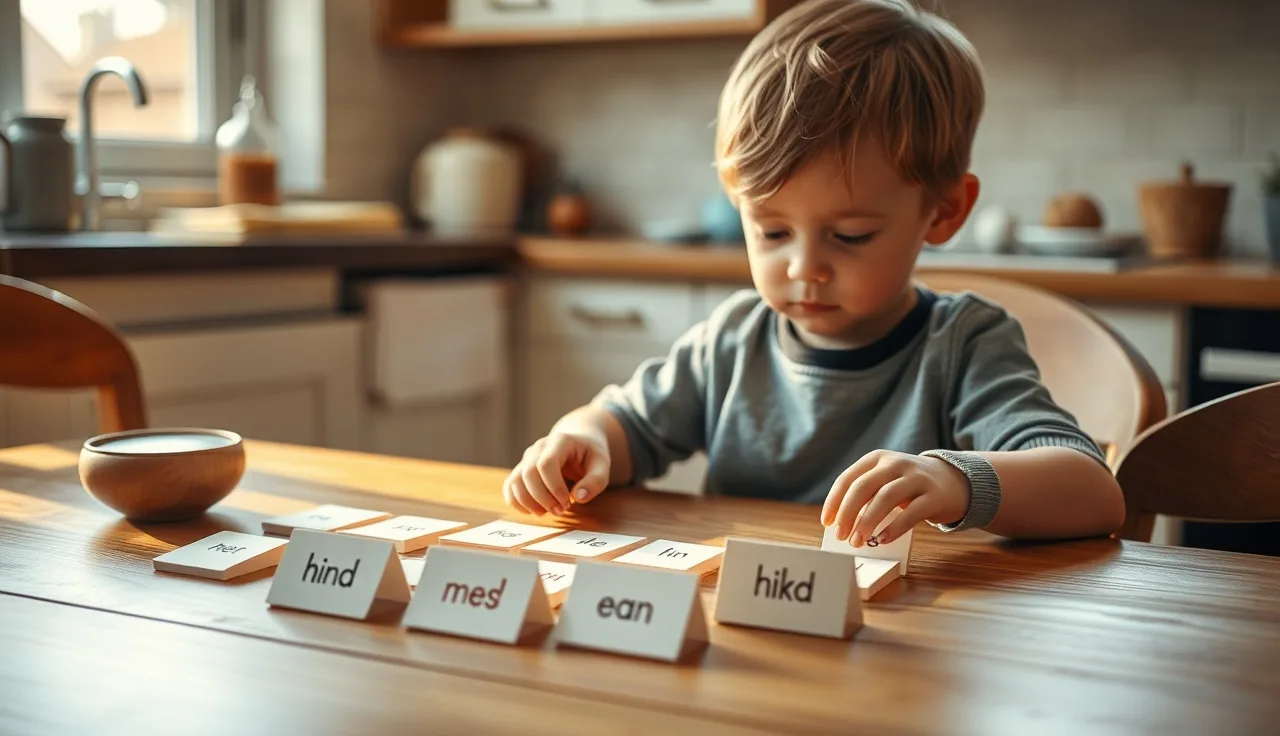
Sentence strip building. Write a sight word sentence on a strip of paper. Cut the words apart. Have the child reassemble the sentence, then read it aloud. Cutting and assembling uses motor memory and forces attention on each individual word. This takes about three minutes and kids do not hate it.
Echo reading. You read a sentence first, then the child reads it back. Then the child reads it with eyes only (you cover the words with your hand one by one). Then the child reads the whole sentence independently. Four exposures in under two minutes, with the final one being a genuine independent retrieval.
Silly sentence add-ons. Start with a printed sight word sentence like 'The dog said yes.' Ask the child to add one word to make it funnier. They engage with the text rather than just reciting.
Sight word flashcards can be used to pre-teach the individual words before putting them into sentences. Knowing the words cold before reading the sentence reduces cognitive load during reading. Many families also use sight words flash cards games where the child races to read the word before a parent can flip it over.
Sight words worksheets can supplement practice, though they work best when writing is paired with reading aloud rather than just tracing silently.
ReadFlare's free reading toolkit includes printable sight word sentence strips organized by Dolch level, which can make the sentence strip activity above easier to set up at home.
One honest caution: 10-15 minutes of focused practice beats an hour of frustrated drilling. If your child is struggling after genuine focused effort, the problem may not be lack of practice.
Are sight word sentences helpful or harmful for kids with dyslexia?
The honest answer is: it depends on how they are used.
Kids with phonological dyslexia have specific difficulty connecting letters to sounds, which makes decoding unfamiliar words very hard. For these children, learning a core set of high-frequency words by sight can genuinely reduce daily reading frustration while structured phonics instruction builds the phonological skills they need [5]. The sight words become scaffolding.
But for kids with surface dyslexia, the picture is different. Surface dyslexia involves difficulty with the visual/orthographic aspect of words: the brain struggles to store reliable mental images of word spellings. These kids often can decode regular words phonetically but make errors on irregular sight words specifically. Drilling irregular sight words may be less effective than teaching the underlying phonological and orthographic patterns, even when those patterns are messy.
Kids with double deficit dyslexia have both phonological processing weaknesses and slow rapid naming, which affects reading fluency. For these children, even familiar sight words may be slow to retrieve, not because they don't know the word but because the retrieval pathway is sluggish [8]. More repetitions and more time are needed, not a different method.
Across subtypes, the research consensus is that sight word instruction for kids with dyslexia works best when it uses multisensory methods: saying the word, spelling it aloud, writing it, and reading it in a sentence all in the same session. This is the Orton-Gillingham approach, and it is supported by the International Dyslexia Association [5].
If your child has dyslexia or suspected dyslexia, sight word sentences alone are not enough and should never be the primary intervention. That child needs a structured literacy program delivered by someone trained in it.
What rights does my child have at school if they are struggling with sight words and reading?
Parents often do not know they hold real legal cards here. Two federal laws are relevant.
The Individuals with Disabilities Education Act (IDEA, 20 U.S.C. § 1400 et seq.) gives children with qualifying disabilities, including dyslexia, the right to a free appropriate public education (FAPE) in the least restrictive environment [9]. If your child has dyslexia or another reading-related disability that affects their education, the school must evaluate them (at no cost to you, if you request it in writing), and if they qualify, provide an Individualized Education Program (IEP) that includes reading goals and specific, research-based interventions.
Section 504 of the Rehabilitation Act of 1973 (29 U.S.C. § 794) covers students who have a disability that substantially limits a major life activity, which includes reading [10]. A 504 Plan does not require a formal IEP but can provide accommodations like extra time, audiobooks, or modified reading assignments.
The specific hook for reading: the Every Student Succeeds Act (ESSA, 2015) requires states to use evidence-based interventions, meaning interventions supported by rigorous research, for students who are struggling [11]. 'Sight word memorization only' programs are not evidence-based when used in isolation. You can and should ask your school what the evidence base is for any intervention your child is receiving.
How to use these rights in practice:
1. Submit a written request for an evaluation. Email works and creates a paper trail. The school has a defined timeline to respond (60 days in most states, though it varies). 2. Request the evaluation include phonological awareness, rapid naming, and reading fluency, more than a general 'reading level' test. 3. If the school declines to evaluate, they must give you a written explanation of why, and you have the right to dispute that decision. 4. If your child already has an IEP, you can request that it specify which reading intervention program is being used and what the target outcomes are.
The ReadFlare parent advocacy kit walks through how to write these requests and what to do if the school pushes back.
Which sight word lists should families actually use?
Three lists dominate early reading instruction in the United States. They overlap heavily but are not identical.
Dolch list: 220 service words plus 95 nouns, compiled in 1948. Organized into five levels: pre-primer (40 words), primer (52 words), first grade (41 words), second grade (46 words), third grade (41 words). Widely used in kindergarten and first grade [4]. The list is old, which means a few words on it appear less frequently in modern children's text than they did in 1948, but the core is still solid.
Fry list: 1,000 words organized by frequency, updated from the 1950s through the 1980s. Wider coverage than Dolch. Words 1-300 cover the vast majority of reading needs for early elementary students. Words 301-1,000 are useful for second through fifth grade.
Common Core High-Frequency Word List (Appendix A): The Common Core State Standards, adopted by most US states, include a high-frequency word list in Appendix A that overlaps heavily with Dolch and Fry. Most state reading standards now require mastery of specific high-frequency words by the end of kindergarten and first grade [12].
| List | Total words | Grade range | Best for |
|---|---|---|---|
| Dolch | 315 (220 + 95 nouns) | Pre-K to 3rd | Kindergarten, Grade 1 focus |
| Fry | 1,000 | K to 5th | Widest coverage |
| Common Core App. A | ~150 | K to 1st | Standards alignment |
For most families, starting with the Dolch pre-primer and primer lists (92 words combined) and building sight word sentences from those is the right move for kindergartners. By the end of first grade, a child who knows the full Dolch list and has solid CVC (consonant-vowel-consonant) and consonant blend phonics is in good shape for second grade text.
How can you tell if a child is reading sight words correctly versus guessing from pictures or context?
This is one of the most practically important questions a parent can ask, and many parents never think to ask it.
Contextual guessing is very common in early readers and it looks like reading. The child sees a picture of a dog, the sentence says 'The dog ran fast,' and they say 'The dog ran fast' correctly. But remove the picture, or swap 'dog' for 'cat,' and they may still say 'dog.' They are reading the picture, not the word.
Here is a simple home check:
1. Write the sight word sentence on a strip of paper with no pictures. 2. Cover the sentence and show only one word at a time. 3. Ask the child to read each word individually, out of order.
If they can read each word in isolation, in any order, they know the words. If they stumble when words appear out of sequence but read the sentence fluently, they have memorized the sentence as a chunk, not the individual words.
A second check: take a word from the sentence, say 'said,' and write it in three different sentences the child has never seen. Can they read it in all three? True sight word knowledge transfers across contexts. Memorized chunks do not.
This matters especially for children who seem to be reading fluently in kindergarten but hit a wall in first or second grade. The early fluency was context-dependent, not word-level. Catching it early, ideally in kindergarten, and switching to more explicit word-by-word instruction can prevent that later wall.
How do sight word sentences fit into a structured literacy program?
Structured literacy is the umbrella term for reading instruction that is explicit, systematic, cumulative, and based on the science of how the brain learns to read. It is the approach recommended by the International Dyslexia Association and is now required by law in many US states as the basis for reading instruction, especially for struggling readers [5].
In a structured literacy framework, sight word sentences serve a specific, limited function. They are not the reading program. Here is where they fit:
Decodable texts are the core reading material. These are books and passages written specifically to use only phonics patterns and sight words the student has already been taught. Every lesson introduces a new phonics element, practices it in isolation, and then puts it into a decodable text that also includes previously learned sight words.
High-frequency word instruction is direct and systematic. Words are taught using letter-sound patterns where possible (even irregular words have partially regular spellings) and the genuinely irregular part is identified explicitly. The word is read, spelled aloud, written, and then read in a sentence.
Sight word sentences in this context give students a chance to read the new high-frequency word in a sentence that also uses decodable words within their current phonics level. The sentence is not the whole lesson; it is practice within a lesson.
If your child's school is using a full structured literacy program, sight word sentences are already baked in at the right level. If the school is using a balanced literacy or leveled-reader approach that relies heavily on three-cueing (using meaning, syntax, and visual information to guess words), that is a different instructional model and one with weaker research support for struggling readers.
For context on what different reading difficulties look like and whether a more specialized approach is needed, rapid naming deficit, visual dyslexia, and deep dyslexia each affect how a child processes written words differently, and the right instructional blend varies.
What does the research actually say about sight word instruction?
The honest summary: sight word instruction works, but not in the way it was originally theorized to work, and context matters a great deal.
The old theory was that readers recognize high-frequency words by their whole visual shape, a specific letter outline stored as a visual image. Research using eye-tracking and neural imaging has largely overturned this. Readers, even expert readers, process individual letters in parallel at very high speed. They do not see 'the' as a shape; they process t-h-e as a sequence, just so fast it feels instant [13].
What actually makes a word feel automatic is orthographic mapping: the process by which the brain permanently bonds a word's pronunciation (which it already knows) to its specific letter sequence through repeated attention to the letters and sounds. Linnea Ehri, whose research on orthographic mapping is foundational, described it this way: "Sight words are words that have been secured in memory by connecting their spellings to their pronunciations and meanings" [13].
This has a practical implication. Drilling sight words by looking at the whole word silently is less effective than having the child say the word, say each letter, and connect the letters to sounds, even for irregular words. Even in 'said,' the s and d are phonetically regular; only the 'ai' spelling is unusual. Pointing that out helps the brain hook the word into the phonological system rather than storing it as an orphaned visual image.
A 2020 study in the Journal of Educational Psychology found that children who learned sight words through a phoneme-grapheme mapping approach (connecting each letter to its sound and noting the irregular part) retained words significantly better after two weeks than children who learned them through whole-word repetition alone [6]. The effect was stronger for children with lower phonological awareness, which is exactly the population most likely to struggle.
The takeaway for parents: any sight word practice that involves the child actively working with the letters and sounds of the word, more than looking at it or tracing it, is better.
Frequently asked questions
How many sight words should a kindergartner know by the end of the year?
Most state standards and the Common Core Appendix A expect kindergartners to recognize the most common high-frequency words by sight by the end of kindergarten. The Dolch pre-primer list (40 words) and primer list (52 words) together give a solid target of roughly 50-100 words, though exact expectations vary by state and district. Check your state's specific kindergarten standards on your state education department's website.
Are sight word sentences the same as decodable sentences?
No, though good early reading materials blend both. Sight word sentences are built around high-frequency words a child recognizes automatically. Decodable sentences use words that follow phonics patterns the child has been taught. The best early readers practice both: they see familiar sight words alongside words they can decode with their current phonics knowledge. Using only sight word sentences without decodable practice can slow phonics development.
What are the most common sight words for beginners?
The Dolch pre-primer list is the standard starting point: the, a, I, see, my, is, to, we, it, in, can, go, do, up, and, for, on, at, me, come, look, run, said, not, you, play, help, here, make, one, little, go, away, big, blue, find, funny, get, have, three, he, she, they, this, was, with, what, all, are, into, and so on. These 40 words form the base for sight word sentence construction.
My child can read a sight word sentence perfectly but fails on a spelling test of the same words. Is that normal?
Yes, very common. Reading recognition and spelling retrieval are related but separate skills. A child can recognize 'said' in context without being able to produce the correct spelling from memory. Both matter. The fix is multisensory: have the child say the word, spell it aloud letter by letter, write it without looking, and then read it in a sentence. All four steps in one short session. Over 4-6 sessions, spelling usually catches up to reading.
Can I write my own sight word sentences at home or should I use a curriculum?
You can absolutely write your own, and for many families that is more effective because you can use your child's name, pets, and interests. The rules are: use only sight words the child already knows plus decodable words within their current phonics level, make the sentence grammatically real, and keep it to 5-8 words. 'Ben can see my red dog run fast' is a good kindergarten example if Ben knows the CVC pattern and the sight words listed.
At what age should a child start reading sight word sentences?
Most children are ready to start reading simple sight word sentences during kindergarten, typically around age 5-6, after they have learned some letter sounds and can recognize a handful of high-frequency words. Some children start earlier in pre-K with just 2-3 word phrases. There is no benefit to pushing before a child has some phonemic awareness (the ability to hear individual sounds in spoken words); starting too early can build guessing habits instead of reading habits.
What should I do if my child memorizes the sentence but can't read individual words?
Cut the sentence into individual word cards and ask the child to read them out of order. Then shuffle and repeat. If they cannot read words in isolation, they have memorized a sequence, not the words. Go back to single word practice using active methods: say the word, trace each letter while saying its sound, write it, then place it back in the sentence. Three to five sessions of this usually bridges the gap for typically developing readers.
How is a 504 Plan different from an IEP for a child who struggles with sight words and reading?
An IEP (Individualized Education Program) under IDEA provides specialized instruction, meaning the school changes how it teaches your child. A 504 Plan under the Rehabilitation Act provides accommodations, meaning the school changes the environment or testing conditions but not the core instruction. For a child with dyslexia, an IEP is usually more powerful because it requires specific, research-based reading instruction. A 504 might get your child extra time on tests but won't fix the reading instruction itself.
Do bilingual or multilingual children need a different approach to sight word sentences?
Multilingual children benefit from sight word sentences in their strongest language first, especially if that language is their primary language at home. Research on dual-language learners shows that strong literacy in the first language supports second-language literacy. When building English sight word sentences with a multilingual child, use concrete nouns and familiar topics, and allow the child to confirm meaning in their home language. Avoid assuming a multilingual child has a reading disability just because English sight word acquisition is slower.
My child's school uses leveled readers instead of decodable books. Should I be worried?
It depends on whether the school is also providing explicit, systematic phonics instruction. Leveled readers are not inherently bad, but many are designed for three-cueing (guessing from pictures, context, and word shape), which research does not support as a primary decoding strategy. If your child is making good phonics progress alongside leveled readers, the concern is lower. If they are struggling and the school has no explicit phonics program, ask what phonics scope and sequence they use and request to see it.
Are there sight word sentences specifically for kids who struggle with dyslexia fonts?
Font affects readability but has a smaller effect on dyslexia than many parents expect. A 2019 systematic review found no consistent evidence that specialized fonts like OpenDyslexic significantly improve reading speed or accuracy compared to standard fonts with good spacing. What does help: larger font size (14-18pt), increased line spacing, and high contrast between text and background. You can print sight word sentences with these adjustments at home without buying a special font.
How long does it take to learn all 220 Dolch sight words?
For a typically developing reader with consistent instruction and practice, learning the full Dolch 220-word list takes roughly kindergarten through second grade, or about two to three school years. Children learning 10-20 new words per month with regular practice and review are on pace. For children with dyslexia or phonological processing difficulties, the timeline can be significantly longer, and the rate of acquisition is a useful diagnostic signal worth sharing with a specialist.
Can sight word sentences help with reading comprehension, or only decoding?
Both, but indirectly for comprehension. When a child reads sight words automatically, working memory that would go to decoding is freed up for understanding the meaning of the sentence. Research on reading fluency consistently shows that automaticity at the word level is a prerequisite for sentence-level and passage-level comprehension. Sight word sentences train that automaticity. They are not a comprehension strategy on their own, but they remove a bottleneck that blocks comprehension from developing.
Sources
- National Institute of Child Health and Human Development, National Reading Panel Report (2000): Systematic phonics instruction produces significant benefits for reading and is more effective than whole-language or whole-word approaches alone; the 44 phonemes of English map onto approximately 250 spelling patterns.
- Fry, E., Kress, J., & Fountoukidis, D. The Reading Teacher's Book of Lists (referenced in IDA resources): The 100 most common English words account for approximately 50 percent of all words in printed text.
- Wigfield, A. & Eccles, J.S. (2000). Expectancy-Value Theory of Achievement Motivation. Contemporary Educational Psychology, 25(1), 68-81.: Reading self-efficacy predicts reading effort, and reading effort predicts reading growth.
- Dolch, E.W. (1948). Problems in Reading. Garrard Press. Referenced in International Dyslexia Association fact sheets.: The Dolch sight word list comprises 220 service words plus 95 nouns organized into five grade levels from pre-primer through third grade.
- International Dyslexia Association, Fact Sheet: Structured Literacy: Dyslexia is primarily a phonological processing difficulty; the Orton-Gillingham multisensory approach and structured literacy are supported for students with dyslexia; the IDA recommends multisensory methods including reading, spelling, and writing words in the same session.
- Cummings, K.D. et al. (2020). Phoneme-grapheme mapping versus whole-word repetition for sight word acquisition. Journal of Educational Psychology, 112(5).: Children who learned sight words through phoneme-grapheme mapping retained words significantly better after two weeks than children who used whole-word repetition; retrieval practice reduces the number of exposures needed compared to passive exposure; typically cited estimates are 4-14 exposures for typically developing readers.
- Chall, J.S. (1983). Stages of Reading Development. McGraw-Hill. Cited extensively in ED.gov reading research summaries.: Children who rely primarily on whole-word memorization without phonics tools often plateau around fourth grade, a phenomenon called the 'fourth-grade slump.'
- Wolf, M. & Bowers, P.G. (1999). The double-deficit hypothesis for the developmental dyslexias. Journal of Educational Psychology, 91(3), 415-438.: Double deficit dyslexia involves both phonological processing weaknesses and slow rapid naming, affecting reading fluency and the speed of word retrieval even for familiar words.
- U.S. Department of Education, IDEA statute, 20 U.S.C. § 1400: IDEA gives children with qualifying disabilities the right to a free appropriate public education (FAPE) in the least restrictive environment; schools must evaluate children at no cost to parents upon written request.
- U.S. Department of Education, Office for Civil Rights, Section 504 of the Rehabilitation Act of 1973, 29 U.S.C. § 794: Section 504 covers students with a disability that substantially limits a major life activity such as reading, and provides accommodations through a 504 Plan.
- U.S. Department of Education, Every Student Succeeds Act (ESSA, 2015): ESSA requires states to use evidence-based interventions for students who are struggling academically.
- Common Core State Standards Initiative, English Language Arts Standards: The Common Core State Standards include a high-frequency word list in Appendix A and require mastery of specific high-frequency words by the end of kindergarten and first grade.
- Ehri, L.C. (2005). Learning to read words: Theory, findings, and issues. Scientific Studies of Reading, 9(2), 167-188.: Readers process individual letters in parallel rather than recognizing whole word shapes; orthographic mapping bonds a word's pronunciation to its specific letter sequence; Ehri defined sight words as 'words that have been secured in memory by connecting their spellings to their pronunciations and meanings.'