Last updated 2026-07-09
TL;DR
Zingo Sight Words is a bingo-style card game by ThinkFun that covers 66 high-frequency words drawn from the Dolch list. It works best as a low-stress repetition tool for kids in pre-K through early second grade. It is not a reading curriculum and won't replace phonics instruction, but for kids who already recognize some words, it adds real practice in a format that feels like play.
What is Zingo Sight Words and how does the game work?
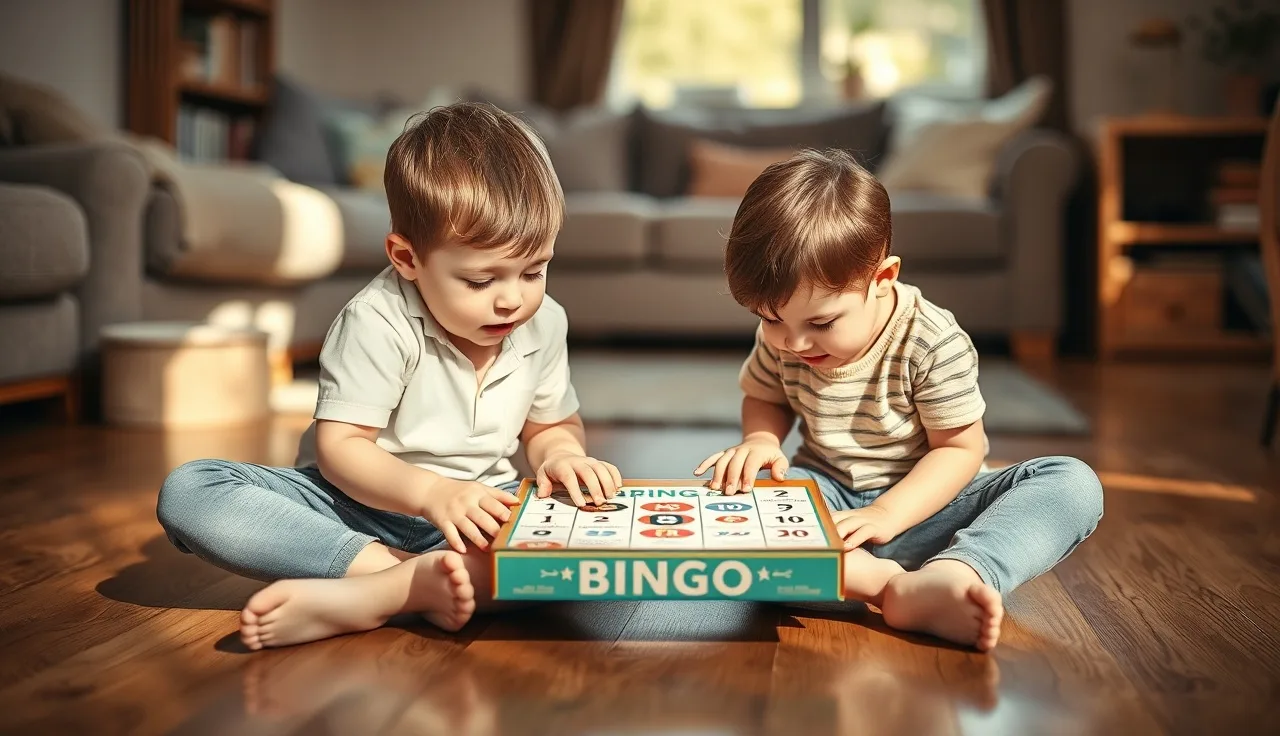
Zingo Sight Words is a card game published by ThinkFun, a US toy company known for logic and language games. The mechanics are simple: a spring-loaded plastic "Zingo Zinger" slides tiles out two at a time. Each tile shows a printed word. Players look at their game cards, which have a 3x3 grid of words, and claim a tile if it matches a word on their card. First player to fill their card wins. That's it.
The game includes 72 word tiles covering 66 unique words, two levels of bingo cards (beginner and advanced), and can involve two to six players [1]. The whole thing takes about 15 minutes once kids know the rules. The box says ages 4 and up, which matches the developmental window when children start learning high-frequency words in preschool and kindergarten.
What makes it useful for reading is the repetition. A child who plays four or five rounds in an afternoon has seen each common word many times in a low-stakes, game-like frame. No pencil. No test. No worksheet. That shift in context matters more than most parents expect.
Which sight words does Zingo cover, and are they the right ones?
The 66 words in the game come primarily from the Dolch sight word list, compiled by education researcher Edward Dolch in 1936 based on frequency counts in children's reading materials [2]. The Dolch list has 220 service words plus 95 nouns, for 315 words total. Dolch's own counts showed that his 220 service words account for roughly 50 to 75 percent of the words children hit in early reading material, depending on the text [2].
Zingo doesn't cover the full Dolch list. It focuses on the pre-primer and primer levels, the first 40 and next 52 words respectively. Words like "the," "a," "is," "in," "it," "can," "see," "go," and "me." These are the words a kindergartner or first grader meets most. If your child is working on Dolch sight words at school, the Zingo tiles almost certainly overlap with their current list.
The game does not cover Fry words, a separate high-frequency list updated in the 1980s by Edward Fry. The first 100 Fry words and the first 100 Dolch words overlap by about 80 percent, so the practical difference at these early levels is small. If your child's school uses Fry words, the game still covers most of what they're learning.
One honest limitation: the game only shows written words, not sounds. It builds visual recognition, not phonemic decoding. That distinction matters a lot for kids with dyslexia.
Does research support using games to teach sight words?
Short answer: yes, with real qualifications. There's a solid research base for game-based practice as a supplement to explicit instruction, but almost none of it studies Zingo by name. What we have instead is research on the mechanisms the game uses.
A 2015 study in the Early Childhood Education Journal found that game-based learning increased engagement and word retention in early literacy tasks compared to drill-based repetition, though effect sizes varied widely by study design [3]. The key variable was repetition frequency: children needed to see a word 4 to 14 times before it moved into automatic recognition, and games that produced that repetition without fatigue showed real gains.
Zingo does this well. In a 15-minute game, a player might see 20 to 30 tiles, claim 9 of them, and watch siblings claim others. Each claimed tile forces the player to scan their card and find the matching word. That's active processing. Passive flashcard drills produce weaker retention than active retrieval, a finding replicated across many memory studies going back to the "testing effect" work of Roediger and Karpicke (2006) [4].
Still, game-based practice is a supplement, not a replacement. The National Reading Panel's 2000 report, the most cited federal review of reading instruction, found that systematic phonics instruction produced significantly larger gains than any single vocabulary or sight-word approach alone [5]. Zingo belongs in the practice bucket, not the instruction bucket. Use it after a child has been taught a word, not to introduce one.
Parents of kids with signs of dyslexia should know that rote visual memorizing is genuinely harder for dyslexic readers because of phonological processing deficits. The game can still help, but it won't cover for missing decoding skills.
How does Zingo compare to flashcards, worksheets, and other sight word tools?
Here's an honest comparison of the main tools parents reach for.
| Method | Cost (approx.) | Engagement level | Repetitions per session | Best for |
|---|---|---|---|---|
| Zingo Sight Words | $20-$25 | High (game format) | 20-30 tiles per round | Pre-K through grade 1, group play |
| Sight word flashcards | $5-$15 | Low-moderate | 10-30 depending on deck size | One-on-one drill, portability |
| Sight words worksheets | Free-$5 | Low | Varies by worksheet | Fine motor plus literacy combined |
| Sight word apps | Free-$10/mo | Moderate-high | Unlimited with adaptive pacing | Solo practice, travel |
| Classroom word wall | Free | Passive | Environmental exposure only | Contextual reinforcement |
Zingo wins on engagement for young children, especially when you're competing with screens. It loses on portability and one-on-one depth. Flashcards are better for targeted remediation because you can isolate exactly the words a child struggles with. Sight words flash cards let you pull out just the hard ones. Zingo doesn't have that kind of selectivity.
For a child who resists any reading practice, Zingo is often the path of least resistance. That's not nothing. A kid who refuses flashcards but will play Zingo for 30 minutes is still stacking up exposures. Research on early literacy in home settings has found that sustained engagement matters as much as instructional quality when parents are the ones running the practice [6]. I'd pick the tool the child will actually use.
Worksheets are a waste of time if the child already recognizes a word. They make more sense for words that are partially known, where tracing or writing the word adds a kinesthetic memory channel.
Is Zingo Sight Words good for kids with dyslexia?
This is the question parents of struggling readers ask most, and the honest answer has edges. Dyslexia is a language-based learning disability rooted mainly in phonological processing deficits, not visual perception [7]. The International Dyslexia Association defines dyslexia as "a specific learning disability that is neurobiological in origin" characterized by "difficulties with accurate and/or fluent word recognition and by poor spelling and decoding abilities" [7].
For kids with phonological dyslexia, memorizing sight words by visual pattern is harder than it looks. Their brains don't automatically break words into phonemes, so they also struggle to anchor the visual shape of a word to its pronunciation [11]. What looks like a visual memory game is phonologically demanding under the surface.
That doesn't make Zingo useless for dyslexic kids. It means the expectations change. A dyslexic child playing Zingo may learn to recognize "the" and "a" and "is" over many sessions, especially if a parent names the word aloud every time a tile comes out. The auditory reinforcement adds a phonological hook. Without it, the game is purely visual and less effective.
Kids with double deficit dyslexia, who struggle with both phonological processing and rapid automatic naming, will likely find the pace stressful. The Zingo Zinger pops two tiles out and other players grab them fast. If your child has naming speed issues, slow the game down on purpose. Take turns drawing tiles instead of racing. That one change turns the game from a source of anxiety into a useful practice tool.
If you aren't sure whether your child has dyslexia or another reading difficulty, a formal dyslexia test or learning disability test through your school or a private evaluator is the right next step before you pick any intervention tool.
What age and grade level is Zingo Sight Words actually designed for?
The box says ages 4 and up, and that tracks with when most children start formal sight word instruction. Pre-K and kindergarten programs usually begin with the Dolch pre-primer list, and many kindergartners are expected to recognize 20 to 45 sight words by the end of the year, depending on their state standards.
In practice, Zingo works best from about age 4 through early second grade, right around first grade sight words instruction. By mid-second grade, most kids reading on grade level have already made the words Zingo covers automatic, so the game loses its instructional point. It might still work as a confidence builder for kids who are behind, but it won't teach anything new to a typical seven-year-old who reads well.
For children with learning disabilities or big reading delays, that window stretches. A third grader reading at a kindergarten level can still get real practice from Zingo without any shame attached. The game doesn't look remedial. It looks like a game. That's one of its quiet advantages.
How can parents use Zingo more effectively at home?
The default way to play produces some value. Here's how to get more out of it.
First, say every word aloud when a tile is drawn, even if your child already knows it. "The tile says 'because.' Can you find 'because' on your card?" This adds an auditory channel to a task that is otherwise silent and visual. For kids with any phonological weakness, that reinforcement matters.
Second, add a sentence step for words your child is still learning. After a tile is claimed, ask them to say a sentence with that word. "Can you use 'before' in a sentence?" It takes 10 seconds and moves the word from recognition into active language use. Research on vocabulary learning consistently shows that using a new word in production speeds retention more than exposure alone [3].
Third, let children lose without rescue. The game is fastest when players grab tiles quickly, and slower readers will sometimes miss a tile they needed. That's okay. The frustration is information. Notice which words your child keeps missing or hesitating on. Those are the words to target with separate practice like sight word flashcards or a word wall at home.
Fourth, use the two difficulty levels on purpose. The beginner cards have simpler words. The advanced cards add less common high-frequency words. Mix one beginner and one advanced card per player if your kids are at different stages. The older child gets challenged. The younger one still competes.
The ReadFlare free reading tools page has a printable high-frequency word tracker that works alongside game-based practice like this, so you can log which words your child has mastered and which still need work.
One more thing: play it three or four times in a row when you play. Single sessions weeks apart produce weak retention. Massed practice in one sitting, then a gap, then another massed session, fits what memory research calls the "spacing effect" better than one game a week [4].
Can Zingo Sight Words be used in a classroom or intervention setting?
Yes, and it's a reasonable add for a kindergarten or first-grade literacy center. Teachers have used it as a center activity for small groups of two to four students with little supervision once kids know the rules. The game is self-contained and the tiles are durable.
For reading specialists doing Tier 2 or Tier 3 intervention, Zingo is a useful transition activity between more intensive structured literacy work, not a primary tool. A 10-minute Zingo round at the end of a pull-out session gives kids a low-stress consolidation period. The words they've been drilling in the main session might show up on the tiles, reinforcing what was just taught.
One practical classroom issue: the Zingo Zinger makes a satisfying click-clack that 25 kindergartners find hilarious and disruptive. Most teachers who use it in centers put a folded towel under the device. Small thing, worth knowing before your first session.
For schools running structured literacy under state dyslexia laws (44 states have some form of dyslexia legislation as of 2024 [8]), Zingo falls under supplemental materials. It is not an approved structured literacy program and wouldn't count toward any state's required intervention hours. It's a game, and should be treated as one.
Does Zingo Sight Words have any IEP or 504 relevance?
Directly, no. Zingo is a commercial game with no clinical standing. It won't appear in an IEP or 504 plan, and no evaluator will recommend it by name as an accommodation or intervention.
Indirectly, there's a connection worth understanding. IDEA (the Individuals with Disabilities Education Act, 20 U.S.C. § 1400 et seq.) requires that children with qualifying disabilities receive a Free Appropriate Public Education (FAPE) with services designed to meet their individual needs [9]. When a child's IEP includes goals around sight word recognition or reading fluency, parents can ask what supplemental tools the school uses to support those goals. A game like Zingo might be one of them in a Tier 1 or Tier 2 setting, though the school isn't obligated to name specific products.
Parents can also mention home tools like Zingo at IEP meetings when describing what the child does and responds to at home. That context helps the team understand what motivates the child and what formats they engage with.
For families building an advocacy toolkit, the ReadFlare parent kit includes sample IEP goal language for early sight word and fluency targets, which helps when you're reviewing what the school proposes.
If your child has a reading disability and you aren't sure they qualify for an IEP or 504, the starting point is a learning disability test or a formal evaluation request to the school in writing. Games are no substitute for that process.
What are the actual limitations of Zingo Sight Words?
Honest assessment here, because the internet is full of toy reviews that read like press releases.
The biggest limitation is what the game doesn't teach. It teaches visual recognition of printed word forms. It doesn't teach phonics, decoding, letter-sound correspondence, phonemic awareness, or any of the foundational skills the science of reading identifies as the main drivers of reading acquisition [5]. A child who only learns to read through visual word memorizing is building on a weak foundation, especially with any underlying phonological weakness.
The second limitation is selectivity. You can't customize Zingo to match exactly the words on your child's current school list. Flashcards win here. If your child needs to master 12 specific words before a Friday assessment, Zingo is a less efficient tool than pulling those 12 words on cards and drilling them.
The third is population coverage. The game covers 66 words. The Dolch list alone has 315. By mid-first grade, most classroom lists run well past what Zingo covers. The game has a fairly short useful life if your child is progressing on track.
The fourth is durability. The small word tiles get lost. If you buy Zingo, sort the tiles, count them, and store them in a zip bag inside the box on day one. ThinkFun doesn't sell replacement tile sets separately, so a missing tile means a word that can never be matched on one card.
None of these are disqualifying. They just mean Zingo is one tool in a toolkit, not the toolkit.
Are there better alternatives or games that do more for struggling readers?
Depends on what "better" means for your specific child.
For phonics-based word-building games, Blink, Boggle Junior, or the Bob Books-branded games focus more on letter-sound relationships. If your child is getting structured literacy at school and you want a home game that reinforces the same phonics logic, those fit better. Zingo doesn't reinforce phonics at all.
For a child who's fluent at word recognition but slow, games that build reading speed in connected text, like timed poetry readings or sentence-level board games, do more than Zingo at that stage.
For kids who respond well to screens, apps like Starfall or Reading Eggs cover similar word territory with adaptive difficulty. The research base on these apps is thin but generally positive for engagement, and they can track mastery in ways a physical game can't.
For the specific Zingo format (bingo-style, whole-word recognition, group play), there's also Sight Word Bingo from various publishers, which often covers more words across multiple card sets. The per-word cost is lower and the coverage is broader, though the game mechanic is less satisfying than the Zingo Zinger.
If your child has been identified with or is being evaluated for a specific reading disability, look at structured literacy programs (Wilson Reading, RAVE-O, SPIRE) for the core intervention rather than games. Games are the dessert, not the meal. The What Works Clearinghouse at the US Department of Education reviews intervention programs with actual evidence ratings, so check it before you spend real money on any program [10].
Frequently asked questions
How many sight words does Zingo Sight Words include?
The game includes 72 tiles covering 66 unique high-frequency words drawn primarily from the Dolch pre-primer and primer lists. These two levels together contain roughly 92 words, so Zingo covers the majority of the most common early-reader words. It does not cover the full 220-word Dolch service word list or any of the 95 Dolch nouns.
What age is Zingo Sight Words recommended for?
ThinkFun recommends Zingo Sight Words for ages 4 and up. In practice it works best from pre-kindergarten through early second grade, roughly ages 4 to 7. Children who are already fluent with the Dolch pre-primer and primer words have outgrown its instructional value, though it can still work as a confidence-building activity for older kids reading below grade level.
Is Zingo Sight Words based on the Dolch list or the Fry list?
The words come primarily from the Dolch sight word list, specifically the pre-primer and primer levels. The Fry and Dolch lists overlap by about 80 percent at these early levels, so Zingo is useful regardless of which list your child's school uses. If you want to verify which specific words appear in the game, the tile inventory lists are widely available online from parenting and homeschool blogs.
Can Zingo Sight Words help kids with dyslexia?
It can help, but with limits. Dyslexia is rooted in phonological processing deficits, not visual memory, so purely visual word memorizing is harder for dyslexic kids than it looks. Saying each tile word aloud when drawn adds helpful phonological reinforcement. The game should supplement, not replace, structured literacy instruction. A formal dyslexia evaluation is the right first step before choosing any specific tool.
What is the difference between Zingo and regular sight word bingo games?
The main difference is the Zingo Zinger mechanism: a spring-loaded plastic slider that pops two tiles out at once, which makes tile distribution fast and tactilely satisfying for young kids. Standard sight word bingo uses caller cards and chips, which work fine but feel more like a classroom exercise. For engagement with reluctant young learners, the Zingo Zinger tends to generate more excitement.
How many players can play Zingo Sight Words?
The game supports two to six players. Two players works well for one-on-one parent-child practice. Three to four players produces a nice competitive energy without getting chaotic. At six players, tile competition gets intense and younger or slower readers may miss most tiles before they can process them, which can be frustrating. Four players is probably the sweet spot for mixed-age sibling groups.
Can Zingo Sight Words be used in an IEP or 504 plan?
Not directly. Zingo is a commercial game with no clinical or educational certification, so it won't appear in formal IEP or 504 documents as an approved intervention. However, parents can mention it at IEP meetings to describe what formats motivate their child at home. If an IEP includes sight word recognition goals, Zingo can be one of many informal practice tools used to support those goals between school sessions.
Is Zingo Sight Words worth the price?
At roughly $20 to $25, it's a reasonable one-time purchase if your child is in the pre-K through first-grade window and resists flashcard drilling. It's not worth buying if your child already reads the Dolch pre-primer and primer words fluently, or if you want phonics instruction rather than sight word practice. Free printable bingo games cover similar ground at no cost, but the physical Zingo Zinger tends to produce more consistent engagement.
Does Zingo Sight Words teach phonics or just word memorization?
It teaches word memorization only. Tiles show whole printed words with no phonics breakdown, no letter-sound cues, and no syllable markings. This is fine as a supplement to phonics instruction but not as a replacement. The National Reading Panel's evidence review found that systematic phonics instruction produces significantly stronger reading gains than sight word approaches alone. Use Zingo for practice, not for teaching decoding.
How do you make Zingo Sight Words harder for kids who have mastered the basic words?
The game includes two levels of bingo cards: beginner (simpler high-frequency words) and advanced (less common high-frequency words). Mixing one beginner and one advanced card per player is the simplest difficulty adjustment. For kids who've mastered all 66 words, the game has run its course. At that point, level-specific readers, decodable books, or phonics games covering longer-word patterns will do more.
Are the Zingo tiles the right size for young children with fine motor challenges?
The tiles are small, roughly the size of a large Scrabble tile, and can be fiddly for children with fine motor difficulties or very small hands. For kids with occupational therapy goals around fine motor skills, that's actually a small benefit. For kids with coordination challenges who find small pieces frustrating, a larger-format bingo game with cards and chips may work better and reduce emotional friction during play.
What happens if Zingo tiles get lost?
ThinkFun does not sell replacement tile sets separately. If tiles are lost, the corresponding words can never be matched on cards that include them, which unbalances the game. The practical solution is to sort and count all 72 tiles when the game is new, store them in a labeled zip bag, and keep it inside the box. Some parents laminate a tile inventory list and tape it inside the lid as a quick count reference.
How does Zingo Sight Words compare to screen-based sight word apps?
Apps like Starfall and Reading Eggs cover similar or larger sight word vocabularies with adaptive difficulty and mastery tracking that a physical game can't match. Apps win on scalability and data. Zingo wins on physical, social, and tactile engagement, particularly for kids who spend a lot of time on screens already. For children under age 6, the American Academy of Pediatrics recommends limiting recreational screen time, which is one argument for physical games in that age range.
Sources
- ThinkFun, Zingo Sight Words product page: Zingo Sight Words includes 72 word tiles covering 66 unique words, two levels of bingo cards, and supports two to six players
- Dolch, E.W. (1936). A basic sight vocabulary. Elementary School Journal, 36(6), 456-460. Cited in: Florida Center for Reading Research, sight word resources: The Dolch list was compiled in 1936 and its 220 service words account for 50 to 75 percent of words in early reading materials
- Pyle, N., et al. (2015). Game-based learning as a vehicle for improving outcomes in an early literacy curriculum. Early Childhood Education Journal, 43(6), 493-500.: Game-based learning increased engagement and word retention in early literacy tasks; children needed 4 to 14 word exposures for automatic recognition
- Roediger, H.L. & Karpicke, J.D. (2006). Test-enhanced learning: Taking memory tests improves long-term retention. Psychological Science, 17(3), 249-255.: Active retrieval tasks produce stronger retention than passive exposure; massed practice followed by spacing fits the spacing effect
- National Reading Panel, Teaching Children to Read: An Evidence-Based Assessment of the Scientific Research Literature (2000). National Institute of Child Health and Human Development.: Systematic phonics instruction produced significantly larger reading gains than any single vocabulary or sight-word approach alone
- Piasta, S.B. & Wagner, R.K. (2010). Developing early literacy skills: A meta-analysis of alphabet learning and instruction. Reading Research Quarterly, 45(1), 8-38.: Motivational and engagement variables in home literacy practice matter as much as instructional quality for young children
- International Dyslexia Association, Definition of Dyslexia: Dyslexia is defined as 'a specific learning disability that is neurobiological in origin' characterized by 'difficulties with accurate and/or fluent word recognition and by poor spelling and decoding abilities'
- National Conference of State Legislatures, Dyslexia in the States (2024): As of 2024, 44 states have some form of dyslexia legislation requiring schools to screen, identify, or provide structured literacy intervention
- Individuals with Disabilities Education Act (IDEA), 20 U.S.C. § 1400 et seq., U.S. Department of Education: IDEA requires children with qualifying disabilities to receive a Free Appropriate Public Education (FAPE) with services designed to meet individual needs
- What Works Clearinghouse, U.S. Department of Education, Institute of Education Sciences: The What Works Clearinghouse provides evidence ratings for educational intervention programs including early literacy interventions
- Ehri, L.C. (2005). Learning to read words: Theory, findings, and issues. Scientific Studies of Reading, 9(2), 167-188.: Phonological processing deficits make visual word memorization harder for dyslexic readers because they cannot anchor visual word forms to phonological representations
- American Academy of Pediatrics, Media and Young Minds (2016). Pediatrics, 138(5).: The AAP recommends limiting recreational screen time for children under age 6, supporting physical games as an alternative for literacy practice