Last updated 2026-07-10
TL;DR
A cold read is when a child reads a passage they've never seen before, aloud and without preparation. Schools use cold reads to measure reading rate, accuracy, and comprehension together. Oral reading fluency on unseen text is one of the strongest predictors of overall reading skill in grades 1 through 8. With the right passages and a simple scoring method, parents can run cold reads at home too.
What is a cold read in reading instruction?
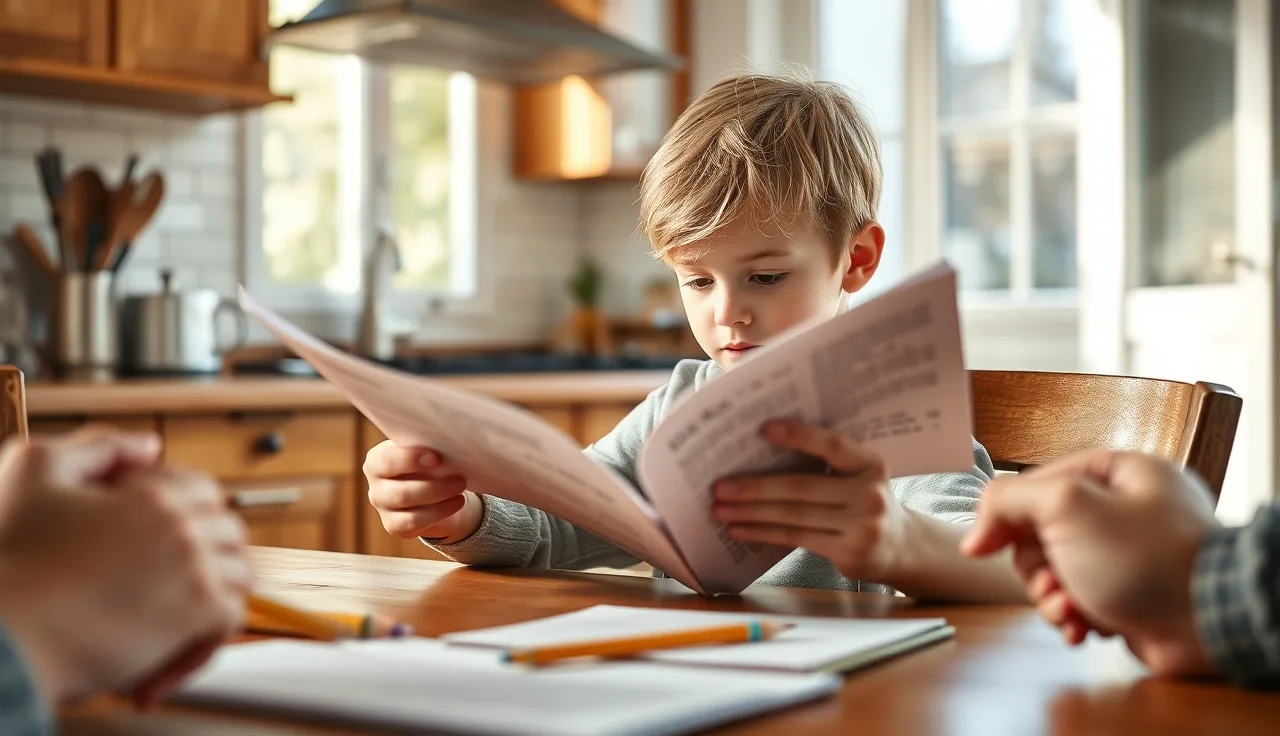
A cold read is exactly what it sounds like. A child reads a new passage for the first time, out loud, with no preview. No one has read it to them first. No one has told them the topic or the tricky words. They meet the text cold, the same way they'll meet a science textbook chapter or a standardized test passage in real life.
That's different from a "warm" or "hot" read. A warm read means the student has seen the passage once. A hot read means they've practiced it several times. Both have a place in instruction. Neither measures what a cold read measures: how a child handles genuinely unfamiliar text under normal reading conditions.
Teachers and reading specialists use cold reads for two overlapping purposes. First, as an assessment tool, to see where a child actually is right now. Second, as a practice format, because research shows that regularly reading unseen texts builds fluency faster than re-reading the same familiar passages over and over [1]. The distinction matters. The way you score and debrief a cold read changes depending on which purpose you're serving.
Why do cold reads predict reading ability so well?
The short answer: cold reading measures automaticity. When a child reads an unfamiliar passage at a reasonable pace, with good accuracy and natural phrasing, their decoding is automatic enough that working memory can handle comprehension at the same time. If decoding still demands conscious effort, rate drops, errors pile up, and meaning slips away.
This is the core claim of the Simple View of Reading, formalized by Gough and Tunmer in 1986: reading comprehension equals decoding ability multiplied by language comprehension [2]. A cold read stresses both variables at once. A practiced text stresses neither.
The National Reading Panel's 2000 report named oral reading fluency, specifically on unpracticed text, as one of five essential components of reading instruction [1]. Later research confirmed that Oral Reading Fluency (ORF) scores from curriculum-based measurement tools (like DIBELS or AIMSweb) on cold passages correlate with high-stakes reading comprehension test scores at about r = 0.70 to 0.80 in grades 1 through 6 [3]. That's a very strong relationship by social-science standards.
For kids with dyslexia, cold reads reveal something specific. A child with dyslexia may read a practiced passage acceptably after repeated exposure, which masks the underlying deficit. A cold read strips that mask away. That's one reason reading specialists reach for cold passages during an initial evaluation.
How do schools actually measure a cold read? (WCPM, accuracy, and prosody)
The standard unit in schools is Words Correct Per Minute, or WCPM. An assessor picks a grade-level passage the student hasn't seen, starts a one-minute timer when the child begins reading, and marks every error in real time. At the minute mark, they count the total words read, subtract the errors, and get WCPM.
Errors typically counted: mispronunciations, substitutions, omissions, and words the child couldn't read within three seconds (the assessor supplies the word and marks it wrong). Repetitions and self-corrections usually don't count as errors, because they reflect good monitoring.
Accuracy is a separate but related metric. It's the percentage of words read correctly out of total words attempted. A child reading at 95% accuracy or above is generally reading at an independent level for that text. The 90 to 94% band is the instructional range. Below 90% is the frustration level, meaning the text is probably too hard for cold-read practice without support [4].
Prosody, the third dimension, is harder to score and easy to overlook. It's the phrasing, expression, and rhythm a child uses. A robotic word-by-word reader at 100 WCPM sounds nothing like a fluent reader at 100 WCPM. The NAEP Oral Reading Fluency Scale rates prosody on a four-level rubric, from "word by word" to "well-phrased and expressive" [5]. Schools don't always score prosody on every cold read, but watch it anyway. A child with good rate and accuracy but poor prosody often struggles with comprehension even when the surface numbers look fine.
Here's how the three measures relate:
| Measure | What it tells you | How it's scored |
|---|---|---|
| WCPM | Automaticity and rate | Count correct words in 60 seconds |
| Accuracy % | Text difficulty match | (Words correct / words attempted) x 100 |
| Prosody | Meaning-making while reading | Rubric rating, 1-4 scale |
Comprehension is sometimes assessed after the cold read with two to five retell or question-answer prompts. Together, these four measures give a fuller picture than any one alone.
What are the grade-level WCPM benchmarks parents should know?
The most widely used benchmarks come from two sources: the Hasbrouck and Tindal oral reading fluency norms (updated in 2017, published in The Reading Teacher) [6], and DIBELS 8th Edition benchmarks from the University of Oregon [3]. These are population norms. They describe what the middle 50% of students actually do, not an arbitrary target someone invented.
The table below uses Hasbrouck and Tindal 2017 midyear (winter) 50th percentile WCPM values, which represent an average student at that point in the school year.
| Grade | Winter 50th percentile WCPM |
|---|---|
| 1 | 53 |
| 2 | 89 |
| 3 | 107 |
| 4 | 123 |
| 5 | 139 |
| 6 | 150 |
| 7 | 150 |
| 8 | 151 |
A few honest caveats. These are medians from large samples, and the data mix student populations from multiple decades, so they reflect mixed instructional approaches. A child at the 25th percentile isn't failing. They're below the median but still within a range many schools consider acceptable for grade-level progress. A child below the 10th percentile on repeated cold reads almost always needs intervention.
One more thing to know: WCPM growth slows as grade climbs. First graders can add 30 to 40 WCPM over a school year. By eighth grade, most students gain very little, because they're already near the ceiling that matters for comprehension [6].
If your child's WCPM on a cold passage sits well below the 25th percentile for their grade, that's a concrete data point to bring to a parent-teacher conference or an IEP meeting.
How does a cold read differ from a running record or an IRI?
Parents hear several terms that all involve reading aloud from unfamiliar text, and they're not the same thing.
A running record is a technique from Marie Clay's Reading Recovery tradition. The teacher sits beside the child, uses a shorthand notation to mark errors and self-corrections in real time, then analyzes error patterns to figure out which cueing systems the child leans on (meaning, syntax, or visual). Running records happen on leveled books, the child reads the whole text, and the focus is on instructional planning [4]. They usually aren't timed.
An Informal Reading Inventory (IRI) is a longer diagnostic tool. It bundles graded word lists, graded passages read aloud, and comprehension questions at multiple levels. An IRI can run 30 to 60 minutes and is meant to pin down three reading levels: independent, instructional, and frustration. The Qualitative Reading Inventory and the Basic Reading Inventory are two common examples.
A curriculum-based measurement cold read (the kind that produces WCPM) is faster, standardized, and built to track progress over time across many students. It's less diagnostic than an IRI but more useful for ongoing progress monitoring.
None of these matches a standardized reading comprehension test like the NAEP or a state assessment, which are group-administered, silent reading tests. Cold reads are oral and individual.
Trying to figure out which tool your child's school uses? Ask the teacher directly: "Is this timed, and are you counting errors per minute?" If yes, it's curriculum-based oral reading fluency measurement, the closest thing to a textbook cold read.
Can cold reads actually improve fluency, or are they just for testing?
Both. And the research on cold reads as a practice format is genuinely encouraging.
Repeated reading of the same text builds fluency, and it transfers somewhat to new texts. Samuels showed that back in 1979 [7]. But a method called wide reading, or cold read practice, where students read many different unpracticed texts instead of re-reading the same ones, produces comparable or better fluency gains plus better gains in vocabulary and comprehension, according to a 2006 meta-analysis by Kuhn and colleagues [8].
The intuition holds up. A child who only practices passages they've already heard or read is optimizing for those passages. Cold text forces the same decoding and meaning-making processes that real reading demands.
For at-home practice, this means using a new passage every session is fine, and probably better than drilling one passage until the child has it memorized. You're building the underlying skill, not memorizing a particular text.
A few practical constraints. The passage has to sit at or near the child's instructional level, 90 to 95% accuracy, to be useful. Too hard, and it produces frustration and builds nothing. Too easy, and it's basically a hot read from the start, because the child decodes every word effortlessly.
For struggling readers and kids with dyslexia, pairing a cold read with a short echo-reading or assisted-reading session right after can help. The child reads cold, you note the struggles, and then you (or the tutor) read the passage aloud expressively while the child follows along. That sequence gives feedback and a fluent model without pre-teaching the text before the cold attempt.
You can find reading comprehension passages sorted by grade level, which work well for cold read practice at home.
How do cold reads connect to IEPs, 504 plans, and school accountability?
If your child has an IEP under IDEA (the Individuals with Disabilities Education Act, 20 U.S.C. § 1400 et seq.) [9], oral reading fluency data from cold reads matters in two ways.
First, present levels of academic achievement in the IEP must describe your child's actual current performance with measurable data. A WCPM score from a standardized cold read passage is exactly the kind of data that belongs there. If the IEP says only that your child "has difficulty with reading" with no numbers attached, that's a problem you can push back on. Ask for the specific ORF data used to write the present levels.
Second, IEP goals must be measurable. "Student will improve reading fluency" is not a measurable goal. "Student will read a grade 3 cold passage at 90 WCPM with 95% accuracy by May" is. Schools have to use data like ORF scores to write goals and track progress toward them. If your child's IEP has no fluency goals tied to specific WCPM targets on cold passages, and fluency is a documented area of need, you have grounds to ask the IEP team to revisit the goals.
Start at the ED.gov IDEA site if you need to understand the legal framework [9]. The law requires progress monitoring data to be shared with parents at least as often as report cards go home [9].
For 504 plans (Section 504 of the Rehabilitation Act of 1973), the connection runs a little differently. A 504 plan doesn't require measurable goals or progress reporting the way an IEP does. But cold read data can help document that a child's disability substantially limits the major life activity of reading, which is the eligibility threshold.
The ReadFlare parent advocacy kit includes a sample IEP goal template for oral reading fluency you can bring to your child's next meeting if you want a concrete starting point.
Want more background on how to read and contest school-generated reading comprehension test data? Review it before any IEP meeting.
What makes a good cold read passage for home practice?
Not all passages work equally well. Here's what actually matters.
Length: 150 to 250 words for grades 1 through 4, and 250 to 400 words for grades 4 and up. Shorter passages don't give you a stable WCPM estimate, because one stumble throws off the whole percentage. Longer passages tire young readers, and the later portions reflect fatigue, not skill.
Content: Use both expository (informational) and narrative passages. Many children read narrative fiction fluently but struggle badly with expository text, because informational writing packs in denser vocabulary, more complex sentences, and assumed background knowledge the child may not have. Practice only on stories and you may miss a real gap in informational reading fluency that will surface on state tests [5].
Vocabulary density: A good cold read passage is mostly words already in a child's oral vocabulary, with a handful of new or technical words woven in. If the whole passage is stuffed with words the child doesn't know by ear, comprehension fails because of vocabulary, not decoding, and you can't read the results cleanly.
Format: Plain prose, standard font, age-appropriate line length. Skip passages with lots of dialogue tags, poetry, or unusual punctuation for early cold reads. Those pile on prosody demands that muddy the interpretation.
For specific grade-level passages, ReadFlare's printable reading comprehension collection includes passages labeled by Lexile level, which makes picking the right difficulty straightforward.
You can also use reading comprehension worksheets as cold read source material, as long as the comprehension questions come after, not during, the initial oral read. Seeing the questions first is a form of preview, and it undermines the cold part.
How should parents score and debrief a cold read at home?
You don't need a teaching degree to run a useful cold read at home. Here's a simple method that holds up.
Print or display the passage. Read it yourself first so you know the word count and any proper nouns or technical terms that might trip up a child who doesn't know them (note those in advance so you don't accidentally coach around them). Have the child sit beside you with their own copy. You follow along on yours with a pencil.
Start timing when the child reads the first word. Mark every error with a check or a slash above the word. If the child stalls on a word for more than three seconds, say the word, mark it as an error, and ask them to keep going. Self-corrections, where the child catches their own error and fixes it, are not errors.
At exactly 60 seconds, mark the last word read. Count total words to that point. Subtract errors. That's WCPM.
Then, without letting the child look back at the passage, ask them to tell you what they just read (retell). Follow with two or three specific questions: one literal ("What did the character do when she found the box?"), one inferential ("Why do you think that happened?"), one vocabulary ("What does the word 'reluctant' mean in this passage?"). Don't over-prompt. Just listen.
Debrief honestly. Tell the child their WCPM. Kids generally do better when they know their score and can watch it change over time. Keep a simple log: date, passage title or level, WCPM, accuracy percentage, and a one-sentence note on comprehension. Over six to eight weeks of twice-weekly cold reads, you should see WCPM trending up if instruction is working.
If it isn't trending up, that data is valuable too. Take the log to your child's teacher or reading specialist. "Here are 12 cold read scores from the past six weeks, and there's been no growth" is a far more persuasive opening than "I don't think things are improving."
For parents working with early readers in grades 1 or 2, check the guidance on 1st grade reading comprehension and 2nd grade reading comprehension to calibrate your passage selection.
Do kids with dyslexia need a different approach to cold reads?
Somewhat, yes.
Kids with dyslexia usually have deficits in phonological processing that make decoding slow and effortful. On a cold read, this shows up as low WCPM, high error rates on phonetically complex words, and sometimes a stark mismatch between their listening comprehension (often age-appropriate or above) and their reading comprehension on the same passage (well below). That mismatch is diagnostic. If a child answers your retell questions accurately when you read the passage aloud, but bombs the same questions after reading it themselves, the problem is decoding, not comprehension. That distinction changes everything about how you intervene [2].
For kids with dyslexia, don't use cold reads as a daily pressure exercise. Once or twice a week is enough for progress monitoring. Daily practice time is better spent on structured literacy instruction, explicit phonics work, and then warm reading of decodable texts where the target phonics patterns are under control.
Be careful with passage level. The 90 to 95% accuracy rule matters even more for kids with dyslexia, because a text at their frustration level breeds anxiety and avoidance, not learning. Use passages one grade level below the child's enrolled grade if needed, and note that in your log so comparisons stay apples-to-apples.
Accommodations that fit a formal assessment (extended time, text-to-speech) do not belong in a cold read fluency probe, because those accommodations target the exact thing a cold read measures. Here's the nuance: a fluency cold read measures the unsupported oral reading process. Track accommodation use separately and note it in the IEP. Don't apply it during an ORF probe unless the IEP explicitly says to.
A reading tutor who specializes in dyslexia can help you set the right passage level and track progress in a way that tells decoding growth apart from compensation strategies.
How can cold reads connect to broader comprehension work by grade?
Cold reads are a window into fluency, but fluency is a means to comprehension, not the goal itself. Once a child reads above about 100 WCPM with 95% accuracy, extra WCPM matters far less than the quality of the comprehension strategies they're building [1].
In lower elementary (grades 1 and 2), cold reads mostly catch kids falling behind in decoding before the gap widens. If your first or second grader lands well below the WCPM benchmarks, early intervention beats later intervention by a wide margin. On this point, the research is unusually consistent [1].
In the middle grades (3 through 5), cold reads lean harder into informational text, because the curriculum does. A third-grader who reads narrative fiction fluently may still stumble through a cold passage from a social studies unit. 3rd grade reading comprehension and 4th grade reading comprehension resources can help you find appropriately leveled expository passages.
By grades 6 through 8, WCPM gains plateau, and the cold read becomes less about rate and more about prosody and comprehension depth. A sixth-grader who reads 145 WCPM but answers only 40% of inferential questions correctly has a different profile than one reading 145 WCPM who answers 80% correctly. They need different interventions. 6th grade reading comprehension passages tend to carry the kind of complex expository structure that exposes this gap clearly.
Cold reads also pair well with general reading comprehension practice at home. The cold read tells you where the child is, and targeted practice moves the needle.
Frequently asked questions
How long should a cold read passage be for a second grader?
For a second grader, aim for 150 to 200 words. That's enough to get a stable one-minute WCPM count and a meaningful retell, without exhausting a child still building stamina. Much shorter, and a single stumble distorts the accuracy percentage. The 2nd grade reading comprehension section has passages in that length range.
Can I use any book or printout for a cold read at home?
Mostly yes, with two caveats. First, confirm the child hasn't seen the text before; even a brief preview changes what you're measuring. Second, know the approximate reading level of the passage, because a text that's too hard or too easy gives you misleading data. Leveled readers, decodable books, and passages labeled with a Lexile or grade-level estimate are easiest to use reliably.
What if my child refuses to read aloud or cries during a cold read?
Back off entirely and reframe the activity. Some children, especially those who've experienced shame around reading, find any timed oral reading exercise threatening. Try removing the timer for a few sessions, or let the child retell a passage you've read to them first to build confidence. Useful data is the goal, and a distressed child produces none. Emotional safety comes first.
How often should cold reads happen for progress monitoring?
For general progress monitoring, twice a month is a common recommendation. For a child receiving reading intervention, once a week gives you a more sensitive data set to catch whether the intervention is working. Daily cold reads aren't necessary and can create anxiety. Consistency matters more than frequency: same time of day, same scoring method, same passage type.
Is WCPM the same thing as reading speed?
Related but not identical. WCPM reflects both speed and accuracy at once, because errors are subtracted before you calculate the score. A child who races through 150 words in a minute but makes 30 errors gets a WCPM of 120, not 150. Pure words-per-minute without an error correction tells you little about reading skill, because it ignores whether the words were read correctly.
Can a child score well on a cold read but still struggle with comprehension?
Yes, and it's more common than people expect. Strong WCPM with weak comprehension can signal a child who has memorized decoding patterns but reads without monitoring for meaning, sometimes called "word calling." The fix is explicit comprehension strategy instruction: predicting, questioning, summarizing, and monitoring for sense while reading. Check the general framework at how to improve reading comprehension.
Do schools have to share cold read data with parents?
For children with IEPs, schools must report progress on IEP goals, including fluency goals, at least as often as they send report cards, per IDEA (20 U.S.C. § 1414) [9]. For general education students, you can request the specific ORF data under FERPA, the Family Educational Rights and Privacy Act [10]. Schools aren't always proactive about sharing it, but they can't refuse a written request for your child's assessment records.
What is the difference between a cold read and DIBELS?
DIBELS (Dynamic Indicators of Basic Early Literacy Skills) is a specific set of curriculum-based measurement tools developed at the University of Oregon. An oral reading fluency probe from DIBELS is a type of cold read, using standardized passages with known difficulty levels. When people say "cold read" generically, they mean any unpracticed passage read aloud. DIBELS is one specific, well-normed version of that.
Should cold reads be narrative or informational text?
Both matter, and using only one type gives you an incomplete picture. Many children read narrative text far more fluently than informational text, because stories follow familiar structures and vocabulary. The Common Core and most state standards expect children to handle both text types by third grade. If you're only cold reading with stories, you may be missing a real gap in content-area reading fluency.
What accuracy percentage means the text is too hard for a cold read?
Below 90% accuracy is generally the frustration level, meaning the text is too difficult to be useful for instructional practice [4]. For a cold read used purely as a measure, frustration-level text is fine because it shows you where the ceiling is. But for regular home practice aimed at building skill, stick to passages where the child reads 90 to 95% of words correctly on the first try.
How do cold read scores relate to state reading tests?
Pretty strongly. Research shows that oral reading fluency scores on cold passages correlate with standardized reading comprehension scores at roughly r = 0.70 to 0.80 in grades 1 through 6 [3]. That's not perfect, and a child can be a slow but accurate reader who scores well on untimed state tests. But for most kids, a WCPM score well below grade-level norms is a reliable early warning for below-grade performance on state assessments.
At what grade does WCPM stop being the most important metric?
By about grade 5 or 6, most children who are on track hit a WCPM plateau where extra rate gains don't predict much extra comprehension gain. Above roughly 150 WCPM with high accuracy, prosody and comprehension strategy quality become better indicators of reading strength. That's why middle school reading assessment should include comprehension depth measures alongside, or instead of, a raw WCPM count [6].
Can I use cold reads to document my child's reading disability for school purposes?
Cold read data can support your case but isn't enough on its own for a formal disability determination. Schools and evaluators use cold reads as part of a broader evaluation battery. Under IDEA [9], a full evaluation for a specific learning disability like dyslexia must include multiple measures across multiple settings. Your home cold read logs can be valuable supplementary evidence, especially to show lack of progress over time, but won't replace a school psychologist's or specialist's formal evaluation.
Sources
- National Institute of Child Health and Human Development, Report of the National Reading Panel (2000): Oral reading fluency on unpracticed text is one of five essential components of reading instruction; the panel identified it as a reliable predictor of overall reading achievement.
- Gough, P.B. & Tunmer, W.E. (1986). Decoding, reading, and reading disability. Remedial and Special Education, 7(1), 6-10.: The Simple View of Reading: reading comprehension equals decoding ability multiplied by language comprehension, establishing the theoretical basis for cold read interpretation.
- University of Oregon, DIBELS 8th Edition Technical Adequacy Information: Oral reading fluency scores on cold passages correlate with standardized reading comprehension tests at approximately r = 0.70 to 0.80 in grades 1 through 6; DIBELS 8th Edition provides updated benchmark targets.
- Clay, M.M. (2000). Running Records for Classroom Teachers. Heinemann; and standard IRI accuracy level definitions (Johns, J.L., Basic Reading Inventory).: 90-94% accuracy is instructional level; below 90% is frustration level; 95% and above is independent level for reading texts.
- National Center for Education Statistics, NAEP Oral Reading Fluency Study: The NAEP Oral Reading Fluency Scale uses a four-level prosody rubric from word-by-word reading to well-phrased expressive reading; the study also found informational text fluency significantly below narrative fluency for many students.
- Hasbrouck, J. & Tindal, G. (2017). An update to compiled ORF norms. The Reading Teacher, 70(5), 557-562.: Updated oral reading fluency norms by grade and percentile; establishes that WCPM growth rates slow significantly after grade 5 and plateau near grades 7-8 at approximately 150-151 WCPM at the 50th percentile.
- Samuels, S.J. (1979). The method of repeated readings. The Reading Teacher, 32(4), 403-408.: Repeated reading of the same text builds oral reading fluency and transfers somewhat to new, unpracticed texts.
- Kuhn, M.R., Schwanenflugel, P.J., Morris, R.D., et al. (2006). Teaching children to become fluent and automatic readers. Journal of Literacy Research, 38(4), 357-387.: Wide reading (many different unpracticed texts) produces comparable or better fluency gains than repeated reading, plus greater gains in vocabulary and comprehension.
- U.S. Department of Education, Individuals with Disabilities Education Act (IDEA), 20 U.S.C. § 1400 et seq.: IDEA requires that IEP present levels include measurable data, that goals be measurable, and that progress toward IEP goals be reported to parents at least as often as report cards are issued.
- U.S. Department of Education, Family Educational Rights and Privacy Act (FERPA) guidance: FERPA gives parents the right to inspect and review all education records, including assessment data, within 45 days of a request.
- Fuchs, L.S., Fuchs, D., Hosp, M.K., & Jenkins, J.R. (2001). Oral reading fluency as an indicator of reading competence: A theoretical, empirical, and historical analysis. Scientific Studies of Reading, 5(3), 239-256.: Oral reading fluency on curriculum-based measurement cold passages is among the strongest single indicators of overall reading competence across the elementary grades.