Last updated 2026-07-10
TL;DR
Orton-Gillingham (OG) is a structured, multisensory way to teach reading and spelling, built originally for kids with dyslexia. All About Reading is a popular OG-based home curriculum. Research shows structured literacy rooted in OG outperforms whole-language instruction for struggling readers. Most kids with dyslexia need 100 to 150 hours of intensive intervention to close the gap.
What is Orton-Gillingham, exactly?
Orton-Gillingham is a structured, sequential, multisensory method for teaching reading, writing, and spelling. Neurologist Samuel Torrey Orton and educator Anna Gillingham built it in the 1930s, and it is still the most-studied foundation for reading intervention in the English-speaking world. Every major structured literacy program you've heard of, from Wilson Reading System to Barton Reading and Spelling to All About Reading, traces its lineage straight back to OG principles.[1]
Five things set OG apart from typical classroom reading instruction:
1. It is explicit. Every phonics rule is taught directly, never expected to be "picked up" through reading. 2. It is systematic and sequential. Skills build in a set order, from simple consonant-vowel-consonant words to multisyllabic words and morphology. 3. It is multisensory. Students see, say, hear, and often write each concept at the same time, engaging several neural pathways at once. 4. It is diagnostic. A trained instructor watches what a student has and hasn't mastered, then adjusts the pace. 5. It is cumulative. New material always connects back to mastered material, so nothing sits in isolation.
Here's the part parents miss. Orton-Gillingham is not a boxed curriculum. It's an instructional approach. That distinction matters, because a program can be "OG-based" or "OG-influenced" while still varying a lot in structure, lesson design, and how closely it sticks to the original method.
What is All About Reading, and how does it connect to Orton-Gillingham?
All About Reading (often shortened to AAR) is a structured literacy curriculum from All About Learning Press. It's built on Orton-Gillingham principles and designed for home use by parents, tutors, and homeschool families. It runs from Pre-Reading through Level 4, taking a student from phonemic awareness all the way through multisyllabic decoding and fluency.[2]
Parents reach for AAR for different reasons. Some homeschool and need a full reading program. Some have kids in regular school who are falling behind and want something to do at home. Many parents of children with dyslexia pick it because it's one of the few OG-based programs made to run without formal OG practitioner training.
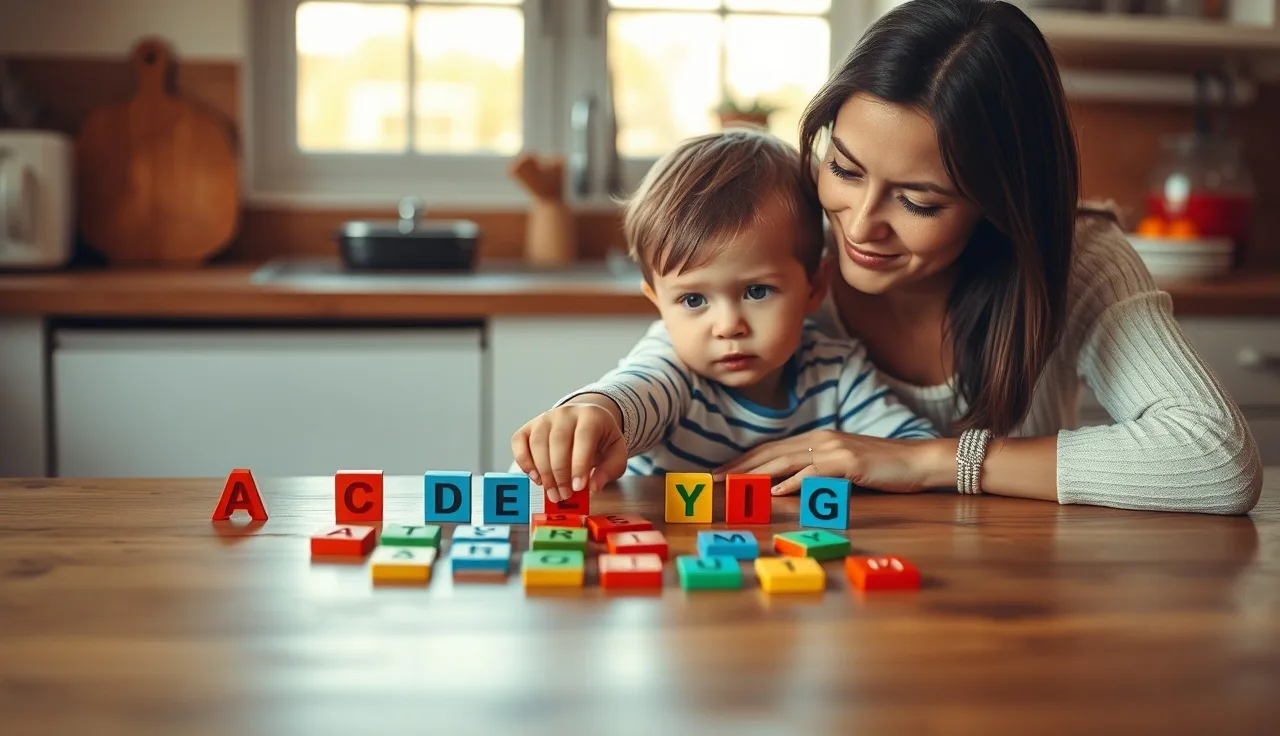
The curriculum comes with decodable readers, phonogram cards, letter tiles for hands-on work, and fluency passages. A parent can run a lesson in 20 to 30 minutes. That's genuinely doable on a weeknight.
As of 2024 to 2025, a full level (student book, activity book, and reader) has typically run $75 to $120, though pricing changes and you should check the publisher directly.[2] There are four levels plus a pre-reading level, so a family going cover to cover can spend $300 to $500 across the whole program.
Is it worth it? For a lot of families, yes. But it takes real parent commitment. The lessons don't run themselves.
Who benefits most from Orton-Gillingham instruction?
The bulk of the evidence behind OG methods comes from students with dyslexia, and that's no accident. Orton's original clinical work was with children who couldn't learn to read through ordinary instruction despite average or above-average intelligence. His hypothesis, later backed by decades of neuroimaging and longitudinal reading research, was that these kids process phonological information differently and need a different route in.[1][3]
The International Dyslexia Association estimates dyslexia affects 15 to 20 percent of the population.[3] That's a lot of kids sitting in classrooms where whole-language or balanced literacy is the norm, getting little that actually works for them.
OG principles help a much wider group than diagnosed dyslexics, though. The National Reading Panel's 2000 report found that systematic phonics instruction, the backbone of OG, produces better outcomes for all beginning readers, not only those with reading disabilities.[4] If a child struggles to decode, to sound out new words, or spells in ways that look random, OG-based instruction is worth trying whether or not there's a formal diagnosis.
Who's less likely to need intensive OG? Kids who struggle mainly with comprehension rather than decoding. A child who reads words accurately but doesn't understand what they read has a different problem needing different tools: vocabulary, background knowledge, inferencing. Not more phonics. Our guide on how to improve reading comprehension covers that path.
What does the research actually say about Orton-Gillingham?
Strong, but more nuanced than OG advocates sometimes admit.
A meta-analysis published in the Journal of Learning Disabilities examined 21 studies of OG-based reading interventions and found statistically significant positive effects on word reading, pseudoword decoding, and reading fluency compared to control conditions.[5] Effect sizes were moderate to large for word-level reading skills, which is exactly what OG targets.
The What Works Clearinghouse (WWC), part of the U.S. Department of Education's Institute of Education Sciences, has reviewed several OG-based programs one by one. Results vary by program. Some show stronger evidence, some weaker, and a few haven't been reviewed yet. The WWC site lets you search by program name, and it's worth checking if you're deciding between specific curricula.[6]
One honest caveat. Many OG studies use small samples and short intervention windows. The meta-analysis authors noted that "few studies examined long-term outcomes" beyond the immediate post-test, which is a real gap. We know OG works while it's being delivered. Whether gains hold over years without continued practice is less documented.
The broader structured literacy evidence base is larger and steadier. The Simple View of Reading, from Gough and Tunmer's 1986 paper, frames reading comprehension as decoding ability multiplied by language comprehension. If either factor drops near zero, comprehension collapses. OG hits the decoding factor directly, and that's where the strongest evidence sits.[7]
How many hours of Orton-Gillingham instruction does a child actually need?
This is the question most parents don't know to ask, and it drives every planning decision.
Research from the Florida Center for Reading Research and elsewhere suggests that students with significant phonological deficits (the hallmark of dyslexia) typically need 100 to 150 hours of intensive, systematic phonics intervention to reach grade-level decoding, assuming instruction starts before third grade.[8] The window matters. Kids who get intervention in grades 1 and 2 need fewer hours and gain faster than kids who start in grade 4 or 5.
That 100 to 150 hour figure isn't a guarantee. Kids with more severe profiles, or those who've already built avoidance habits around reading, may need more. Kids with mild issues may need less.
Now translate it. A student getting 45-minute sessions three times a week reaches 100 hours in about 44 weeks, roughly one school year. A school pull-out that delivers two 30-minute sessions a week takes two to three years to reach the same dosage. That gap is why frequency and intensity matter, and why parents should push for specific minutes and frequency in an IEP instead of accepting vague language about "reading support."[9]
For home programs like All About Reading, the timeline rides entirely on how often you sit down together. Daily 20-minute sessions, five days a week, get you to 100 hours in about a year of steady effort.
How is All About Reading different from a certified OG tutor?
Understand this before you spend a dollar.
A certified Orton-Gillingham practitioner has completed training through an IDA-accredited or ALTA-accredited program. That means formal coursework (typically 60 to 100-plus hours depending on the certification level), supervised practicum hours with real students, and ongoing professional development.[1] A Fellow-level practitioner has logged hundreds of supervised hours and can train others. The credential is real clinical expertise.
All About Reading is built for parents with no training. It scripts the lessons, hands you the manipulatives, and builds in diagnostic checkpoints. A motivated parent can run it well. But it is not the same as working with a trained clinician who reads real-time processing patterns, adjusts on the fly from error analysis, and catches subtle issues a script won't flag.
For a child with mild to moderate decoding trouble, AAR run by a committed parent can produce strong results. For a child with severe dyslexia, other conditions stacked on top (ADHD, auditory processing disorder, language delays), or a history of failed interventions, a certified OG tutor or an OG-based school program is the better call.
The cost gap is huge. A certified OG tutor typically charges $60 to $150 an hour depending on credential and location, with big-metro rates running toward the top. A certified Wilson or Barton practitioner charges similarly. All About Reading, even buying all five levels, runs under $600 total. That's four to ten tutoring sessions. If your child needs 100-plus hours, the math is stark.
Our reading tutor directory and vetting guide helps you find credentialed options near you.
What OG-based programs are available and how do they compare?
Here's an honest comparison of the most widely used OG-based programs. Prices and evidence status change over time, so check the What Works Clearinghouse and program sites for current details.[6]
| Program | Setting | Requires trained teacher? | WWC review available? | Approximate cost |
|---|---|---|---|---|
| All About Reading | Home/tutor | No (parent-friendly) | No | $75-$120 per level |
| Barton Reading & Spelling | Home/tutor | No (parent-friendly) | No | $299 per level |
| Wilson Reading System | School/clinic | Yes (requires training) | Yes | Varies by provider |
| Lindamood-Bell | Clinic | Yes | Yes | $120-$200+/hr |
| SPIRE | School | Yes | Yes | School adoption cost |
| RAVE-O | School | Yes | Yes | School adoption cost |
Barton is close to AAR in design but covers through high school and adult levels, which makes it popular for older students who need the sequence stretched further.
Parents ask whether one program clearly beats the rest. Honest answer: the research doesn't crown a single OG-based program as best for every student. Implementation quality, meaning how well-trained the instructor is and how consistently the instruction happens, matters more than which curriculum you pick.[5]
The ReadFlare parent advocacy kit includes a comparison checklist you can bring to your child's school or tutor.
Does your child's school have to provide Orton-Gillingham instruction?
Not by name. But if your child has a disability affecting reading, the Individuals with Disabilities Education Act (IDEA) guarantees a "free appropriate public education" (FAPE) in the "least restrictive environment." IDEA mandates no specific program. It does require that interventions be "based on peer-reviewed research to the extent practicable," the language of 20 U.S.C. § 1414(d)(1)(A)(i)(IV).[9]
That's where OG's research base turns into a legal argument, more than an educational preference. If peer-reviewed evidence supports structured literacy and OG methods for a child with dyslexia, and the school is instead running whole-language or balanced literacy with no phonics foundation, a parent can reasonably argue the IEP fails the FAPE standard.
Some states go further than IDEA requires. As of 2024, more than 40 states have passed dyslexia-specific legislation requiring schools to screen for dyslexia, provide evidence-based intervention, and in many cases adopt structured literacy frameworks.[10] The specific requirements vary a lot. The National Center on Improving Literacy keeps a state policy database on its website.
If your school refuses OG-based or structured literacy instruction and you believe the current approach isn't working, here are your practical steps:
1. Request an Independent Educational Evaluation (IEE) at district expense if you disagree with the district's evaluation. 2. Ask the IEP team in writing to name the peer-reviewed research supporting the current reading intervention. 3. Contact your state's Parent Training and Information Center (PTI), which gives free advocacy help. Every state has one, funded under IDEA.[9] 4. Consider filing a State Complaint or requesting mediation if the team won't amend services.
A 504 plan is another route for students who don't qualify for special education but have a documented disability affecting reading. Under Section 504 of the Rehabilitation Act, schools must provide reasonable accommodations, though 504 plans generally don't require specific interventions the way IEPs can.[11]
How do you run All About Reading at home without burning out?
Parents who stick with OG home programs share a few habits. The ones who quit share different ones.
The biggest mistake is doing too much per session. Twenty to 25 minutes of focused, brisk work five days a week beats a grinding hour-long Saturday session. Kids with dyslexia tire fast during phonics work because it takes real cognitive effort. Short, frequent, and steady is what wins.
A typical AAR lesson has three parts: a warm-up card review (phonogram cards going both directions, sound to symbol and symbol to sound), a teaching segment for new material, and reading practice in the decodable reader. You don't have to finish all three every day. Some days you get through card review and one new concept. That's fine. Consistency is the variable that moves the needle most.
A few things that help:
- Do lessons at the same time each day so it stops being a negotiation.
- Keep sessions emotionally low-stakes. If your child is frustrated, stop.
- Praise accuracy, not speed. Speed is a fluency goal that comes after accuracy.
- Don't swap the decodable readers for leveled library books. The decodable texts exist for a reason: every word is controlled to the phonics patterns already taught, so the child can succeed without guessing.
Reading fluency, meaning reading accurately at a pace that leaves room for comprehension, develops after decoding turns automatic. The two are related but distinct. Once your child has basic decoding down, you can layer in reading fluency strategies that work alongside OG.
For kids working on comprehension at the same time, a reading comprehension tutor who understands both skill sets can add comprehension strategies without breaking the structured literacy sequence.
What does an All About Reading lesson actually look like?
Picture this. You're at the kitchen table. Your child is in second grade. You've been working through Level 2 for about three months.
You start with the phonogram card deck. You hold up a card with the cluster "igh" and your child says the sound. You run maybe 20 cards, briskly, keeping it game-like. Four to five minutes.
Then you flip the deck the other way. You say a sound and your child writes or points to the card. This works both the reading and spelling pathways at once, which is the multisensory principle in action.
Next, one new concept. Say it's the floss rule: in a one-syllable word with a short vowel, you double the final f, l, or s (hill, cliff, pass). You show it, say it, and have your child tap out words with the letter tiles. You might have them air-write a word while saying the sounds aloud.
Then the decodable reader. Your child reads aloud. You track errors without cutting in mid-sentence, then address them gently after. You note which error patterns repeat. If vowel teams keep tripping them up, that's diagnostic information.
You close with dictation. You say a word, your child spells it aloud and writes it. You check together.
Twenty-five minutes. Done.
That structure, repeated day after day, is what produces gains. Nothing flashy about it. The results live in the repetition and the sequencing.
How do sight words fit into Orton-Gillingham instruction?
This one causes real confusion, partly because "sight word" means different things to different people.
In the traditional Dolch or Fry sense, sight words are high-frequency words that teachers tell kids to memorize as whole visual units, no sound analysis. OG handles this very differently.
OG practitioners teach high-frequency words by analyzing whatever phonics patterns are in the word, even patterns not formally taught yet. Take "said." It isn't random. The "ai" spelling of the short-e sound is unusual, but a student can be taught that directly instead of memorizing the whole shape. Research on orthographic mapping (the process by which words become instantly recognizable) suggests that phonological analysis, not visual memorization, is how the brain actually stores words for fast retrieval.[7]
All About Reading includes a set of "red words," words with irregular patterns taught for quick recognition. But even red words come with an explanation of what's irregular about them, more than "memorize this shape."
For a closer look at where sight word instruction fits in the bigger reading picture, the ReadFlare guide on sight words lays out which approaches the research supports and which ones are mostly habit.
When should you consider a formal dyslexia evaluation?
If your child has had reading instruction for six months or more and still can't decode simple one-syllable words, reverses letters past age 7, has real trouble with phonological awareness tasks (rhyming, blending, segmenting), or reads well below grade level despite intervention, a formal evaluation is worth pursuing.
A psychoeducational evaluation for dyslexia usually includes standardized tests of phonological processing (the CTOPP-2 is widely used), reading decoding and fluency, spelling, and sometimes language and working memory.[12] Some evaluators add an IQ measure to rule out global cognitive delays, though the old IQ-achievement discrepancy model for diagnosing dyslexia has largely been discredited in current research.
The International Dyslexia Association defines dyslexia as "a specific learning disability that is neurobiological in origin. It is characterized by difficulties with accurate and/or fluent word recognition and by poor spelling and decoding abilities."[3] That 2002 consensus definition is the one most states and evaluators reference.
You can request an evaluation through your child's school at no cost under IDEA. After you give written consent, the school has 60 calendar days (or the timeline set by your state) to finish it. You can also pay for a private evaluation, which typically costs $1,500 to $3,500 depending on the psychologist and scope, sometimes partly covered by health insurance.
A diagnosis isn't required to start OG-based instruction at home. But it matters for school services, legal protections, and understanding your child's specific profile.
For kids found to have comprehension gaps alongside decoding weaknesses, a reading comprehension test can baseline where they are before intervention starts.
Frequently asked questions
Is All About Reading the same as Orton-Gillingham?
No. All About Reading is a curriculum built on Orton-Gillingham principles, made for parents and tutors without formal OG training. Orton-Gillingham itself is an instructional approach, not a specific program. AAR follows OG's multisensory, sequential, explicit phonics framework closely, but a certified OG practitioner brings clinical training, error analysis, and diagnostic flexibility that go beyond any boxed curriculum.
At what age should a child start Orton-Gillingham instruction?
The earlier the better. Phonological awareness foundations (the precursor skills OG builds on) can start as early as age 4 or 5. Formal OG reading instruction usually begins in kindergarten or first grade for children showing early signs of reading trouble. Research consistently shows intervention in grades 1 and 2 needs fewer hours to produce lasting gains than intervention that starts in grade 3 or later.
Can a parent teach Orton-Gillingham at home, or does it have to be a professional?
A parent absolutely can run OG-based instruction at home using a structured curriculum like All About Reading or Barton. No certification required. What you do need is commitment to short daily sessions, patience, and the willingness to follow the program's sequence instead of skipping around. For children with severe dyslexia or complex profiles, adding a certified tutor to home work is often worth the money.
How long does it take for Orton-Gillingham to work?
Most children show measurable decoding improvement within 30 to 50 hours of consistent instruction. Closing a significant reading gap typically takes 100 to 150 hours, per research from the Florida Center for Reading Research. Fluency (reading quickly and accurately) lags behind decoding accuracy and keeps developing for months after decoding becomes reliable. Expect a long runway, not a quick fix.
Does insurance cover Orton-Gillingham tutoring?
Rarely, but it depends on your plan and how services are coded. Some families have used Health Savings Accounts (HSAs) or Flexible Spending Accounts (FSAs) for tutoring when a physician prescribes it for a diagnosed learning disability. A few states have education savings account programs that can fund tutoring. Ask your pediatrician and your HR benefits coordinator, but don't count on insurance as a default.
Is Orton-Gillingham approved by the What Works Clearinghouse?
The What Works Clearinghouse reviews specific programs, not approaches. Individual OG-based programs like Wilson Reading System have WWC reviews with positive findings. Others haven't been reviewed yet. All About Reading and Barton, two popular home programs, don't currently have WWC reviews, which means they lack that particular evidence stamp, not that they don't work. The broader structured literacy evidence base behind OG is strong.
What's the difference between All About Reading and All About Spelling?
They are companion programs from the same publisher, All About Learning Press, and share the same OG-based phonogram system. All About Reading focuses on decoding (reading words aloud) and fluency. All About Spelling focuses on encoding (spelling words correctly). Many families run both at once because decoding and encoding reinforce each other. The phonogram cards are the same across both programs, which keeps running both manageable.
Can Orton-Gillingham help kids who struggle with reading comprehension?
Indirectly, yes. If weak comprehension comes from slow, effortful decoding, fixing decoding through OG frees up cognitive capacity for understanding. But OG doesn't directly teach vocabulary, inferencing, or text structure, which are the skills that drive comprehension in fluent readers. A child who decodes well but still can't understand what they read needs comprehension-focused strategies, not more phonics. See our guide on how to improve reading comprehension.
Does my child need a dyslexia diagnosis to get OG-based services at school?
Not necessarily. Under IDEA, a child qualifies for special education based on a documented disability that adversely affects educational performance, not a specific diagnostic label. Many children get reading intervention under categories like "Specific Learning Disability" with no formal dyslexia diagnosis. That said, a dyslexia evaluation on record often strengthens IEP arguments for structured literacy and can trigger state-level dyslexia laws where they exist.
What is a decodable reader and why does All About Reading use them?
A decodable reader is a book where almost every word uses phonics patterns the student has already learned, with only a few controlled "red words" needing memory. OG-based programs use them so a child practices decoding without guessing from pictures or context. Research on orthographic mapping backs this up: the brain stores words for instant recognition through phonological analysis, not visual memorization, and decodable texts give structured practice of exactly that process.
How does Orton-Gillingham differ from balanced literacy?
Balanced literacy mixes phonics with whole-language strategies, including cueing children to use pictures or context to guess unknown words. Orton-Gillingham teaches children to decode every word by sounding it out with explicitly taught phonics patterns, no guessing cues. The IDA and the National Reading Panel support explicit, systematic phonics over balanced literacy for students who struggle to read, especially those with dyslexia.
What are the signs that an OG-based program is working?
Look for the child reading unfamiliar words by sounding them out instead of guessing, fewer random-looking spelling errors (mistakes become phonetically logical even when wrong), more willingness to attempt new words, and rising oral reading fluency scores. Progress should be measurable roughly every four to six weeks during active intervention. If there's no measurable progress after 10 to 12 weeks of consistent instruction, the program or the delivery needs to change.
Can older students (middle school or high school) benefit from Orton-Gillingham?
Yes, though the work is harder and slower. The brain stays plastic enough to rewire phonological processing in adolescence and adulthood, but older students have often built avoidance strategies and emotional baggage around reading that slow progress. OG-based programs like Barton cover through adult levels precisely because older students need the same foundational sequence, delivered with age-appropriate content and pacing.
How do I find a certified Orton-Gillingham tutor?
Start with the International Dyslexia Association's provider directory at dyslexiaida.org, or the Academic Language Therapy Association (ALTA) directory. Look for practitioners with AOGPE (Associate or Certified level from the Orton-Gillingham Academy) or CALT (Certified Academic Language Therapist) credentials. Ask about their supervised practicum hours and how many students with profiles like your child's they've worked with. Credential level matters: a Fellow-level practitioner has far more supervised hours than an Associate.
Sources
- International Dyslexia Association, Knowledge and Practice Standards for Teachers of Reading: Orton-Gillingham is the foundational approach for structured literacy instruction; certification standards require 60-100+ hours of coursework and supervised practicum.
- All About Learning Press, All About Reading program overview: All About Reading is an OG-based curriculum with five levels designed for parent and tutor use, covering pre-reading through multisyllabic decoding.
- International Dyslexia Association, Definition of Dyslexia (2002 consensus definition): Dyslexia is defined as a specific learning disability neurobiological in origin, affecting 15-20% of the population; characterized by difficulties with accurate and/or fluent word recognition and by poor spelling and decoding abilities.
- National Institute of Child Health and Human Development, Report of the National Reading Panel (2000): The National Reading Panel found systematic phonics instruction produces significantly better reading outcomes for all beginning readers compared to non-systematic or no phonics instruction.
- Stevens, E.A. et al., Journal of Learning Disabilities (2021), meta-analysis of OG-based interventions: A meta-analysis of 21 OG-based intervention studies found statistically significant positive effects on word reading, pseudoword decoding, and reading fluency; few studies examined long-term outcomes beyond the immediate post-test.
- U.S. Department of Education, Institute of Education Sciences, What Works Clearinghouse: The WWC reviews individual reading programs for evidence quality; Wilson Reading System has received positive findings; All About Reading and Barton have not yet been formally reviewed.
- Gough, P.B. & Tunmer, W.E., Remedial and Special Education (1986), Simple View of Reading: The Simple View of Reading frames reading comprehension as the product of decoding ability and language comprehension; orthographic mapping research supports phonological analysis as the mechanism for word storage.
- Florida Center for Reading Research, Florida State University: Students with significant phonological deficits typically need 100 to 150 hours of intensive, systematic phonics intervention to reach grade-level decoding, with better outcomes when intervention begins before third grade.
- U.S. Department of Education, Individuals with Disabilities Education Act, 20 U.S.C. § 1414: IDEA requires IEP interventions to be based on peer-reviewed research to the extent practicable (20 U.S.C. § 1414(d)(1)(A)(i)(IV)); every state has a federally funded Parent Training and Information Center.
- National Center on Improving Literacy, State Dyslexia Law Database: As of 2024, more than 40 states have passed dyslexia-specific legislation requiring screening and evidence-based intervention.
- U.S. Department of Education, Office for Civil Rights, Section 504 of the Rehabilitation Act: Section 504 requires schools to provide reasonable accommodations to students with disabilities affecting a major life activity such as reading, even when the student does not qualify for special education under IDEA.
- Comprehensive Test of Phonological Processing, Second Edition (CTOPP-2), Pro-Ed Publishing: The CTOPP-2 is a widely used standardized assessment of phonological processing used in dyslexia evaluations; private psychoeducational evaluations typically cost $1,500 to $3,500.