Last updated 2026-07-10
TL;DR
The Core Phonics Survey is a free, individually administered diagnostic tool that tests roughly 10 phonics and decoding skills, from letter names through multisyllabic words, in about 15 minutes. Teachers and reading specialists use it to pinpoint exactly where a child's decoding breaks down, so instruction targets the right gap rather than starting over from scratch.
What is the Core Phonics Survey?
The Core Phonics Survey is a short, one-on-one reading diagnostic created by researchers at the Texas Education Agency and passed around widely through literacy programs across the United States. It is not a screener in the pass/fail sense. It is a map. A teacher sits with a child, works through a series of tasks, and gets a precise picture of which phonics skills are solid and which ones have holes.
The assessment covers roughly ten subtests arranged in order of complexity: uppercase and lowercase letter names, letter sounds, consonant blends and digraphs, short vowel words, long vowel patterns, vowel teams, multisyllabic words, and nonsense words that test whether a child is truly decoding by pattern rather than memorizing whole words. That nonsense-word piece matters more than parents often realize. If a child reads "bim" and "fode" correctly, they are actually using the phonics code. If they can only read real words, they may be leaning on memory.
The survey takes about 10 to 15 minutes for most children, though a child who struggles heavily at early subtests may finish faster because the examiner stops when errors become frequent. The results come as a simple score sheet showing which subtests the child passed and which they did not, which tells you exactly where structured literacy instruction should start.
The tool is free. You can download the Core Phonics Survey PDF directly from several state education agency sites and reading research centers. That is not a small thing. Many diagnostic tools cost hundreds of dollars per administration. This one costs nothing and gives genuinely useful data.
Who developed the Core Phonics Survey and is it research-based?
The Core Phonics Survey grew out of the Texas Primary Reading Inventory project and has been refined through successive editions tied to structured literacy research. It follows the same evidence base summarized in the National Reading Panel's 2000 report to Congress, which found that systematic and explicit phonics instruction produces significantly better outcomes than non-systematic approaches [1].
The survey's structure follows what reading scientists call the "scope and sequence" of the alphabetic code, moving from simple to complex in the same order that structured literacy programs teach. That matters because it means results translate directly into instructional decisions. If a child passes letter sounds but fails at consonant blends, you know where to teach, more than that the child is "behind."
The International Dyslexia Association (IDA) has long recommended diagnostic phonics assessments of exactly this type as part of a full reading evaluation [2]. The What Works Clearinghouse at the U.S. Department of Education has also reviewed structured literacy interventions that use this kind of phonics diagnostic as a placement tool, and the evidence base for systematic phonics instruction is rated strong [3].
Is the Core Phonics Survey itself a validated norm-referenced test with its own published reliability coefficients? No. It is a criterion-referenced tool, meaning it tells you whether a child can or cannot perform specific skills, not where they rank among peers. For a norm-referenced comparison, you would pair it with something like DIBELS or a formal reading evaluation. But for instructional planning, criterion-referenced data is often more useful. Knowing a child sits in the 18th percentile does not tell you what to teach. Knowing they cannot decode consonant digraphs does.
What does the Core Phonics Survey actually test? A subtest-by-subtest breakdown
Here is what the survey covers, in order:
| Subtest | Skill Tested | Example Task |
|---|---|---|
| 1 | Uppercase letter names | Point to letters, child names them |
| 2 | Lowercase letter names | Same, lowercase set |
| 3 | Consonant letter sounds | Child gives sound, not name |
| 4 | Short vowel words (CVC) | Read real words: "sat," "pin" |
| 5 | Consonant digraphs and blends | Read words: "chip," "blast" |
| 6 | Long vowel, silent-e words | Read words: "rake," "pine" |
| 7 | Vowel teams and other long vowel patterns | Read words: "coat," "rain" |
| 8 | Vowel-r combinations | Read words: "turn," "farm" |
| 9 | Multisyllabic words | Read two- and three-syllable words |
| 10 | Nonsense words across multiple phonics patterns | Read invented words to isolate decoding from memory |
The nonsense word subtest deserves extra attention. Children with dyslexia frequently memorize word shapes rather than decoding them sound by sound. Nonsense words remove the memory shortcut entirely. A child who reads "sploat" correctly is using the code. A child who cannot attempt it at all is likely not applying phonics systematically, even if their sight-word reading looks passable [4].
Some versions of the survey add a separate phoneme segmentation task (breaking spoken words into individual sounds) and a blending task, because phonemic awareness sits underneath phonics skill. If a child cannot hear the individual sounds in a word, teaching them letter-sound correspondences hits a ceiling fast.
One thing parents should know: the survey is designed mainly for grades K through 3, but it works for any student whose decoding skills have not reached grade level, including older students who have compensated for years. I have seen it used meaningfully with fifth graders and even middle schoolers reading three or four years below grade level. The tool does not care how old the child is. It cares what they can decode.
How is the Core Phonics Survey scored and what do the results mean?
Scoring is straightforward. For each subtest, the examiner records whether the child read each item correctly or incorrectly and then calculates a percentage correct. Most versions suggest a mastery threshold of around 80 percent correct on a subtest before moving on, though some programs use 90 percent. The score sheet produces a profile showing mastery (green, check, or similar notation) versus not-yet-mastered subtests.
The instructional implication is direct: find the first subtest where the child did not reach mastery, and start structured phonics instruction there. Not below that point. Not above it. There.
Parents reading these results for the first time sometimes worry when they see their child failed subtests 6 through 10 but passed 1 through 5. That is actually useful information. It means the child has a foundation. Intervention can begin at a specific, identified point rather than reteaching skills the child already owns.
What the survey cannot tell you is whether a child's reading difficulty comes from dyslexia, a processing deficit, limited reading exposure, a language difference, or something else entirely. It identifies decoding skill gaps. Pinning down their cause requires a fuller evaluation, which under IDEA may be something you can request from your school district at no cost [5].
A few common score patterns and what they suggest:
- Fails subtests 1 and 2 (letter names): likely very early reader or real concern about letter-name knowledge; check vision and hearing too.
- Passes letter names and sounds, fails CVC words: phoneme blending may be the gap, not phonics knowledge per se.
- Passes CVC, fails consonant blends: instruction has not covered blends yet, or blending multiple consonants is breaking down.
- Passes real words but fails nonsense words at similar complexity: strong indicator of over-reliance on visual memory rather than decoding; this pattern shows up frequently in dyslexia evaluations [4].
Where can I download the Core Phonics Survey PDF for free?
Several legitimate sources host the Core Phonics Survey PDF at no cost.
The Florida Center for Reading Research (FCRR) at Florida State University hosts free assessment tools and has published or linked to versions of the Core Phonics Survey through its teacher resources section [6]. Texas Gateway, the state education portal for Texas, has distributed versions tied to the Texas Literacy Initiative [8]. The Oregon Department of Education and several other state agencies have posted their own adapted versions [9].
A search for "Core Phonics Survey PDF" on any of those .gov or .edu domains will find the document. I am deliberately not deep-linking to a specific PDF path because those files move between server directories and a broken link is worse than a correct search instruction. Go to fcrr.org or your state education agency's literacy resources page and search there.
One caution: there are reformatted versions floating around on teachers-pay-teachers type sites that charge a small fee. The original is free. You should not pay for it. If a site is charging you for the Core Phonics Survey itself (as opposed to an accompanying lesson plan or tracking spreadsheet), look elsewhere.
Once you have the PDF, you will need the student record form (sometimes a separate document) where you mark responses during administration. Some versions combine both into a single download. The examiner reads instructions from the manual page and the student reads from a clean stimulus page that shows the letters and words without any answer markings visible.
How is the Core Phonics Survey administered? Can parents do it at home?
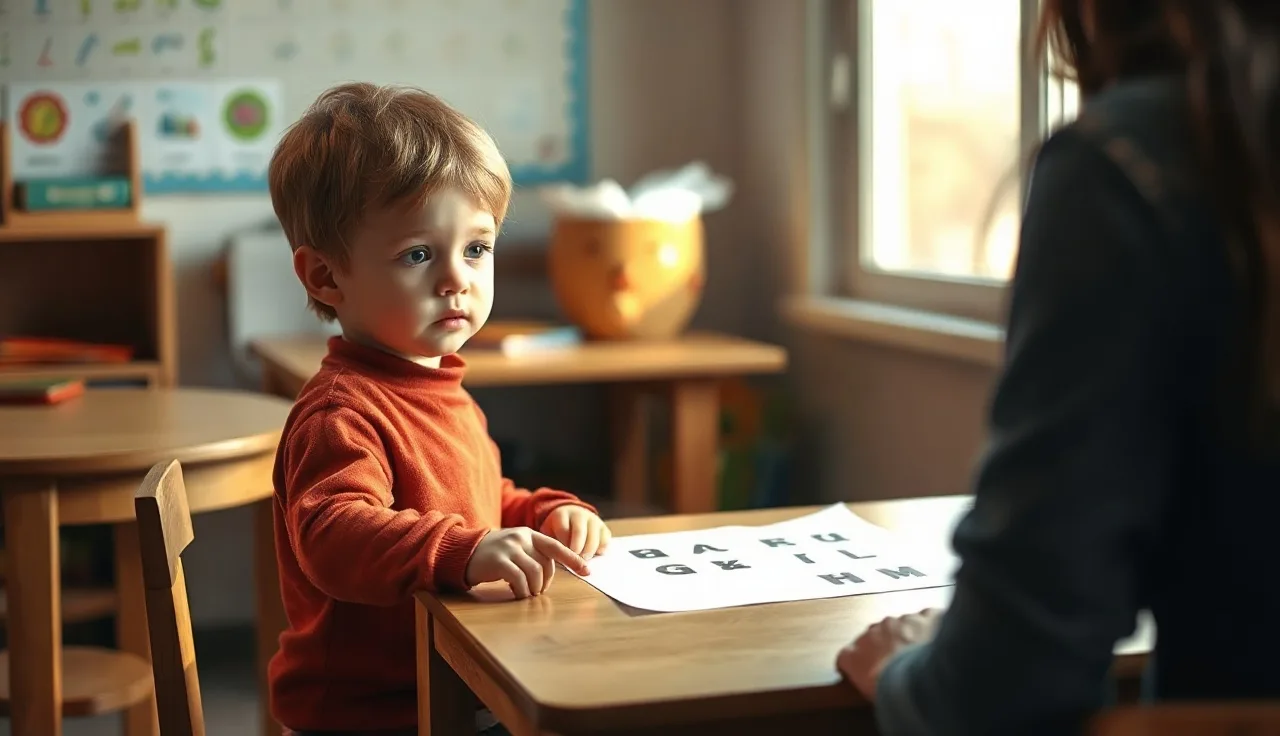
The survey is built for trained literacy teachers and reading specialists, but the administration process is not technically complex. It is individual (one examiner, one child), follows a script, and uses a clean stimulus booklet the child reads from while the examiner marks responses on a separate record form.
Can a parent administer it at home? Yes, with caveats. The administration itself is not difficult if you follow the instructions carefully. The bigger challenge is interpreting what you observe. A trained examiner notices things a parent might miss: whether a child is sounding out slowly but accurately (good sign), whether they are guessing by first letter only (concerning), whether they self-correct (encouraging) or do not notice errors (worrying). That observational layer matters.
If you are a parent thinking about home administration, use the results to inform your own understanding and your conversations with the school, but do not use them as the sole basis for formal decisions. Schools are required to conduct their own evaluations before placing a child in special education services, and they will run their own assessments anyway [5].
Doing the survey at home before a school meeting still gives you real, concrete information. Instead of saying "my child struggles with reading," you can say "she passed letter sounds and short vowel words but fell apart on consonant digraphs and every nonsense word after that." That is a different conversation.
For parents who want to explore other quick diagnostic tools, the Quick Phonics Screener covers similar territory and is another free option worth knowing about.
How does the Core Phonics Survey compare to other phonics assessments?
There are several phonics diagnostics in common use, and they are not equivalent. Here is how the Core Phonics Survey fits in:
| Assessment | Cost | Time | Normed? | Best Use |
|---|---|---|---|---|
| Core Phonics Survey | Free | 10-15 min | No (criterion-ref) | Instructional planning, identifying skill gaps |
| Quick Phonics Screener | Free | 10-20 min | No (criterion-ref) | Similar use; some prefer its layout |
| DIBELS 8th Ed. | Subscription | 5-8 min per probe | Yes | Universal screening, progress monitoring |
| GORT-5 | ~$300-400 per kit | 20-30 min | Yes | Diagnostic evaluation, norm-referenced |
| Woodcock Reading Mastery | ~$400-600 per kit | 45-90 min | Yes | Full diagnostic battery, often used in evaluations |
The Core Phonics Survey and Quick Phonics Screener are the tools most classroom teachers and reading coaches actually reach for when making daily instructional decisions. They are fast, free, and give actionable subtest-level data. The normed tools like GORT-5 and Woodcock are what school psychologists and educational diagnosticians use when a formal eligibility determination is on the table.
Here is the practical rule of thumb for parents. If you want to understand your child's phonics gaps so you can talk to the teacher or find the right tutor, the Core Phonics Survey is an excellent starting point. If you are preparing for an IEP eligibility meeting or a private evaluation, you want a trained professional administering a normed battery and writing an interpretive report.
Understanding what phonics for reading actually looks like in practice helps you make sense of these scores when you get them.
What should I do if my child scores low on the Core Phonics Survey?
Low scores tell you where instruction needs to begin. They do not tell you what caused the gap, how long remediation will take, or whether your child has dyslexia. Keep those three things separate in your mind.
Here is a concrete sequence:
First, look at the first failed subtest. That is your instructional entry point. If your child failed consonant blends, they need explicit, systematic instruction in consonant blends before anything above that will stick.
Second, figure out whether the child is getting that instruction at school. Ask the teacher directly: what structured phonics program are you using, does it follow a scope and sequence, and where is my child currently placed in that sequence? If the answer is vague, or if the school is using a "balanced literacy" program without a systematic phonics component, that is information you need.
Third, if the gaps are significant or persistent, request a full evaluation in writing. Under IDEA, public schools must evaluate children suspected of having a disability, at no cost to parents, within a timeline set by state law (typically 60 days from written consent in most states, though timelines vary) [5]. A letter from you triggering that process is different from a conversation. Put it in writing.
Fourth, find a structured literacy tutor or program that works explicitly within the scope and sequence your child needs. Orton-Gillingham, Wilson Reading, RAVE-O, and SPIRE are examples of programs with evidence behind them [3]. The tutor should be able to tell you exactly where in the phonics sequence they will begin and why.
ReadFlare's parent advocacy kit has a sample letter you can adapt for your school request, along with a tracking sheet to document your child's phonics progress over time. That sheet is useful whether or not the school ever starts an IEP process.
Fifth, do not panic. Phonics gaps are among the most fixable of all reading difficulties when instruction is explicit and systematic. The research is consistent on this [1]. The problem is not usually the child. It is usually the instruction.
Can the Core Phonics Survey results be used in an IEP or 504 evaluation?
Results from the Core Phonics Survey can absolutely inform an IEP or 504 process, but they play a specific role. Because the survey is criterion-referenced and not normed, it does not by itself establish eligibility for special education under IDEA or accommodations under Section 504.
IDEA requires that eligibility determinations use "a variety of assessment tools and strategies" and that no single measure be used as the sole criterion [5]. The Core Phonics Survey fits naturally as one of those tools in a broader evaluation battery. It provides granular decoding data that normed tests often lack. A school psychologist who includes it alongside a normed reading assessment, a cognitive battery, and academic achievement testing is doing the job well.
Where the survey earns its keep in an IEP is in writing present levels of performance and building measurable annual goals. "Student will decode CVC nonsense words with 90% accuracy" is a goal that flows straight from Core Phonics Survey data. That specificity is what IDEA's requirement for measurable annual goals actually demands [5].
For 504 plans, which address accommodations rather than specialized instruction, the survey can document that a student has specific phonics deficits, which supports accommodations like extended time, text-to-speech tools, or modified assignments. Section 504 of the Rehabilitation Act requires schools to provide appropriate accommodations to students with disabilities that substantially limit a major life activity, and reading counts as one such activity [7].
If your school's evaluation skipped any phonics diagnostic at the subtest level and used only broad reading scores, you can bring your Core Phonics Survey results to the IEP meeting and ask the team to consider them. You also have the right to request an independent educational evaluation (IEE) at public expense if you disagree with the school's evaluation [5].
How does the Core Phonics Survey connect to structured literacy and dyslexia intervention?
Structured literacy is the umbrella term for reading instruction built on explicit, systematic phonics, phonemic awareness, and language structure. The International Dyslexia Association defines structured literacy as instruction that addresses phonology, sound-symbol association, syllable instruction, morphology, syntax, and semantics, delivered in a specific, sequential, explicit, and multisensory way [2].
The Core Phonics Survey maps directly onto the phonics strand of that definition. It tells you where in the sequence of sound-symbol instruction a child needs to begin. That makes it the natural entry-point assessment for any structured literacy program.
For children with dyslexia specifically, the survey's nonsense word subtests are especially telling. The most consistent finding in dyslexia research is a phonological processing deficit: difficulty manipulating the sound structure of language, which directly impairs decoding of unfamiliar words [4]. A child with dyslexia may read many real words from memory but collapse on nonsense words at the same phonics level. The Core Phonics Survey surfaces that pattern clearly.
The survey does not diagnose dyslexia. Dyslexia is identified through a full evaluation that includes cognitive processing measures, phonological awareness testing, rapid automatized naming, and reading fluency data, on top of phonics skill testing [2]. But the Core Phonics Survey is often the first tool that clearly shows a parent or teacher that something specific is going wrong at the decoding level, and that specificity is what gets the right intervention started.
Children who get explicit, systematic phonics instruction aimed at their identified gaps make meaningful gains. The National Reading Panel's meta-analysis of 38 studies found that systematic phonics instruction produced significantly larger gains in decoding than whole-word or whole-language approaches [1]. That evidence does not mean every child catches up completely, but it means targeted instruction works, and the Core Phonics Survey is how you aim it.
For a broader grounding in what phonics instruction involves, phonics definition is a good place to start, and for parents whose children are just entering reading instruction, abc phonics walks through the earliest skill building.
What are some common mistakes schools make when using the Core Phonics Survey?
The survey is simple enough that errors in interpretation are more common than errors in administration. Here are the ones I see come up over and over.
Mistake one: administering the survey once and never again. The Core Phonics Survey is a useful progress monitoring tool. Give it every 8 to 12 weeks during active intervention and you see whether skills are actually being acquired. Schools that give it once in September and then use those scores to make decisions in March are not using the tool well.
Mistake two: ignoring the nonsense word subtests. Some teachers find nonsense words confusing to children and skip those rows. That is a significant omission. The nonsense words are the most diagnostically rich part of the survey for spotting whether a child is truly decoding versus memorizing.
Mistake three: starting instruction above the identified gap. If a child fails blends, the temptation is to put them in a blends group while continuing grade-level reading instruction as though everything is fine. That does not close the gap. Instruction needs to start at the identified gap and move systematically forward.
Mistake four: using survey results to argue a child does not need evaluation. A child who passes several subtests but still reads well below grade level may need a fuller evaluation. The Core Phonics Survey tests decoding skill. Reading fluency, comprehension, oral language, and processing speed all feed reading achievement, and none of them appear in survey scores.
Mistake five: not sharing results with parents in plain language. A score sheet full of percentages means nothing to most parents without explanation. If your child's teacher administered this survey and you have not seen the results or had them explained, ask. You have a right to that information.
How long does it take to see improvement after targeted phonics instruction?
Nobody has clean universal data on this because intervention intensity, duration, and the nature of the child's difficulty all vary enormously. The closest honest answer comes from intervention research.
Children with typical reading difficulties who receive structured phonics intervention at 30 to 45 minutes per day, five days per week, often show measurable gains in targeted skills within 8 to 12 weeks [10]. Studies of Orton-Gillingham based programs typically show gains over a full school year of intervention, with effect sizes in decoding ranging from moderate to strong [3].
Children with dyslexia often need longer, more intensive intervention and may require it for multiple years. Gains are real but usually slower, and fluency often lags behind accuracy even when decoding improves. That is normal and does not mean the intervention is failing.
The Core Phonics Survey lets you track this concretely. If you re-administer it every 8 to 10 weeks, you can see whether the specific skills being taught are moving. Subtests failed in September should show improvement by December if instruction is targeted and consistent. If they do not, that is a signal that something about the instruction needs to change, not that the child cannot learn.
For parents supplementing school instruction at home, phonics worksheets organized by skill level and phonics games that target specific patterns can support the skill sequence the survey identifies, without adding pressure by jumping ahead.
Frequently asked questions
Is the Core Phonics Survey the same as the Quick Phonics Screener?
They are different tools with similar purposes. Both are free, criterion-referenced phonics diagnostics organized by skill level. The Quick Phonics Screener was developed separately and has a slightly different subtest layout and scoring format. Many reading specialists prefer one or the other based on familiarity. Either gives you subtest-level phonics data useful for instructional planning. Neither is normed, so neither alone establishes a disability diagnosis.
Can the Core Phonics Survey identify dyslexia?
No. The survey identifies phonics skill gaps, not their cause. Dyslexia requires a full evaluation including phonological processing, rapid automatized naming, reading fluency, and cognitive measures, administered by a qualified professional. That said, the survey often surfaces the pattern most associated with dyslexia: a child who reads real words better than nonsense words of equal phonics complexity, which suggests over-reliance on visual memory rather than decoding.
What grade levels is the Core Phonics Survey designed for?
The survey is used most in kindergarten through third grade, which is when foundational phonics is typically taught. But it works for any student whose decoding has not reached grade level, including older students. Many reading specialists use it with students in fourth grade through middle school who have persistent decoding difficulties. The skill levels tested do not assume any particular grade; they assume a particular point in the phonics scope and sequence.
How do I request that my school administer the Core Phonics Survey?
Write to your child's teacher or reading specialist and ask specifically for a diagnostic phonics assessment that gives subtest-level results, naming the Core Phonics Survey as one acceptable tool. You can also request a full evaluation in writing under IDEA, which requires the school to assess your child across all areas of suspected disability at no cost. If your child already has an IEP, bring the request to the next IEP meeting and ask for it to be documented.
What is a passing score on the Core Phonics Survey?
Most versions suggest mastery at roughly 80 to 90 percent correct on a given subtest. There is no single standardized cutoff because the survey is criterion-referenced rather than normed. A score below 80 percent on a subtest usually means the skill needs direct instruction before moving to more complex patterns. The key is not the number in isolation but the profile across subtests, which shows exactly where the phonics sequence breaks down.
How is the Core Phonics Survey different from a reading level assessment like Fountas and Pinnell?
They measure different things. Fountas and Pinnell leveled reading assessments measure overall reading performance using leveled texts and assess comprehension, fluency, and reading behavior together. The Core Phonics Survey measures specific phonics decoding skills in isolation. A child can have a relatively high Fountas and Pinnell level while still having identifiable phonics gaps, especially if they compensate through strong vocabulary and context guessing. The Core Phonics Survey finds those gaps.
Can I use the Core Phonics Survey results to get my child tutoring reimbursed?
Probably not directly. Insurance does not typically cover reading tutoring, and the survey is not a clinical instrument. But documented phonics skill deficits from the survey, combined with a formal evaluation or IEP, can support arguments for school-funded services. In some states, dyslexia legislation requires schools to provide tutoring or intervention for identified students. Check your state's specific dyslexia statutes, as they vary considerably.
What happens after a child masters all Core Phonics Survey subtests?
Mastery on all subtests means the child can decode the major patterns of English orthography, which is the goal of foundational phonics instruction. After that, the focus shifts to fluency (reading accurately at an appropriate rate), vocabulary, morphology (prefixes, roots, suffixes), and reading comprehension. Decoding automaticity, meaning fast and effortless word reading, is the bridge between phonics skill and comprehension, and that bridge takes continued reading practice to build.
Is there a Spanish version of the Core Phonics Survey?
Some state education agencies and university literacy centers have built Spanish phonics diagnostics with a similar structure, but Spanish phonics follows a different and more consistent orthographic system than English. The English Core Phonics Survey is not directly translated for Spanish use. If your child reads primarily in Spanish or is a Spanish-English bilingual reader, ask your school's bilingual or ESL reading specialist about appropriate Spanish literacy diagnostics.
How often should the Core Phonics Survey be administered?
During active phonics intervention, every 8 to 12 weeks is a reasonable interval for re-administration. That gives instruction enough time to produce measurable change without waiting so long that you miss whether the approach is working. At the start of a school year, it is commonly given in September to set instructional baselines. Progress monitoring more often than every six weeks tends to produce noise rather than signal for a survey of this type.
What structured literacy programs use the Core Phonics Survey as a placement tool?
Several Orton-Gillingham based programs and their derivatives recommend the Core Phonics Survey or a similar phonics diagnostic at intake. Wilson Reading System, Barton Reading and Spelling, and SPIRE all recommend entry-level phonics assessment to identify where in their scope and sequence instruction should begin. Some districts using RAVE-O or the 95 Percent Group's Phonics Core Program also use it for initial placement. The survey's skill sequence maps closely to what all these programs teach.
My child's school says they already did a reading assessment. Is that the same as the Core Phonics Survey?
Probably not. Most school universal screeners, like DIBELS or iReady, measure broad reading skills or fluency and flag students who may be at risk. They do not give the subtest-level phonics skill breakdown the Core Phonics Survey provides. Ask specifically: did the assessment give results by individual phonics skill, like consonant blends, long vowels, and multisyllabic words? If the answer is no, the school has screening data but not a full phonics diagnostic profile.
Sources
- National Institute of Child Health and Human Development, Report of the National Reading Panel (2000): Systematic phonics instruction produces significantly larger gains in decoding than non-systematic or whole-language approaches; meta-analysis of 38 studies.
- International Dyslexia Association, Structured Literacy Approach: IDA defines structured literacy and recommends diagnostic phonics assessment as part of reading evaluations for students with dyslexia.
- U.S. Department of Education, What Works Clearinghouse: What Works Clearinghouse reviews of systematic phonics and Orton-Gillingham based programs show strong evidence for decoding gains.
- Shaywitz, S.E. & Shaywitz, B.A., Dyslexia (Specific Reading Disability), Biological Psychiatry, 2005: Phonological processing deficit is the most consistent neurological finding in dyslexia research; manifests as difficulty decoding novel or nonsense words despite adequate sight word recognition.
- U.S. Department of Education, IDEA 2004 statute and regulations: IDEA requires public schools to evaluate children suspected of having a disability at no cost to parents, use multiple assessment tools (no single measure), and write measurable annual goals in IEPs.
- Florida Center for Reading Research, Florida State University: FCRR hosts free reading assessment tools and teacher resources including phonics diagnostics tied to structured literacy scope and sequence.
- U.S. Department of Education, Office for Civil Rights, Section 504 of the Rehabilitation Act: Section 504 requires schools to provide appropriate accommodations to students with disabilities that substantially limit a major life activity, including reading.
- Texas Education Agency, Texas Literacy Initiative resources: TEA developed and distributed foundational phonics assessment tools including early versions of the Core Phonics Survey through state literacy initiatives.
- Oregon Department of Education, Literacy resources: Oregon DOE has distributed adapted versions of the Core Phonics Survey through state reading improvement programs.
- Torgesen, J.K., Journal of Learning Disabilities intervention research: Children with significant phonics deficits who received 30-45 minutes daily structured phonics intervention showed measurable skill gains within 8-12 weeks in multiple studies.