Last updated 2026-07-10
TL;DR
Phonics games work best when they target a specific, sequenced skill your child hasn't mastered yet, give immediate corrective feedback, and require active decoding rather than guessing from pictures or context. Games that drill letter-sound correspondence, blending, and word families consistently outperform general vocabulary apps in controlled studies. Free options can be just as effective as paid ones.
Why do phonics games matter for struggling readers?
Struggling readers don't need more reading time alone. They need more repetitions of the right skill in a low-stakes setting, and that's exactly where a well-designed phonics game earns its place.
The National Reading Panel's 2000 report reviewed 38 studies and found that systematic, explicit phonics instruction produced significantly better decoding and spelling outcomes than programs without it [1]. Games can deliver that systematic practice, but only when the game actually requires the child to apply phonics knowledge rather than memorize whole words or guess from pictures.
For a child who dreads reading, a game changes the emotional weight of the work. The practice still happens. The repetitions still stack up. But the child doesn't experience it as drilling on the one thing they're bad at. That matters, because struggling readers typically get far fewer decoding repetitions per school day than their peers, even sitting in the same classroom.
One 2020 randomized controlled trial in the Journal of Learning Disabilities found that students with reading difficulties who used a phonics-focused digital game for 20 minutes, three times a week over 10 weeks, improved word reading accuracy by an average of 8 percentile points more than a control group getting typical instruction alone [2]. That's not magic. It's real, and it's meaningful. The reason it worked: the game enforced correct letter-sound responses before moving forward. Engagement was secondary.
Understanding the basics of phonics definition first will help you evaluate any game you're considering.
What does research say about the best features of phonics games?
The research is clear about which design features separate games that build real skills from games that only feel educational. Four features do the work. The rest is decoration.
The single most important feature is immediate corrective feedback. If a child clicks the wrong letter blend and nothing happens, or the game just plays a sad sound and moves on, learning stalls. Effective games pause, restate the rule, and make the child produce the correct answer before continuing. A 2018 meta-analysis in Reading and Writing covering 57 digital intervention studies found that feedback timing was one of the strongest moderators of effect size, with immediate rule-based feedback beating delayed or no feedback by a standardized mean difference of about 0.45 [3].
Sequential skill progression is the second non-negotiable. A game that randomly mixes CVC words with vowel teams and multisyllabic words isn't teaching phonics. It's testing memory. The best games mirror what structured literacy programs do: start at consonant-vowel-consonant words, move to consonant blends, then digraphs, then long vowel patterns, then vowel teams, and so on. Each new pattern builds on the last, so the sequence isn't optional.
Active decoding beats passive recognition, and that's the third feature to hunt for. Multiple-choice games where a child eliminates wrong answers by guessing are far weaker than games that make the child build or type the word. Production tasks outperform recognition tasks for phonics acquisition in nearly every study that has compared the two.
Sound quality is the one parents miss. If the game uses distorted or artificially stretched phoneme sounds, it can reinforce mispronunciation. The /b/ sound should be a clean, brief stop, not "buh." This sounds minor. It matters more for children with phonological processing weaknesses, which is exactly the group you're trying to help.
For context on the full phonics skill sequence, the phonics for reading overview is worth bookmarking.
Which phonics games are actually backed by evidence?
Here's the direct version: very few commercial games have independent peer-reviewed efficacy studies behind them. Most "evidence-based" claims on app store pages point to general reading science, not a study of that specific product. That doesn't mean no products have evidence. It means you read those claims with a skeptical eye.
Lexia Core5 and Raz-Kids have the most published independent research among subscription products. A 2019 study in Reading Psychology found Lexia Core5 users in grades K-2 showed statistically significant gains in phonological awareness and decoding versus matched controls, with an effect size of 0.33 for decoding [4]. That's a modest but real effect for a supplemental tool. Lexia Core5 costs roughly $5 to $6 per student per month at institutional pricing; individual family pricing runs around $10 to $15 per month depending on the tier.
Phonics Hero is a UK-based app with a clean, sequenced program that maps closely to systematic phonics progressions. It has less independent research behind it than Lexia, but its design quality is high and schools use it internationally.
Free games on platforms like PBS Kids (Super Why) and Starfall (starfall.com) beat many paid alternatives for early phonics skills. Starfall in particular has a sequenced consonant and vowel pattern progression that genuinely mirrors decodable text logic. The What Works Clearinghouse has not formally reviewed Starfall, but its alignment with structured literacy principles is stronger than most free options [5].
Word Toss, Go Fish phonics card decks, and blending boards from structured literacy providers are low-tech and extremely effective. Moving letter cards to blend sounds engages different cognitive pathways than tapping a screen, and for kids with dyslexia specifically, hands-on manipulation has a long research history supporting its use [6].
What to avoid: vocabulary-first apps that show pictures and let children guess words. Apps that reward speed over accuracy. Any game that describes itself mainly as a "sight word trainer" without also building phonemic awareness and decoding. Sight words have a place. A steady diet of whole-word memorization does not fix a phonics gap.
How do you match a phonics game to your child's specific skill gap?
This is where most parents go wrong. They pick a game by grade level or general reading age, when what actually matters is the one phonics skill the child hasn't mastered yet.
Start with a screening. The quick phonics screener is a free, teacher-administered assessment that takes about 15 minutes and tells you exactly where a child's phonics knowledge breaks down, whether that's short vowels, consonant blends, vowel teams, or multisyllabic words. The core phonics survey is another reliable option that many schools already use.
Once you know the gap, match the game to that exact skill level. A child who has mastered CVC words but stalls on consonant blends needs a game that drills blends, not one that reviews letter names or practices sight words. A wrong-level game is almost as useless as no game at all.
Here's a rough matching guide by common skill gap:
| Skill gap identified | Game type to look for | Example |
|---|---|---|
| Letter-sound correspondence | Letter matching with audio feedback | Starfall ABC section, abc phonics activities |
| Short vowel CVC words | Word building, sorting by vowel | Phonics Hero Level 1, Word Ladders |
| Consonant blends/digraphs | Blending games, word sorts | Phonics Hero Level 2, blend puzzles |
| Long vowel patterns | Pattern sorting, word families | Word family card games, Lexia Stage 3+ |
| Vowel teams (oa, ee, ai) | Pattern recognition + decoding | ReadWorks decodable sets, Lexia Stage 4+ |
| Multisyllabic words | Syllable segmentation games | Syllable Soccer, Syllable Hopscotch |
If you're not sure where to start with the skill sequence itself, phonics and stuff has a clean breakdown of the typical progression and what each level looks like in practice.
What's the difference between digital phonics games and physical games?
Both work. Neither is universally better. The right choice depends on your child's profile and your family's logistics.
Digital games win on consistency and immediate feedback. An app responds the same way every time, never gets tired, never accidentally mispronounces a phoneme, and tracks progress on its own. For children who fight parent-led practice, taking the adult out of the loop can cut conflict and raise the total minutes they'll actually finish.
Physical games win on hands-on engagement, social interaction, and the plain absence of digital distractions. Research on structured literacy, particularly the Orton-Gillingham approach and its offshoots, has long documented that seeing, saying, and physically moving letters at the same time strengthens phonics memory for children with dyslexia [6]. You can't reproduce that on a touchscreen.
Card games and board games carry a quiet bonus: they put adult and child in the same activity, which creates natural chances for the adult to model blending without it feeling like a lesson. A parent asking "wait, how do I say that blend again?" teaches a child more about repair strategies than any worksheet.
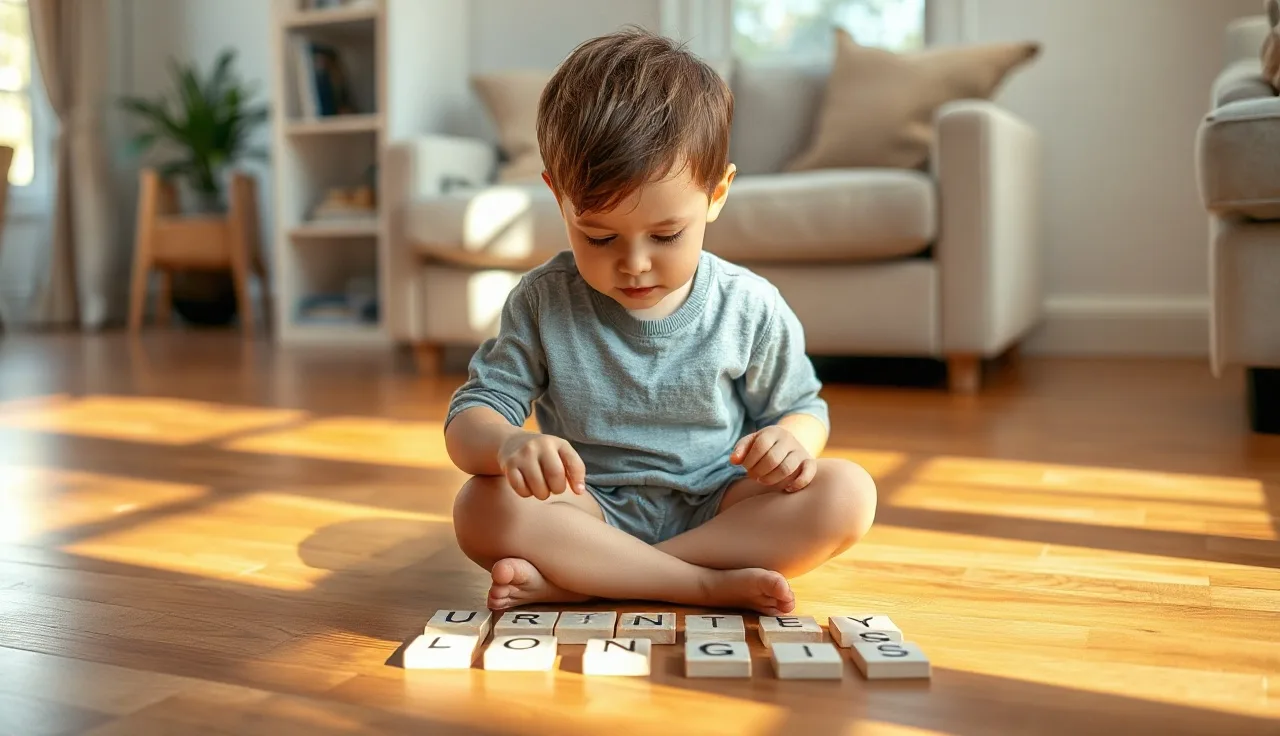
For younger children, preschool through first grade, physical letter tiles, phoneme segmentation hopscotch, and word family card games tend to work well because the movement holds attention. For older struggling readers, grades 3 and up, digital games often feel more age-appropriate even when the phonics content is remedial. A 10-year-old working on CVC words is more willing to do it on a tablet than on flashcards.
Phonics games has a curated list of both digital and physical options sorted by skill level if you want specific picks beyond what's here.
How much time on phonics games actually makes a difference?
Frequency beats duration. Three 15-minute sessions a week produce better retention than one 45-minute session, based on what we know about distributed practice and memory consolidation [7].
For a child using phonics games to supplement school instruction, 15 to 20 minutes three to four times a week is a reasonable target. That adds meaningful repetitions without burnout. If the game is replacing a formal structured literacy lesson, aim closer to 30 minutes daily, but at that point you're in tutoring territory and the game should sit inside a broader structured program, not stand alone.
Watch for two warning signs. First, if your child clears game levels fast but the skill never shows up when they read real books, the game may be too easy or may reward memorization over decoding. Drop them back a level. Second, if your child is stuck on the same level for more than three weeks of regular play, the game alone isn't enough and you likely need a human tutor or a more intensive intervention.
The International Dyslexia Association recommends that children with dyslexia receive structured literacy instruction that is "systematic and cumulative, explicit, diagnostic, multisensory" and notes that supplemental digital tools work best when embedded in this kind of program rather than used as standalone fixes [8].
ReadFlare's free reading tools section includes a phonics skill tracker you can use to log which skills a child has mastered across any game or program, so you're not relying on the game's own progress metrics alone.
Can phonics games help children with dyslexia specifically?
Yes, with important caveats.
Dyslexia is a phonological processing disorder, which means children with dyslexia have specific trouble with the exact skills phonics games target: mapping sounds to letters, blending phonemes, and quickly recognizing letter patterns. That match is why structured literacy approaches, which are essentially formalized phonics instruction, are the evidence-based treatment of choice for dyslexia according to the International Dyslexia Association, the Florida Center for Reading Research, and the What Works Clearinghouse [5][8].
The caveat: children with dyslexia usually need more repetitions, more explicit instruction, and more immediate corrective feedback than typically developing readers. A game that works fine for a child without dyslexia may not give enough structured support to a child with it. Look for games that require production (building or typing words rather than clicking), that use spaced repetition to bring back previously learned patterns, and that give explicit rule instruction before practice, not only after errors.
Orton-Gillingham based digital programs like Barton Reading and Spelling (which has some game-like elements) and the Wilson Reading System digital companion are built specifically for dyslexic learners. They cost far more than general phonics apps, typically $200 to $400 for full program access, but they carry the strongest evidence base for this group.
For free options, the Florida Center for Reading Research's student center activities (at fcrr.org) were developed specifically for struggling readers and include phonics activities with the explicit feedback structure dyslexic learners need [9]. They're not flashy. They work.
If your child has a formal dyslexia diagnosis or an IEP, the school is required under IDEA to provide appropriate specialized instruction. Phonics games you run at home are supplemental to that, not a substitute for it. More on your rights in the FAQ section below.
What are the best free phonics games and where do you find them?
Free does not mean low quality here. Some of the most structurally sound phonics games cost nothing.
Starfall (starfall.com) is one of the best free resources for K-2 phonics. It covers letter sounds, short vowels, long vowel patterns, and simple decodable sentences in a clean, sequenced format. The free tier covers a large chunk of early phonics content.
PBS Kids' Super Why game (pbskids.org) targets letter-sound work for preschool and kindergarten in an engaging format with reasonable feedback mechanics.
The Florida Center for Reading Research at fcrr.org offers free downloadable phonics games, sorts, and activities organized by skill level. These are teacher-tested materials with a serious phonics backbone, and they print cleanly for home use [9].
Teachers Pay Teachers (teacherspayteachers.com) has thousands of free and low-cost phonics game downloads. Quality varies wildly, so filter by "Phonics" and "Structured Literacy" and look for sellers with high review counts. The best free ones are word sort games, blend puzzles, and phoneme segmentation card decks.
Phonics Play (phonicsplay.co.uk) is a UK site with many free games that align well with the English alphabetic code. The phases mirror the Letters and Sounds progression common in British schools but translate fine for American learners.
For printable game templates you can make yourself with index cards, phonics worksheets and kindergarten phonics worksheets have grade-sorted options that turn into card games with almost no effort.
If your child is early in phonics learning and you want a full curriculum-based game sequence, jolly phonics takes a multisensory approach that many parents run successfully at home with minimal cost.
How do phonics games fit into an IEP or 504 plan?
This question matters more than most parents realize.
Under the Individuals with Disabilities Education Act (IDEA), specifically 20 U.S.C. § 1400 et seq., schools must provide a free appropriate public education (FAPE) to children with qualifying disabilities, including learning disabilities like dyslexia [10]. If your child has an IEP, the specialized instruction services in that document are the school's legal obligation, not optional add-ons.
Phonics games show up in an IEP two ways. First, inside the specialized instruction methodology: the IEP might state that the child receives systematic phonics instruction using a named program, and a digital phonics tool could be part of that program. Second, as an assistive technology accommodation: for some children, text-to-speech or phonics-based assistive apps are listed as accommodations. The IEP team, which includes the parents, decides what goes in.
The Department of Education's Office of Special Education Programs (OSEP) has stated that FAPE requires instruction "reasonably calculated to enable a child to make progress," the standard from the Supreme Court's 2017 Endrew F. v. Douglas County School District ruling [11]. If the school is using a phonics game that produces no measurable progress on your child's IEP reading goals, you can ask the IEP team to change the approach. That's your right.
For 504 plans under Section 504 of the Rehabilitation Act (29 U.S.C. § 794), phonics apps can be listed as accommodations or tools for accessing instruction, particularly when a disability affects reading acquisition [12].
Practically: if a teacher or specialist recommends a specific paid phonics app as part of your child's school program, ask whether the school will provide it. Many districts hold site licenses for programs like Lexia Core5 precisely because they're meant to be delivered at school, not billed to parents.
The ReadFlare parent advocacy kit has IEP meeting prep templates and a phonics progress monitoring log you can bring to annual reviews as documentation of what's working at home.
What should you watch for when evaluating a phonics game?
Run this checklist in under five minutes before you commit time or money to any game.
First, play three minutes yourself before handing it over. Ask: does this game actually make the player decode a word, or could a child with zero phonics knowledge guess right? If guessing from pictures or process of elimination works, the game probably isn't doing what you need.
Second, check what happens when your child gets something wrong. Does the game give the correct answer with an explanation of the rule? Or does it just beep and move on? Games that move on after errors produce much weaker learning than games that require the correct response before proceeding.
Third, listen to the sound quality of individual phonemes. Play each consonant sound in isolation. Short stop consonants like /p/, /b/, /t/, /d/ should be crisp and brief. If they carry an obvious schwa ("puh", "buh"), the game may reinforce the exact mispronunciation that wrecks blending.
Fourth, check whether the game reports progress at all. For a struggling reader, you want to know which specific skills are mastered and which aren't, rather than a total score or level number. Some apps give detailed skill reports. Many don't.
Fifth, check the grade-level claim against the actual content. Many apps claim to cover grades K-3 but spend 80 percent of their content on letter names and sight words, with barely any systematic decoding. Read the content, not the marketing.
For a deeper look at what high-quality phonics instruction includes, phonics for kids covers the research on effective teaching at each age range, and alphabet phonics helps parents working with children still at the earliest letter-sound stages.
How do you keep kids motivated to play phonics games without fights?
No research article covers this part well, so here's the honest version: motivation is individual, and there's no trick that works for every child.
Still, a few things help again and again.
Keep sessions short enough that the child always ends on a win. A child who stops after getting three in a row right comes back tomorrow. A child who stops on a long losing streak won't. Set a timer for 12 to 15 minutes and stop when it goes off, finished level or not.
Separate effort from performance in your praise. "You kept trying on that hard one" lands better than "good job getting it right" for a child who struggles with reading, because they can control effort and they can't always control accuracy yet.
Let the child pick which game they play from a short pre-approved list. Two or three options at the right skill level give a sense of control without opening the door to games that don't actually practice phonics.
For younger children, pairing a digital session with a physical version of the same skill, like a quick word sort card game after an app session, doubles the encoding without feeling like more work.
For older children who are mortified to be working on early phonics, framing matters enormously. A game presented as "reading practice" is humiliating to a 12-year-old. The same game framed as "training your brain's pattern recognition" or "the thing speed readers do to rewire word processing" lands completely differently. That's not a lie. It's a more accurate description of what systematic phonics instruction does neurologically, as documented in brain imaging studies of reading development [13].
Frequently asked questions
Are phonics games a substitute for a reading tutor?
No. Games are a practice tool, not a teacher. They can add valuable repetitions and make practice more enjoyable, but they can't diagnose a skill gap, adjust instruction in real time, or build the explicit knowledge a trained reading specialist provides. Think of games as shooting free throws between basketball practices: useful, necessary even, but not a replacement for coaching.
At what age should children start playing phonics games?
Phonological awareness games, which focus on rhyming and syllable clapping rather than letters, fit ages 3 to 4. Letter-sound correspondence games can begin around age 4 to 5, typically pre-K or the start of kindergarten. The key is matching the game to the child's readiness, not forcing letter-sound work before a child has solid phonological awareness as a foundation.
Do phonics games work for English language learners?
Yes, with one caveat. Phonics games built around English letter-sound patterns are directly relevant to ELL students learning to decode English text. But children who are learning English vocabulary and decoding at the same time benefit more from games that pair decoding with clear audio support and simple visual context. Games that assume vocabulary the child doesn't have yet can hide whether errors are phonics errors or vocabulary gaps.
What is the best free phonics app for kindergarteners?
Starfall (starfall.com) is consistently the strongest free option for kindergarten-level phonics. It has a clear sequence starting with letter sounds, moves through short vowels and CVC words, and gives audio feedback. PBS Kids' phonics games are a close second for the youngest learners. Both are free in their basic versions and don't require account creation.
Can my child's school be required to provide a phonics game or app as part of an IEP?
Yes. Under IDEA (20 U.S.C. § 1400), if a phonics-based digital program is identified as part of the specialized instruction or assistive technology needed for your child's FAPE, the school must provide it at no cost to the family. Bring data on what tools are working at home to the IEP meeting and request their inclusion. Many districts already hold site licenses for programs like Lexia Core5 or Raz-Kids.
How do I know if a phonics game is actually helping my child's reading?
Watch for transfer to real text, more than game level progression. If your child advances through app levels but still struggles to decode unfamiliar words in a book, the game may be building recognition of specific words rather than phonics skills. Test with a short set of nonsense words every few weeks. A child who can decode nonsense words is applying actual phonics rules. A child who can only read real words may be memorizing.
Are there phonics games specifically designed for older struggling readers, like third grade and up?
Yes. Barton Reading and Spelling, Wilson Reading System, and the RAVE-O program all include game-like activities built for older readers working on remedial phonics. For free options, the Florida Center for Reading Research (fcrr.org) has student center activities sorted by skill level that don't look babyish even when covering early phonics. Framing helps too: present them as "advanced decoding training," not reading remediation.
What phonics skills should a first grader have, and are there games targeting each skill?
By the end of first grade, most children in a strong phonics program should decode CVC words, consonant blends, digraphs (sh, ch, th, wh), and basic long vowel patterns including final-e words. Games should target each layer in sequence. Phonics Hero, Starfall's learn-to-read section, and teacher-made word sort games from FCRR cover all of these at the appropriate level.
Is there any research comparing digital phonics games to traditional flashcards?
Head-to-head comparisons are limited, but a 2016 study in Computers and Education found that digital phonics practice with immediate feedback produced slightly better short-term retention than paper-based practice, with an effect size of about 0.22. The difference was small, and researchers noted that feedback quality mattered more than the medium. Well-designed flashcard practice with corrective feedback performed comparably to most digital tools.
My child loves games but resists reading books. Can games eventually lead to book reading?
They can, if the games are genuinely building decoding skill. As decoding becomes automatic, reading becomes less effortful and more enjoyable. The research term is "reading fluency," and it's driven by accumulated practice with the alphabetic code. Games that build that code correctly should, over time, cut the cognitive load of reading real books. The bridge is decodable books matched to the child's current phonics level.
How much do the best phonics apps cost?
Prices range from free (Starfall, FCRR activities, PBS Kids) to roughly $10 to $15 per month for family subscriptions to programs like Lexia Core5 or Reading Eggs. More intensive Orton-Gillingham-based programs like Barton can run $200 to $400 for full level access. For most families supplementing school instruction, starting with free options and upgrading only if progress stalls is a reasonable approach.
Can a child use phonics games too much?
In practice, overuse is rare, but there's a real risk of swapping game time for reading actual books. Phonics games build decoding skills; reading connected text builds fluency, vocabulary, and comprehension. A child who plays phonics games for an hour but never reads sentences or short books is missing half the picture. Aim for roughly one part game practice to two parts reading decodable or leveled text.
What does 'decodable' mean, and do phonics games use decodable text?
Decodable text contains only words made of letter-sound patterns the child has already been taught, plus a small number of pre-taught high-frequency words. The best phonics games use decodable words in their practice items. If a game presents words with vowel teams before the child has learned vowel teams, it's forcing guessing, not phonics. Always check that the words in a game match the phonics patterns the game claims to teach.
Sources
- National Institute of Child Health and Human Development, Report of the National Reading Panel (2000): Systematic, explicit phonics instruction produced significantly better decoding and spelling outcomes than programs without it, based on a review of 38 studies.
- Journal of Learning Disabilities, digital phonics game RCT (2020): Students with reading difficulties using a phonics-focused digital game 20 minutes, three times a week for 10 weeks improved word reading accuracy by an average of 8 percentile points more than controls.
- Reading and Writing, meta-analysis of 57 digital intervention studies (2018): Immediate rule-based feedback outperformed delayed or no feedback in digital reading interventions by a standardized mean difference of approximately 0.45.
- Reading Psychology, Lexia Core5 efficacy study (2019): Lexia Core5 users in grades K-2 showed statistically significant gains in phonological awareness and decoding versus matched controls, with an effect size of 0.33 for decoding.
- What Works Clearinghouse, U.S. Department of Education: WWC reviews of reading interventions confirm structured literacy approaches as evidence-based for struggling readers; Starfall has not been formally reviewed.
- International Dyslexia Association, Knowledge and Practice Standards for Teachers of Reading: Multisensory instruction involving simultaneous visual, auditory, and kinesthetic-tactile input has a long research history supporting its use for children with dyslexia.
- Psychological Science in the Public Interest, distributed practice and memory consolidation review: Distributed practice (multiple shorter sessions) produces better long-term retention than massed practice (one longer session) of equivalent total duration.
- International Dyslexia Association, Structured Literacy fact sheet: IDA states that structured literacy instruction must be systematic and cumulative, explicit, diagnostic, and multisensory; digital tools work best embedded in this kind of program.
- Florida Center for Reading Research, Student Center Activities: FCRR provides free downloadable phonics games and activities organized by skill level, developed specifically for struggling readers with explicit feedback structures.
- Individuals with Disabilities Education Act, 20 U.S.C. § 1400 et seq.: IDEA requires schools to provide a free appropriate public education (FAPE) to children with qualifying disabilities, including learning disabilities like dyslexia.
- Endrew F. v. Douglas County School District, U.S. Supreme Court (2017): The Supreme Court held that FAPE requires an IEP reasonably calculated to enable a child to make progress appropriate in light of the child's circumstances.
- Section 504 of the Rehabilitation Act of 1973, 29 U.S.C. § 794: Section 504 allows phonics apps to be listed as accommodations or tools for accessing instruction for students whose disability affects reading acquisition.
- Annals of Dyslexia, neuroimaging studies on reading development and phonics instruction: Brain imaging studies document neurological changes in phonological processing regions following systematic phonics instruction in children with reading disabilities.