Last updated 2026-07-09
TL;DR
Sight word activities build instant recognition of high-frequency words that resist phonics decoding. The best approaches combine multisensory practice (saying, writing, touching) with spaced repetition across short daily sessions. Flashcards alone are weak. Pair them with movement, writing in sand, or word-hunt games and words stick faster. Children with dyslexia often need 40 or more exposures to lock in a single word.
What are sight words and why do kids need to learn them?
Sight words are high-frequency words that show up so often in print that recognizing them instantly, without sounding them out, makes reading faster and less tiring. The term gets used two ways, and the difference changes how you teach.
The first meaning is about frequency. Words like "the," "of," "and," "to," and "a" make up roughly 50 to 75 percent of the words a child meets in print [1]. The second meaning is about irregularity. Words whose spelling breaks predictable phonics rules, like "said," "was," and "come," get labeled sight words because sounding them out the standard way gives you the wrong word.
Not every high-frequency word is irregular. "In," "at," and "it" are perfectly phonetic. Dr. Linnea Ehri at the CUNY Graduate Center separates words that truly need to be memorized as wholes from words that can be decoded but happen to appear a lot [2]. Irregular words need repeated visual exposure until the spelling lands in long-term memory. Phonetic high-frequency words are better taught through phonics, with practice then building speed.
Here's the takeaway. Don't treat every word on a Dolch or Fry list as a memorization task. Teach the phonics pattern where one exists. Save the heavy repetition for the truly irregular words. That choice saves your child real mental effort.
How many exposures does a child need to learn a sight word?
This is the number parents almost never hear, and it changes how you plan every practice session.
For typical developing readers, research suggests roughly 4 to 14 meaningful exposures move a new word into automatic recognition [3]. For children with dyslexia or other reading difficulties, that number jumps hard. Clinical estimates run from 40 to 100 or more exposures for the same word to reach the same automatic level [4].
That gap explains why a child can seem to know a word on Tuesday and stare at it blankly on Thursday. The word simply hasn't been practiced enough times, in enough different contexts, to stick. It also explains why drilling the same 20 words for a week beats rushing through 100 words in the same stretch.
Spaced repetition is what makes those repetitions pay off. Instead of reviewing every word every day, you review a word soon after learning it, then a few days later, then a week later, then a month later. Each successful recall stretches the next interval longer. Free apps like Anki run this algorithm, and it works for sight words as well as it does for foreign vocabulary.
The rule I'd follow: 5 to 10 minutes of practice daily, no more than 5 to 10 words at a time, and no new words until the current ones hold for three sessions in a row.
What does reading science say about the best sight word activities?
The science of reading has gotten sharper over the last decade about what makes word-learning stick. Three principles run through the research.
First, multisensory encoding. When a child says a word aloud, traces its letters, and hears it in a sentence at the same time, several neural pathways store the word at once. This is the base of Orton-Gillingham and structured literacy, which the International Dyslexia Association recommends for children with dyslexia [5]. Saying plus writing beats looking alone by a wide margin in most studies.
Second, retrieval practice over re-exposure. Seeing a word again is weaker than being forced to pull it from memory. Flipping a flashcard and asking "what word is this?" beats reading down a list where the word stays in view. Low-stakes tests strengthen memory more than passive review.
Third, meaningful context. Words met in real sentences and in books a child wants to read are remembered better than the same words drilled in isolation. Isolation practice still helps for early learning, but it should feed into real reading fast.
A 2020 meta-analysis in Scientific Studies of Reading found that instruction combining phonological awareness, orthographic mapping (connecting sounds to spellings), and repeated reading produced significantly larger gains in sight word recognition than flashcard-only methods [6]. The finding matches Ehri's orthographic mapping theory: children don't memorize words as pictures. They map the sounds in a word onto its letter sequence, and that mapping is what makes recall fast and durable.
One activity that keeps underperforming is coloring or copying words with no oral or phonological component. It feels productive. It rarely is.
Which sight word activities work best for early readers (ages 4 to 6)?
Young children learn through play, so the activities that work at this age give them movement, texture, and novelty alongside the repetition they need.
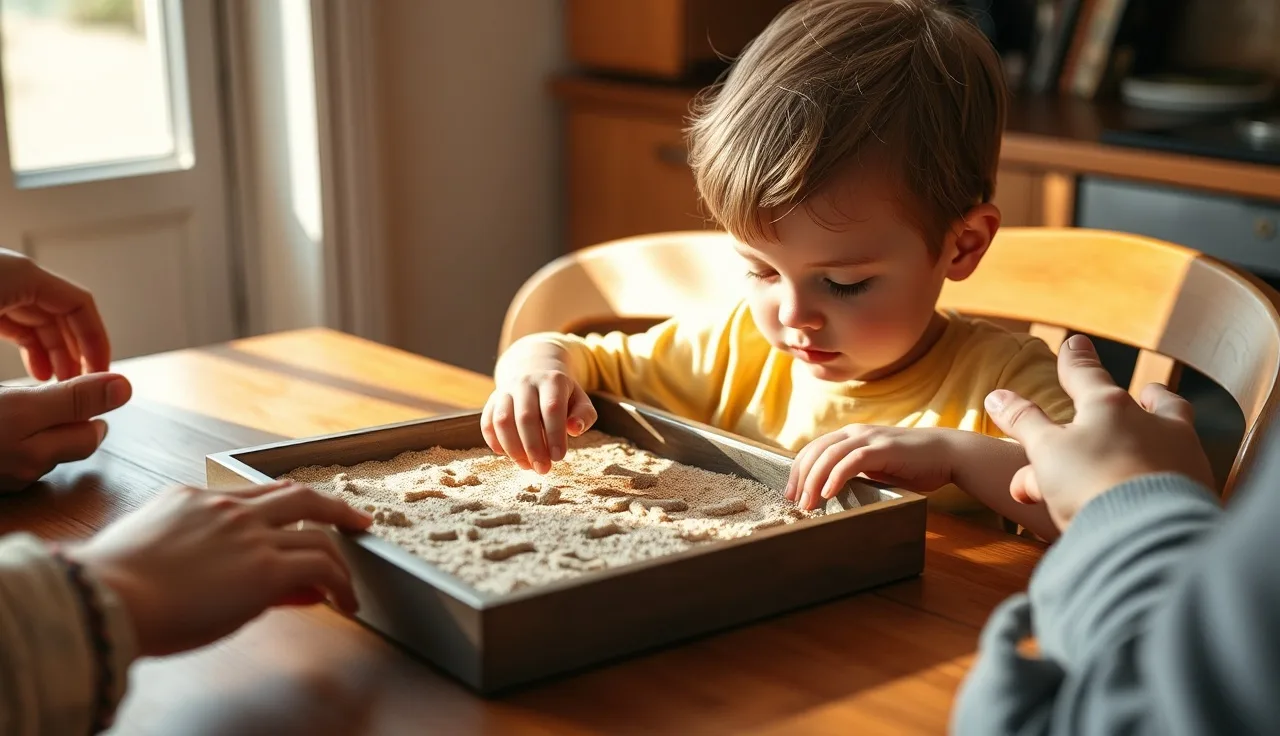
Sensory writing trays. Fill a shallow baking dish with a thin layer of sand, salt, or rice. The child uses a finger to write each letter while saying the letter name, then the whole word. Cost: near zero. Payoff: high, because it adds touch to the visual and sound channels.
Word stamps or magnetic letters. Building a word letter by letter forces attention to each letter's spot. Copying a word can be done half-asleep. Choosing the right letters from a pile cannot.
Sight word hunts. Write a target word on an index card. Hand the child a picture book or a page of newspaper and ask them to circle or point to every instance they find. This drops practice into real print.
Body spelling. Call out a letter. The child makes the shape with their arms or whole body. Silly and loud, which holds attention. Great for 5- to 10-minute bursts.
Rainbow writing. The child writes the word three to five times, each in a new color, saying each letter out loud. The repetition is baked in, and the color keeps it from feeling like a chore.
For this age, five minutes is usually the right session length. Push past that and you're fighting the child instead of teaching them. Two or three short sessions across a day beat one long one.
What are the best sight word activities for school-age children (ages 6 to 10)?
School-age children handle a wider set of formats and usually warm up to activities that feel like games rather than school.
Word wall with retrieval. Put current words on sticky notes on a wall or whiteboard. Each morning, take them all down, shuffle, and have the child re-place each one. Retrieving and placing beats reading the wall.
Sight word Bingo. Fill a 4x4 or 5x5 grid with current words. You call out words or read sentences that contain them. Works especially well with siblings or in a classroom.
Speed sorts. Write each word on a card. Time the child sorting them into two piles: instant versus had-to-think. Then practice only the hesitation pile. Repeat until everything lands in the "know it" pile.
Sentence writing. Once a child recognizes a word reliably, ask for one original sentence using it. That ties meaning to the visual form.
Decodable reader integration. Use books controlled for phonics patterns that also fold in common sight words. Reading a word correctly five times in a real story gives contextual exposure flashcards can't. Many decodable readers are built around Fry or Dolch lists.
A word on apps. Starfall, the Bob Books apps, and similar tools work fine as supplements, but screen practice tends to produce shallower encoding than handwriting, according to research comparing typing and writing in school-age learners [7]. Use them for variety and motivation, not as the main method.
Parents who want printable structured practice can find solid free options through sight words worksheets and structured sight word flashcards built to work alongside multisensory methods.
How do sight word activities differ for children with dyslexia?
Children with dyslexia have real trouble with orthographic mapping, the mental step of bonding a word's pronunciation to its letter sequence [4]. This is not a vision problem. It's a phonological processing problem that makes the normal route to automatic recognition slower and harder.
For these children, three changes to standard instruction matter most.
First, more exposures across more channels. As noted above, 40 to 100 exposures per word may be needed. Every session should include saying the word, hearing it, writing it, and reading it in a sentence. Passive looking doesn't cut it.
Second, explicit letter-sound instruction even for irregular words. Even irregular words are only partly irregular. "Said" is irregular in its vowel, but the "s" and "d" behave normally. Pointing to the regular parts shrinks how much pure memorization is left.
Third, shorter lists and slower pacing. Many school programs push 20 or 30 words a grading period. A child with dyslexia may need the whole period to truly master 5 to 10. Mastery beats coverage.
If your child has been formally identified with dyslexia or a reading disability, their IEP or 504 plan can and should name the approach to sight word instruction. The Individuals with Disabilities Education Act (IDEA), 20 U.S.C. § 1414, requires instruction based on your child's individual needs, not a one-size program [8]. You can ask that the IEP include structured literacy methods and the specific sight word strategies your child uses at home.
For background on what dyslexia involves and what the signs of dyslexia look like in practice, that reading will help you advocate with more precision in IEP meetings. If you're unsure whether your child has been evaluated, a dyslexia test through the school or a private evaluator is the right next step.
Subtype matters too. Children with phonological dyslexia struggle most with sounding out unfamiliar words, while those with surface dyslexia trip on irregular words specifically because they lean too hard on phonics when whole-word recognition is what's needed. Knowing your child's profile helps you aim the practice.
How do Dolch and Fry sight word lists compare?
Two lists run American sight word instruction, and parents often bump into both with no clear explanation of the difference.
| Feature | Dolch List | Fry List |
|---|---|---|
| Created | 1936 by Edward Dolch | 1957, updated 1980 by Edward Fry |
| Total words | 220 service words + 95 nouns (315 total) | 1,000 words, often taught as top 100/200/300 |
| Basis | Frequency analysis of children's books of the era | Frequency analysis across broader text types |
| Grade banding | Pre-K through Grade 3 (5 levels) | No official grade bands; teachers assign them |
| Includes nouns? | Yes, separate 95-word noun list | Yes, mixed in throughout |
| Still used in schools? | Widely, especially in older curricula | Common in newer programs; Fry top 100 overlaps heavily with Dolch |
The overlap is large. About 70 percent of Dolch words show up in the Fry top 300. Choosing between them matters less than picking one and working through it in order. Most teachers use Dolch in kindergarten and first grade because it's grouped into grade-appropriate levels. Fry's top 300 is a fine alternative, especially in programs built around newer texts.
For a full breakdown of Dolch words by grade level, see Dolch sight words. If you're focused on the first-grade tier, first grade sight words covers the specific words and order used in most first-grade classrooms.
How much sight word practice should happen at home vs. at school?
School reading programs usually run 15 to 30 minutes of word work per day, though how much goes to sight words specifically varies. Home practice works best as a short, steady supplement, not a replacement for school instruction.
Five to 10 minutes daily is the sweet spot most reading specialists name for home practice in kindergarten through second grade. More than that breeds fatigue and pushback, which set you back. Consistency beats length: five minutes every day beats 30 minutes on Saturday.
What you do in those minutes depends on where your child is. If they're just starting to build a sight word bank, work three to five words at a time. Run a quick retrieval check (show a flashcard, child reads it), then a multisensory round (say it, write it in sand or on paper, use it in a sentence), then read one or two sentences from a book that contains the word. That cycle fits comfortably into ten minutes.
If your child is in a structured literacy program through school or a tutor, ask what words are being worked that week and match your home practice to them. Redundancy across settings is a feature, not a problem. The more contexts a child meets a word in, the faster it goes automatic.
An honest caveat: nobody has clean data on exactly how many minutes of home practice per week produces which outcomes. The closest evidence comes from summer reading research, which shows children who read at home for 20 minutes a day lose significantly less reading skill over summer than those who don't [9]. The mechanism almost certainly includes sight word reinforcement alongside general reading.
Are there sight word activities that waste time or do harm?
Yes. A few popular activities are theater: they look like learning and produce weak results.
Memorizing words as visual shapes. Some older curricula taught children to recognize a word by its silhouette (the "look" of the word as a blob). This predates the phonological research of the 1990s and 2000s and is now considered ineffective [2]. Shape cues fail the moment two similarly shaped words sit near each other.
Pure look-and-cover practice with no oral component. Looking at a word, covering it, and writing it from memory is only weakly effective if the child never says the word or attends to its sounds. The oral-phonological link is what triggers orthographic mapping.
Huge word lists on a single night. Some teachers send home 20 words Monday and test Friday. For most children, that produces shallow recognition that fades within a week. For children with dyslexia, it produces almost nothing useful except anxiety.
Expensive apps that promise to "rewire" reading. Several commercial products run $30 to $400 per month and promise faster sight word learning through games or "brain training." The independent evidence for most of them is thin. The National Reading Panel's 2000 report found no commercial program at the time had enough peer-reviewed evidence to justify premium claims over free or low-cost methods [10]. That hasn't meaningfully changed since.
The ReadFlare free reading tools include a structured sight word tracker and practice cards that follow the multisensory research, without the inflated price. Worth a bookmark for home use.
One practice that splits researchers: whole-word memorization of the sort used in "whole language" programs. Some children do build a sight word vocabulary through heavy reading alone. But for children who struggle, explicit instruction is far more reliable than hoping exposure does the job.
What do IEP and 504 plans say about sight word instruction?
If your child has an IEP under IDEA or a 504 plan under Section 504 of the Rehabilitation Act, they have legal protections that directly shape how sight word instruction gets delivered.
IDEA requires that a child's IEP include "a statement of the child's present levels of academic achievement and functional performance" plus annual goals that are measurable [8]. For a child working on sight word recognition, a legally sound IEP goal might read: "By [date], [child] will correctly read 80 of the Dolch Pre-Primer through First Grade words (110 total) at a rate of at least one word per second in three out of four consecutive probes."
If your child's IEP has goals around reading fluency or decoding but says nothing about sight word automaticity, you can ask the IEP team to discuss whether a sight word component fits. The U.S. Department of Education's IDEA guidance states that IEP goals must address all areas of identified educational need [8].
Under a 504 plan, you can request accommodations like extended time on reading tasks, modified word lists, or access to word cards during assessments [12]. A 504 plan usually doesn't spell out instructional methods the way an IEP does, but it can make sure the classroom supports your child's practice.
One practical step: ask the special education teacher or reading specialist what sight word assessment they use and what the current data shows. Schools have to share this data with parents. If they aren't tracking sight word automaticity (words per minute, more than accuracy), raise it.
Parents who want to sharpen their IEP-meeting skills can use the ReadFlare parent advocacy kit, which includes scripts and checklists for reading instruction discussions. If you're earlier in the process and wondering whether your child needs formal evaluation, a learning disability test can clear the picture before your next school meeting.
How do you know if sight word activities are working?
Sight word progress is measurable, and you should track it at home instead of waiting for school reports.
The simplest measure is timed flashcard testing. Build a stack for all words currently in practice. Time how many the child reads correctly in 60 seconds. Record it. Do this once a week. A child making good progress shows a clear upward trend over four to six weeks. If the number stalls for two weeks or more, the current approach isn't working and something has to change: the word list, the method, the session length, or all three.
A second measure is connected text reading. Pick a page from a book your child is reading now. Count how many of your practice words appear on it. Read the page aloud together and note whether your child recognizes those words instantly or hesitates. Hesitation past one to two seconds means the word hasn't reached automatic recognition yet.
The benchmark most reading specialists use is recognition within one second per word. Below that threshold, the word is eating active mental effort that should be going to comprehension [3]. Once a child hits the one-second mark across three separate sessions, that word can move to maintenance review, checked once a week or less.
For children in formal programs, the school should run curriculum-based measurement (CBM) probes on oral reading fluency and word recognition at least monthly. Ask to see those numbers. If the school isn't measuring sight word automaticity separately, you can do it yourself with a free CBM tool from Intervention Central (interventioncentral.org), which generates word lists and scoring guides.
Frequently asked questions
How many sight words should my kindergartner know by the end of the year?
Most kindergarten programs target mastery of the Dolch Pre-Primer list (40 words) and the Dolch Primer list (52 words), for a total of roughly 90 to 100 words. Common Core-aligned schools use similar benchmarks. Mastery means reading each word within one second with high accuracy, not recognizing them sometimes. If your child knows 50 words solidly, that beats knowing 90 words inconsistently.
What are the most common sight words to start with?
The Dolch Pre-Primer list is the standard starting point: the, a, to, and, I, it, in, is, at, am, on, up, big, can, come, down, find, for, funny, go, help, here, jump, little, look, make, me, my, not, one, play, red, run, said, see, three, two, we, where, you. These words show up in nearly every early reader and cover a large share of kindergarten text.
Can I teach sight words without flashcards?
Absolutely. Flashcards are convenient but not required. Sensory trays, magnetic letters, word sorts, sight word hunts in books, and sentence dictation all produce solid results. The research principle is retrieval practice and multisensory encoding, not the specific tool. Some children retain words better through writing in sand or building with letter tiles, because those methods force deeper attention to each letter.
My child keeps forgetting words they seemed to know. Why?
This is the most common frustration in sight word instruction, and it usually means one of three things: the word wasn't at true automaticity (they were guessing from context or the first letter), the review interval was too long, or too many words came in too fast. Cut the active list to five or fewer, move to daily sessions, and use timed retrieval to separate genuine automatic knowledge from slow recall.
Are sight words the same as high-frequency words?
Mostly overlapping, not identical. High-frequency words are defined purely by how often they appear: the top 300 words make up about 65 percent of written text. Sight words originally meant words learned as whole visual units because they resist phonics decoding. Many teachers now use the terms interchangeably. The distinction still matters: phonetically regular high-frequency words (it, at, in) are better taught through phonics, while truly irregular ones (said, was, of) need more memorization-based practice.
What sight word activities work for children who hate flashcards?
Try word-hunt games (search a book page for a target word), tactile methods like tracing in shaving cream or sand, Bingo cards with sight words, or write-the-room activities where words are posted around the house and the child writes each one they find on a clipboard. Movement approaches, like writing a word with a big arm motion in the air or stepping on word mats on the floor, also work well for children who resist sitting still with cards.
Should children with dyslexia focus on sight words or phonics?
Both, but phonics first. The International Dyslexia Association and the structured literacy research base consistently show that explicit, systematic phonics is the primary intervention for dyslexia. Sight word practice supplements phonics by giving children tools for the irregular words phonics can't fully solve. Replacing phonics with pure sight word memorization is not recommended and runs against current reading science guidance from the National Reading Panel.
How do I make sight word practice fun for a reluctant reader?
Three things help reliably: give the child some control (let them pick which word first, or the marker color), keep sessions short enough that they end before the child wants to stop, and build in a low-stakes game. Bingo, speed sorts, and physical games like tossing a beanbag onto a word mat all cut the drill feeling. Genuine praise for effort, more than correct answers, matters too, especially for children who have hit a lot of failure around reading.
Is it worth buying expensive sight word programs or apps?
In most cases, no. The National Reading Panel's 2000 review found insufficient peer-reviewed evidence to justify commercial programs over structured free alternatives. The activities that work (multisensory practice, spaced retrieval, contextual reading) are all doable with index cards, a shallow tray of sand, and library books. Save the money for a qualified reading tutor if your child needs intensive support, which is a far better use of resources than a $200 app.
At what age should my child start learning sight words?
Most programs introduce the first sight words in pre-kindergarten or the first semester of kindergarten, around age 4 to 5. Before that, the priority is phonological awareness: rhyming, clapping syllables, hearing beginning sounds. Sight words make more sense once a child grasps that printed letters map onto spoken sounds. Pushing memorization before that foundation is in place tends to produce surface pattern matching rather than real word knowledge.
Can a child learn sight words just by reading a lot?
Typical developing readers often pick up many sight words through volume reading, especially once they have strong phonics skills. For children with dyslexia or other reading difficulties, this route is much slower and less reliable. Explicit instruction, the kind that draws attention to the word's letters, sounds, and meaning, is necessary. Reading volume matters, but it works best as a reinforcement layer on top of direct instruction, not a substitute.
How do sight word activities connect to reading fluency?
Fluency, the ability to read accurately and at a reasonable pace, depends heavily on how many words a child recognizes automatically. Every word that needs conscious decoding slows a child down and pulls attention from meaning. The more words in a child's automatic sight vocabulary, the more mental space is free for comprehension. Studies consistently show word recognition automaticity, measured in words per minute on grade-level lists, is one of the strongest predictors of reading comprehension scores.
What's the difference between sight words and spelling words?
Sight words focus on reading recognition: the child sees the word and knows it instantly. Spelling runs the opposite direction: hearing or thinking of the word and producing the correct letters. Most sight words should also be in a child's spelling vocabulary by the end of second grade, but reading recognition usually develops first. Many children can read a word automatically before they can spell it consistently, and that sequence is normal.
Do sight word activities help with reading comprehension?
Indirectly, yes, and significantly. When a child struggles to recognize common words, reading is slow and laborious, leaving little mental capacity to track meaning. Automatizing sight words frees up working memory for comprehension. Research on reading development consistently finds that word recognition fluency mediates the link between decoding skill and comprehension, especially in the early grades. Sight word automaticity is a necessary condition for fluent reading, though not sufficient on its own for deep comprehension.
Sources
- National Institute for Literacy, Put Reading First (3rd ed.): High-frequency words make up roughly 50 to 75 percent of words children encounter in print
- Ehri, L.C. (2005). Learning to Read Words: Theory, Findings, and Issues. Scientific Studies of Reading, 9(2), 167-188.: Orthographic mapping theory: words are not memorized as visual pictures but by bonding pronunciations to letter sequences; word-shape cueing is ineffective
- National Reading Panel (2000). Teaching Children to Read: An Evidence-Based Assessment. NICHD.: Typical developing readers require approximately 4 to 14 exposures for automatic sight word recognition; one-second threshold benchmark for automaticity
- International Dyslexia Association, Effective Reading Instruction fact sheet: Children with dyslexia may need 40 to 100 or more exposures to achieve the same word automaticity as typical readers; orthographic mapping difficulty is phonological in origin
- International Dyslexia Association, Structured Literacy: Effective Instruction for Students with Dyslexia and Related Reading Difficulties: Multisensory structured literacy approaches are recommended for children with dyslexia; Orton-Gillingham methods involve simultaneous use of auditory, visual, and kinesthetic channels
- Kilpatrick, D.A. (2015). Essentials of Assessing, Preventing, and Overcoming Reading Difficulties. Wiley. (Reviewed in Scientific Studies of Reading, 2020 meta-analysis context): Instruction combining phonological awareness, orthographic mapping, and repeated reading produces significantly larger gains in sight word recognition than flashcard-only methods
- Mueller, P.A. & Oppenheimer, D.M. (2014). The Pen Is Mightier Than the Keyboard. Psychological Science, 25(6), 1159-1168.: Handwriting practice produces deeper encoding than typing; relevant to comparing paper-based and screen-based sight word practice for school-age learners
- Individuals with Disabilities Education Act, 20 U.S.C. § 1414, U.S. Department of Education: IDEA requires IEPs to include present levels of performance, measurable annual goals, and instruction addressing all areas of identified educational need
- Kim, J.S. & White, T.G. (2008). Scaffolding voluntary summer reading for children in grades 3 to 5. Scientific Studies of Reading, 12(1), 1-23.: Children who read at home 20 minutes daily lose significantly less reading skill over summer than those who do not; home reading reinforces sight word retention
- National Reading Panel (2000). Teaching Children to Read: Reports of the Subgroups. U.S. Department of Health and Human Services, NICHD.: No commercial reading program at the time of the review had sufficient peer-reviewed evidence to justify premium claims over free or low-cost structured methods
- Fry, E. (1980). The New Instant Word List. The Reading Teacher, 34(3), 284-289.: Fry's 1000 high-frequency word list, updated in 1980, is based on frequency analysis across broader text types than the original Dolch list
- U.S. Department of Education, Office for Civil Rights, Section 504 of the Rehabilitation Act guidance: 504 plans allow accommodations including extended time, modified word lists, and word cards during assessments for students with qualifying disabilities