Last updated 2026-07-09
TL;DR
Sight word cards (also called flash cards for high-frequency words) are a proven tool for building reading fluency, but only when paired with phonics, not used as a substitute. Most children learn 220+ Dolch or 300+ Fry words by end of third grade. For kids with dyslexia, cards work best with multi-sensory techniques and explicit letter-sound connections built in.
What are sight word cards and why do teachers use them?
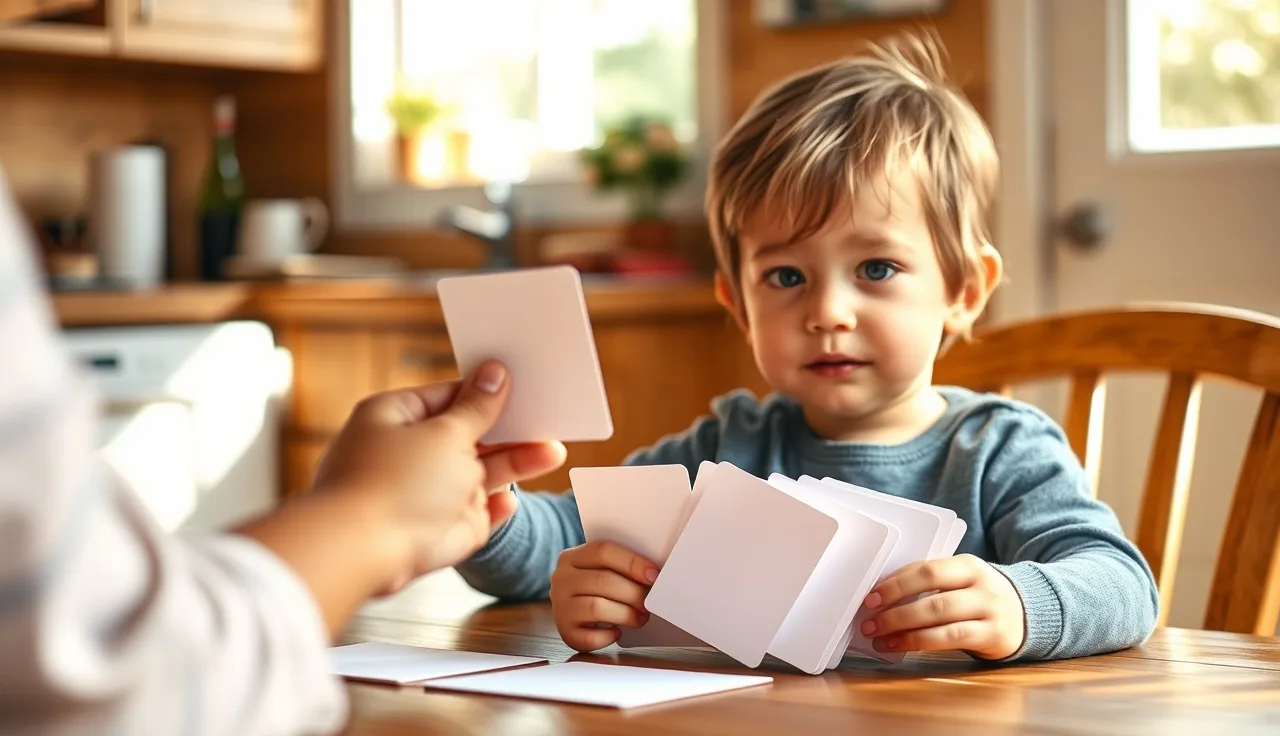
Sight word cards are small cards, paper or digital, that show one high-frequency word each. The goal is automaticity: when a child sees "the" or "because" or "through," they recognize it instantly, no stopping to decode letter by letter. That instant recognition frees up working memory for comprehension.
The term "sight word" gets used two different ways in reading education, and the confusion matters. Some teachers mean any word a child recognizes automatically on sight, which is a reading goal. Others mean irregular words that can't be decoded by standard phonics rules, like "said" or "of." Those are not the same thing. Most high-frequency words are at least partially decodable [1]. The practical upshot: good sight word cards don't just ask kids to memorize a word's shape. They connect the letters to sounds as part of the practice.
Teachers use them because the 100 most common English words make up roughly 50 percent of everything a beginning reader sees in print, according to analysis by researcher Edward Fry [2]. Get those words to automatic recognition early and a child spends less mental energy on individual words, more on meaning. That's the legitimate rationale.
What is the difference between Dolch words and Fry words?
Both lists are real and widely used. They come from different sources and cover slightly different ground.
Edward William Dolch compiled his list in 1936 based on children's books of that era. The Dolch list has 220 service words (no nouns) plus 95 common nouns, for 315 total [3]. It's organized into five grade-level groups: pre-primer through third grade.
Edward Fry developed his list in the 1950s and updated it through the 1990s. The Fry list has 1,000 words ranked by frequency in a much larger text corpus. The first 100 Fry words cover about 50 percent of all words in print; the first 300 cover roughly 65 percent [2].
| Feature | Dolch | Fry |
|---|---|---|
| Total words | 315 (220 + 95 nouns) | 1,000 |
| Era of corpus | 1936 children's books | Mid-to-late 20th century text |
| Grade levels assigned | Pre-primer through Grade 3 | Not grade-leveled |
| Includes nouns | Separate noun list only | Yes, throughout |
| Still used in schools | Yes, widely | Yes, widely |
For making cards, it barely matters which list you start with. Most programs for K through 2 blend both. If you want a full breakdown of what appears on each grade band, the Dolch sight words and first grade sight words guides on ReadFlare go list by list.
One honest note: neither list has been updated for modern digital text. Words like "click" or "video" aren't on them. That doesn't make the lists wrong. It just means they don't cover everything a child reads today.
Do sight word cards actually work? What does the reading research say?
Yes, but with conditions. That's the honest answer.
A 2018 meta-analysis in the Journal of Learning Disabilities examined 22 studies on sight word instruction for students with learning disabilities. The mean effect size was 1.16, which is large [4]. That's for direct instruction on individual words, including flash card methods. The caveat: most of those studies used a small number of target words (often 10 to 20 at a time), practiced repeatedly over short sessions.
The National Reading Panel's 2000 report reviewed the broader evidence on fluency. It found that repeated oral reading with feedback, which is what practicing sight word cards out loud does, improved fluency and comprehension in beginning readers and students with reading disabilities [1]. Silent independent reading without feedback had much weaker evidence.
What the research does not support is using sight word memorization to replace phonics. The simple view of reading, first proposed by Gough and Tunmer in 1986 and replicated many times since, shows reading comprehension depends on both decoding skill and language comprehension [5]. Pumping up a child's sight word bank without building a phonics foundation tends to collapse once words get less frequent or less predictable. You see this clearest in kids who seem to read well in first grade, then hit a wall in second or third when texts get less predictable and they can't decode novel words.
Sight word cards are a real, evidence-supported tool. They're an accelerant for fluency. They're not a reading program on their own.
How should you actually use sight word cards with a child?
The method matters as much as the materials. Here's what the research and classroom practice point toward.
Keep the deck small. Research on memory and word learning shows that practicing 5 to 10 new words at a time, with mastered words recycled back in for review, beats trying to grind through 30 cards in one sitting [4]. A common structure: 5 new cards, 3 to 4 recent cards the child got wrong, 2 to 3 mastered cards as confidence-builders.
Say the word, spell it out loud, say it again. This is sometimes called "see it, say it, spell it, say it," and it adds auditory reinforcement to visual memory. Research on orthographic mapping, the process by which words get stored in long-term memory, shows that connecting letters to sounds is what makes words stick, more than visual shape [6].
Write or trace it. Adding a motor component (finger tracing, writing in sand, or using a stylus on a whiteboard) improves retention for many kids. This is especially true for students with learning disabilities, where multi-sensory encoding can compensate for weaker phonological pathways.
Use the word in a spoken sentence. This connects form to meaning, more than to sound. A child who can bark "the" off a card but doesn't grasp how "the" works in text is only halfway there.
Short sessions, not marathons. Ten minutes daily beats 45 minutes twice a week. Spaced practice is one of the most replicated findings in cognitive science [5].
Flip through mastered cards weekly so they don't fade. Word knowledge isn't permanent without some retrieval practice over time, especially in younger readers.
What makes a good sight word card? DIY vs. store-bought
A good sight word card has the word in a plain, clear font, black on white (or very high contrast), with enough white space that the letters don't crowd each other. That's most of what matters.
Store-bought decks run from about $6 to $25 for a printed card set. Digital apps that mimic flash cards run from free to about $5 a month for premium versions. The price difference rarely reflects a real difference in learning outcomes. What matters is how the cards get used, not whether they came in a branded box.
A few specific things to look for (or build in) if you're making your own:
Font choice: standard serif or sans-serif fonts work fine. There's no strong peer-reviewed evidence that "dyslexia fonts" like OpenDyslexic measurably improve reading speed or accuracy for most readers, though some individuals report preferring them [7]. If your child strongly prefers one, use it. Don't let font selection become the project.
Card size: bigger isn't better. A word in isolation needs to be legible, not large. Standard index card size (3x5 inches) or the digital equivalent works well.
Color coding by word family or part of speech: some programs use it, and some kids find it a helpful organizing aid. No strong randomized-trial evidence it speeds learning, but it doesn't hurt.
Picture on the back: useful for concrete nouns ("house," "tree"), useless for function words ("the," "of," "because"). Trying to picture "therefore" on a card is wasted effort.
For a deeper look at specific formats, the sight word flashcards and sight words flash cards comparisons cover physical vs. digital options in more detail.
How do sight word cards work differently for kids with dyslexia?
Kids with dyslexia have a harder time building the automatic word recognition sight word cards are designed to create. The reason is a weakness in phonological processing, the ability to connect written symbols to their sounds [8]. When orthographic mapping relies on sound-to-letter connections and sound processing is impaired, the whole process slows down.
This does NOT mean sight word cards are useless for kids with dyslexia. It means they need more repetitions, more multi-sensory encoding, and more explicit phoneme-grapheme connection during practice, well beyond simple visual exposure.
A child with phonological dyslexia may need 20 to 40 exposures to a new word to reach automaticity, where a typically developing reader might need 4 to 14 [6]. That's a big gap, and it means the card deck for a child with dyslexia should rotate much more slowly.
Some kids have what's called a rapid naming deficit, where the bottleneck isn't just phonological but also the speed of retrieving stored words. For those kids, drilling flash cards harder and faster doesn't help much. Timed card drills can even ramp up anxiety without building fluency. Slower, more deliberate practice with explicit feedback tends to work better.
Kids with surface dyslexia have the opposite profile: weak at irregular word recognition but relatively better at phonological decoding. For them, sight word cards targeting irregular words matter most, because that's precisely the weak skill.
If your child is struggling hard and you haven't had an evaluation, read the signs of dyslexia and dyslexia test resources before you assume card practice alone will bridge the gap.
What grade levels and word counts should I target at each age?
General benchmarks from school reading programs and the Dolch/Fry frameworks:
| Grade | Approximate cumulative sight word target | Notes |
|---|---|---|
| Pre-K / Kindergarten | 20 to 40 words | Pre-primer Dolch; basic Fry first 25 |
| Grade 1 | 100 words total | Dolch pre-primer + primer + Grade 1 |
| Grade 2 | 150 to 200 words | Adds Dolch Grade 2; Fry first 200 |
| Grade 3 | 220 to 300 words | Completes Dolch list; Fry first 300 |
| Grades 4 to 6 | 300 to 500+ words | Fry 301-500; content-area vocabulary grows |
These are approximate. Schools and reading programs vary. A child reading above grade level may hit these benchmarks earlier. A child with a reading disability may hit them 12 to 18 months later than peers, which is a normal pattern, not a crisis on its own.
What matters more than exact word counts is whether automaticity is building. If a child still sounds out "because" or "people" in third grade, that's a flag worth raising with the teacher. Not a reason to panic, but a reason to ask whether targeted intervention is warranted.
For grade-specific word lists and printable practice tools, the sight words worksheets page has downloadable resources organized by grade band.
How should parents use sight word cards at home without undermining school instruction?
First move: ask the teacher which word list and which grade band the class is working on now. Using a different list at home isn't harmful, but practicing the same words the school is introducing gives your child extra exposures on exactly the right targets, which speeds up automaticity.
A good home routine takes about 10 minutes. Here's a structure built on the research on distributed practice [5]:
Start with two to three review cards the child mastered last week. This is a confidence moment and a retrieval practice moment at once.
Introduce one to three new words using the see-say-spell-say routine. Go slow. Let the child look at the word, say it, spell it letter by letter out loud, and say it again. Then flip the card face down and ask them to spell it from memory.
Run through five to eight total cards, new ones included. Keep the session positive. If the child gets stuck, tell them the word, mark the card for more work, and move on. Drilling a card they're stuck on until they cry is not a learning strategy.
End with something connected to the words: find two of them in a book, or use one in a spoken sentence.
One thing to avoid: don't run sight word cards right before bed if your child is already tired. Working memory drops meaningfully with fatigue, and a failed practice session just before sleep can build a negative association with reading.
The ReadFlare reading toolkit has printable card templates and a tracking sheet matched to Dolch grade bands if you want a ready-made home system.
Can sight word cards help if my child has an IEP or 504 plan?
Yes, and sight word goals can be written directly into IEP documents under the Individuals with Disabilities Education Act (IDEA), 20 U.S.C. § 1400 et seq. [9]. The law requires a child's IEP to include measurable annual goals tied to the child's specific needs, reading goals included. A sight word goal written into an IEP is legally binding on the school.
A well-written IEP sight word goal looks something like: "By [date], student will read [X] of the Dolch Primer words automatically (within 3 seconds) in 4 out of 5 trials, as measured by weekly teacher assessment." Vague goals like "will improve sight word recognition" are legal but harder to monitor and enforce.
Under a 504 plan (Section 504 of the Rehabilitation Act of 1973) [10], the focus is accommodations rather than specialized instruction. A 504 plan might include extra time on reading tasks, preferential seating, or access to text-to-speech, but it wouldn't typically spell out sight word instruction methodology the way an IEP would.
If your child's school is using sight word cards as the primary reading intervention and your child has a diagnosed reading disability, that may not meet the bar for a research-based reading program under IDEA. IDEA requires special education services to use "peer-reviewed research to the extent practicable" [9]. A single set of flash cards is a tool, not a program. You can ask the school to document which research-based program they're using and how cards fit into it. That's a reasonable question, and schools should be able to answer it.
For more on how to handle school meetings around reading, the school advocacy resources on this site help you prepare specific questions.
Are there any downsides or risks to relying too heavily on sight word cards?
There are real risks, and being honest about them matters.
The biggest risk is using sight words as a crutch that masks weak decoding. If a child memorizes 150 words but can't decode "slump" or "grant" because nobody taught phonics systematically, they'll hit a wall in second or third grade when text gets less predictable. This is exactly the pattern Louisa Moats and others in the science of reading community have documented and criticized for years [6].
A related risk: some children learn to guess from context and the first letter instead of actually reading the word. They glance at the first letter, use the picture or the sentence context, and produce a plausible word. This can look like reading and register as success on flash card drills, because the practice environment often gives contextual cues. On a fresh page, in isolation, those kids stumble.
For kids with double deficit dyslexia, where both phonological processing AND rapid naming are weak, heavy reliance on sight word memorization can actually kill motivation if the child keeps hitting failed retrieval during timed drills.
Then there's generalization. A child who reads "come" off a card in your kitchen may not read it in a book under different font and spacing. Isolated card practice has to connect back to real text reading, or generalization runs slower than it should [4].
None of this means stop using cards. It means use them as one part of a complete reading approach, and watch for the warning signs above.
What are the best sight word card programs and apps available?
There are dozens of products. Here's an honest, non-exhaustive look at the categories and what they actually offer.
Physical card sets: Trend Enterprises and Scholastic both sell Dolch and Fry card sets in the $6 to $15 range. They're adequate. The Zaner-Bloser and School Specialty versions add tracing and writing practice on the back, which matches the multi-sensory research. No branded set produces dramatically better outcomes than a homemade set used consistently.
Digital flashcard apps: Sight Words by Duck Duck Moose (now part of Khan Academy Kids, free), Bob Books Reading (about $3 per book set), and Teaching Talking apps get recommended often by reading specialists. They add audio pronunciation, which matters for children who aren't yet sure how a word sounds. The free Khan Academy Kids app has been independently evaluated and shows positive literacy outcomes in low-resource settings [11].
Structured literacy programs that include sight words as a component: Wilson Reading System, Barton Reading and Spelling, and SPIRE all fold high-frequency word practice into a phonics-first structure. These cost much more ($200 to several thousand dollars) but fit children with diagnosed reading disabilities. They're not "sight word card programs" as such. They're complete intervention programs that address the full picture.
What I'd avoid: any program or product that promises reading fluency purely through visual memorization with no phonics component. The packaging looks appealing, the testimonials sound compelling, and the science doesn't back it.
For a side-by-side comparison of digital vs. physical card options, the sight word flashcards review digs into specific products.
How do I know if sight word practice is actually working?
Measure the right things. A child who recites a word off a card in a calm, quiet kitchen is not the same as a child who reads that word automatically in a book. Both matter. They're different skills.
A simple weekly check: take a random sample of 10 cards the child has been practicing. Present each for no more than three seconds. Record how many they get right without sounding out. Three seconds is the informal threshold for "automatic" recognition used in many classroom assessments, though some researchers use a stricter one-second criterion for true automaticity [6].
Another check: find the target words in an actual book or printed passage and see if the child reads them without hesitation in context. This tests generalization, which the card alone can't.
Track the data over four to six weeks. If a child practices regularly and fewer than 70 percent of target words reach automaticity after six weeks, that's worth raising with the teacher. It may mean the word count is too large, the practice method needs adjustment, or there's a deeper decoding issue that needs evaluation.
If you suspect a reading difficulty runs deeper than sight word memorization alone, the learning disability test guide explains what a formal assessment covers and how to request one through the school.
Frequently asked questions
How many sight words should a kindergartner know by the end of the year?
Most kindergarten programs target 20 to 50 sight words by year's end, typically the Dolch pre-primer and primer lists. The exact number varies by school and curriculum. What matters more than the count is whether those words are truly automatic: recognized in under three seconds without sounding out, and recognized in text, more than on isolated cards.
Are sight word cards the same as flash cards?
In practice, yes. Sight word cards are flash cards focused on high-frequency or irregular words. The flash card format (one item per card, rapid retrieval practice) applies to both. The distinction that matters is what's on the card and how it's used, not what it's called. Both terms point to the same tool.
Should I use pictures on sight word cards?
Only for concrete nouns like 'house' or 'dog.' For function words like 'the,' 'of,' 'because,' or 'through,' pictures don't help and can create a guessing shortcut. For irregular or abstract words, the most useful thing on the card is the word itself, with letters clearly visible so phoneme-grapheme connections can be made during practice.
My child knows the sight word cards but still struggles reading books. Why?
This is a generalization gap. Recognizing a word on a card in a quiet room is easier than reading it in a full sentence on a page. The word looks different in different fonts and spacing, and context demands more simultaneous processing. To bridge it, practice finding target words in real books alongside card drills. Also check whether phonics decoding is keeping pace; sometimes card success masks a weak decoding foundation.
How is the Dolch list different from the Fry list?
The Dolch list has 315 words based on 1936 children's books; the Fry list has 1,000 words ranked by frequency in a broader 20th-century text corpus. Dolch is organized into five grade bands; Fry is frequency-ranked without grade levels. The first 100 Fry words cover about 50 percent of printed text. Both lists overlap heavily. Most K-2 programs blend them.
Can I use sight word cards with a child who has dyslexia?
Yes, but the approach needs adjustment. Kids with dyslexia typically need 20 to 40 exposures per word to reach automaticity, compared to 4 to 14 for typically developing readers. Multi-sensory methods (saying, spelling aloud, tracing, writing) beat visual flash alone. Timed drills can raise anxiety without building fluency for kids who also have rapid naming deficits. Keep the target set small and rotate slowly.
What font should I use on DIY sight word cards?
Any clean, standard font works: Arial, Verdana, Times New Roman. There's no strong peer-reviewed evidence that specialty dyslexia fonts like OpenDyslexic measurably improve reading accuracy for most children, though some individuals prefer them. Use a font your child reads comfortably, at least 18-point size for younger learners, with high contrast between text and background.
How long should a sight word card practice session be?
Ten minutes daily beats 45 minutes twice a week. Short, frequent retrieval practice is one of the most replicated findings in cognitive science. Keep each session to 8 to 12 cards total: a few new words, a few recent misses, and a few mastered words for review. Stop before fatigue sets in; a frustrated child isn't consolidating memory.
Can a child's IEP include sight word goals?
Yes. Under IDEA (20 U.S.C. § 1400), IEP goals must be measurable and tied to the child's specific needs. A sight word goal might read: 'Student will read 50 Dolch primer words automatically within 3 seconds in 4 of 5 trials by [date].' Vague goals like 'will improve sight words' are technically allowed but harder to monitor. Ask for specific word counts, accuracy rates, and timelines.
What is the difference between a sight word and a high-frequency word?
High-frequency word means a word that appears often in print, regardless of how regular or irregular it is. Sight word technically means any word recognized automatically on sight, but it's often shorthand for irregular high-frequency words that don't follow standard phonics rules. In classroom practice, the terms get used interchangeably. The distinction matters most when designing instruction: even 'irregular' words usually have some decodable parts worth teaching explicitly.
How many times does a child need to see a word before it becomes automatic?
For typically developing readers, research suggests 4 to 14 exposures with active engagement (not passive reading) produce automatic recognition. For children with dyslexia or phonological processing deficits, that number climbs to 20 to 40 exposures or more per word. This is why small, slow-rotating card decks work better for struggling readers than large decks cycled quickly.
Are there free resources for sight word cards?
Several. Khan Academy Kids (free app) includes structured sight word practice backed by independent evaluation. Many public school districts post Dolch and Fry word lists on their websites in printable form. ReadFlare's free reading toolkit includes printable card templates organized by Dolch grade band. Teachers Pay Teachers has hundreds of free and low-cost card sets, though quality varies; stick with highly reviewed items from credentialed reading specialists.
Should sight word cards replace phonics instruction?
No. The research is clear on this. The simple view of reading (Gough and Tunmer, 1986, replicated many times) shows reading comprehension requires both decoding skill and language comprehension. Sight word memorization without systematic phonics collapses when children meet less frequent or novel words, typically in second or third grade. Cards should supplement a phonics program, not substitute for it.
How do I ask my child's school to provide sight word instruction as part of special education?
Request an IEP team meeting and ask for measurable reading goals that include high-frequency word automaticity. Ask the school to document which research-based reading program they're using and how sight word instruction fits into it. IDEA requires special education to use peer-reviewed research to the extent practicable. You have the right to prior written notice before the school changes or declines to change your child's educational plan.
Sources
- National Institute of Child Health and Human Development, Report of the National Reading Panel (2000): Repeated oral reading with feedback improved fluency and comprehension in beginning readers and students with reading disabilities; silent independent reading showed weaker evidence.
- Fry, E. (1980). The New Instant Word List. The Reading Teacher, 34(3), 284-289: The first 100 Fry words account for approximately 50 percent of all words in print; the first 300 cover roughly 65 percent.
- Dolch, E.W. (1936). A Basic Sight Vocabulary. The Elementary School Journal, 36(6), 456-460: The Dolch list contains 220 service words plus 95 common nouns, for 315 total, organized into five grade-level groups.
- Browder, D., et al. (2018). A Meta-Analysis of Sight Word Research for Students with Significant Cognitive Disabilities. Journal of Learning Disabilities: Meta-analysis of 22 studies on sight word instruction found a mean effect size of 1.16; most effective protocols practiced 5 to 10 words at a time in short sessions.
- Gough, P.B. & Tunmer, W.E. (1986). Decoding, Reading, and Reading Disability. Remedial and Special Education, 7(1), 6-10: The simple view of reading: reading comprehension = decoding x language comprehension; word memorization without decoding is insufficient.
- Moats, L. (2020). Speech to Print: Language Essentials for Teachers (3rd ed.). Brookes Publishing: Orthographic mapping requires phoneme-grapheme connections; children with dyslexia may need 20 to 40 exposures per word vs. 4 to 14 for typically developing readers.
- Wery, J.J. & Thomson, M.M. (2013). Motivational Strategies to Enhance Effective Instruction of Struggling Readers. Support for Learning, 28(3): No strong peer-reviewed evidence that specialty dyslexia fonts like OpenDyslexic measurably improve reading speed or accuracy for most readers.
- International Dyslexia Association, Definition of Dyslexia: Dyslexia is characterized by difficulties with accurate and/or fluent word recognition and by poor spelling and decoding abilities rooted in phonological processing deficits.
- U.S. Department of Education, Individuals with Disabilities Education Act, 20 U.S.C. § 1400: IDEA requires IEPs to include measurable annual goals and that special education services use peer-reviewed research to the extent practicable.
- U.S. Department of Education, Office for Civil Rights, Section 504 of the Rehabilitation Act of 1973: Section 504 requires accommodations for students with disabilities, focused on access rather than specialized instruction methodology.
- WestEd, Khan Academy Kids Independent Evaluation (2021): Khan Academy Kids app showed positive literacy outcomes in independent evaluation across low-resource settings.
- U.S. Department of Education, What Works Clearinghouse, Beginning Reading: What Works Clearinghouse reviews evidence ratings for structured literacy programs including those incorporating high-frequency word instruction.